
Succulent Petrifaction: A Guide to Rare Plant Mutations
 AbodePro Tools
Understanding Succulent Petrifaction
When discussing succulent mutations, most people are familiar with fasciation (cresting) and variegation. However, beyond these common occurrences, succulents can also experience a phenomenon known as succulent petrifaction. Unlike the single-form changes seen in cresting or variegation, a petrified succulent often exhibits multiple mutation traits simultaneously, creating a fascinating natural spectacle.
Key Characteristics of Petrified Succulents
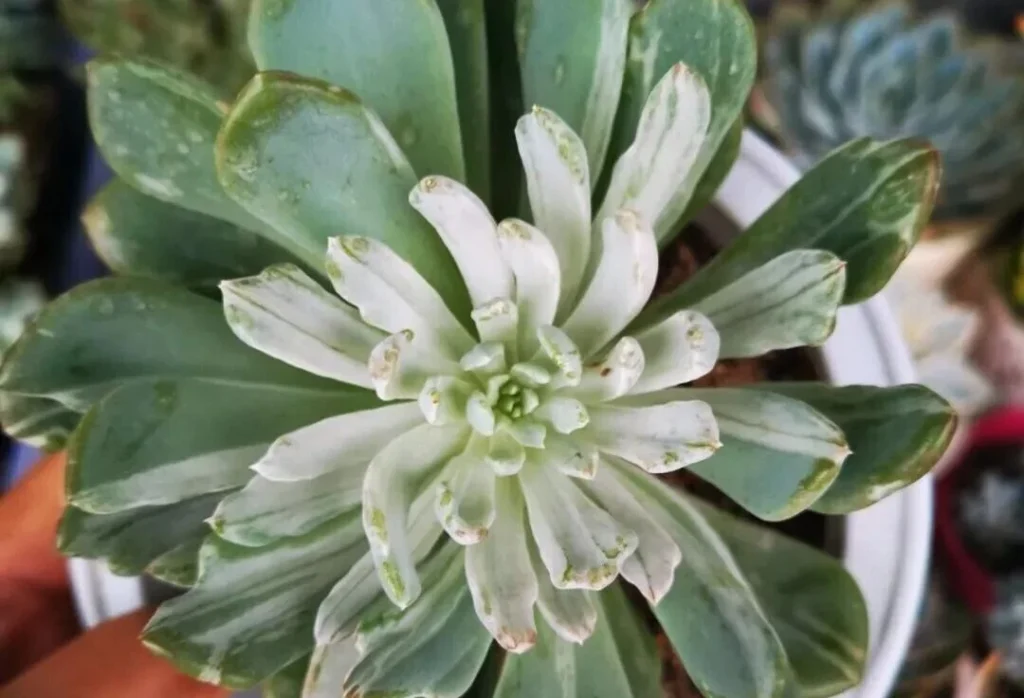
The core cause of succulent petrifaction is genetic mutation triggered by external environmental stimuli. What sets it apart is its complex nature; it frequently combines variegation, fasciation, lignification (woodiness), enlargement, and dwarfing into a single plant. This makes it a textbook example of plant genetic mutation.
Visually, the leaves of a petrified succulent become noticeably harder and more woody, often displaying lines that resemble weathered rock layers. A single plant might show both crested and variegated forms at the same time. The leaves are typically deformed, with tips splitting abnormally to form wrinkled shapes. Additionally, new leaves grow significantly shorter, and some may even fuse together.
Common Varieties Prone to Petrifaction
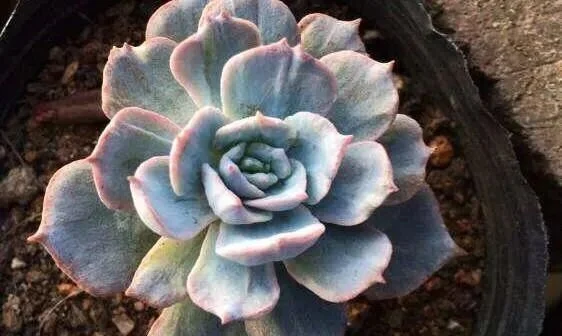
The petrifaction phenomenon is most commonly observed in the Crassulaceae family, particularly within the Echeveria genus. Varieties such as Echeveria peacockii, Graptopetalum paraguayense, Echeveria lilacina, Echeveria runyonii ‘Topsy Turvy’, Echeveria ‘Onslow’, and Echeveria ‘Brocade’ are frequent examples. These are generally hardy and easy-to-grow types.
It is important to note that mutated succulents generally have lower resistance and survival capabilities compared to normal plants. For petrified succulents, this manifests as hardened leaves, slower growth rates, and newer leaves becoming progressively smaller, making the entire plant appear as if its growth has stalled for a long period.
Market Value and Aesthetics
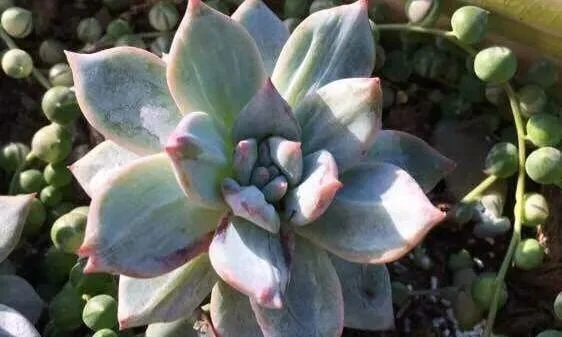
In the current market where various mutated succulents are highly sought after, petrified succulents command a higher price than regular ones, despite their sometimes unconventional appearance. However, they do not enjoy the same widespread popularity as purely crested or variegated plants.
This might be because a single distinct mutation is visually striking, whereas multiple mutations can look cluttered. Appreciation for petrified succulents is highly subjective; whether one finds them appealing depends entirely on personal taste.
How to Care for Petrified Succulents
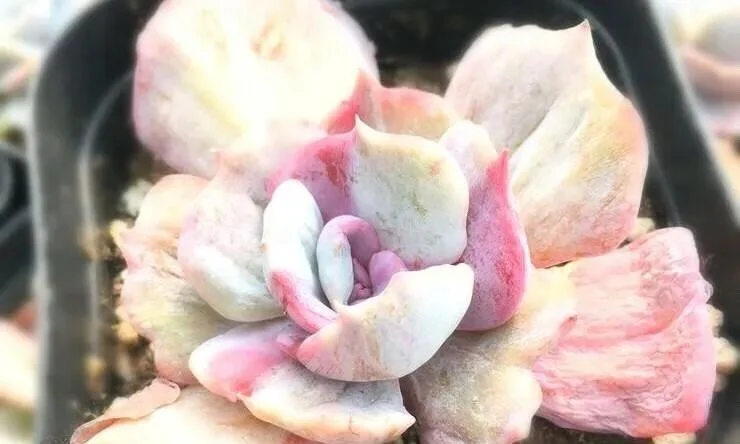
The daily care for a petrified succulent does not differ significantly from standard succulent care. Because their leaves have a higher degree of lignification, the deposition of lignin provides better cellular stability. As a result, it is very rare for an already petrified succulent to revert to its normal form.
For routine maintenance, use a suitable well-draining soil mix, ensure adequate sunlight, and provide appropriate watering. Since petrified succulents grow slowly, repotting every 1 to 2 years is sufficient. During the spring and autumn growing seasons, applying a small amount of water-soluble or slow-release fertilizer will support their health.
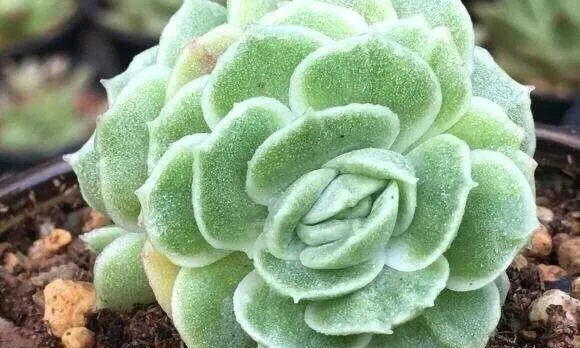
Petrifaction is a unique mutation that adds diversity to the succulent world, offering enthusiasts new avenues for exploration. Since these mutations can occur naturally during regular cultivation, there is no need to spend exorbitant amounts to acquire one; simply enjoy the process of discovering them in your own garden.
Fascinating mutation details!
Good to know that petrified succulents require the same basic care despite growing slower.
I didn't know they could get woody leaves.