
100 Beautiful Succulent Varieties for Easy Indoor Care
 AbodePro Tools
Succulents have captured the attention of plant lovers with their thick leaves, compact shapes, and vibrant colors that often rival traditional blooming flowers. With over ten thousand species across more than a hundred plant families, building a complete collection is nearly impossible. However, selecting the right succulent varieties can make indoor and outdoor gardening incredibly rewarding. Some types require specific conditions, while others are highly resilient and perfect for beginners. The following selections highlight beautiful, low-maintenance options that thrive with minimal effort.
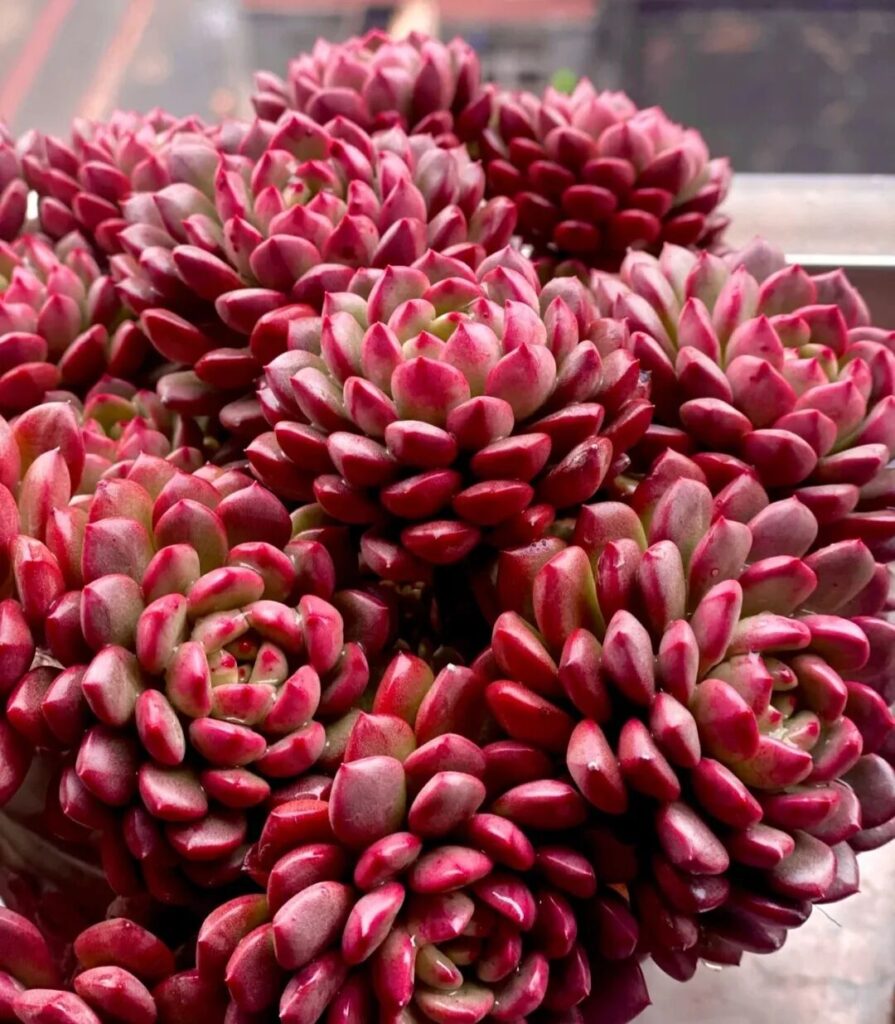
1. Pink Ruby
This variety features short, thick leaves that transform into a deep pink shade under proper light stress. The smooth, glossy surface makes the plant resemble sparkling rubies, making it a highly sought-after choice for compact spaces.
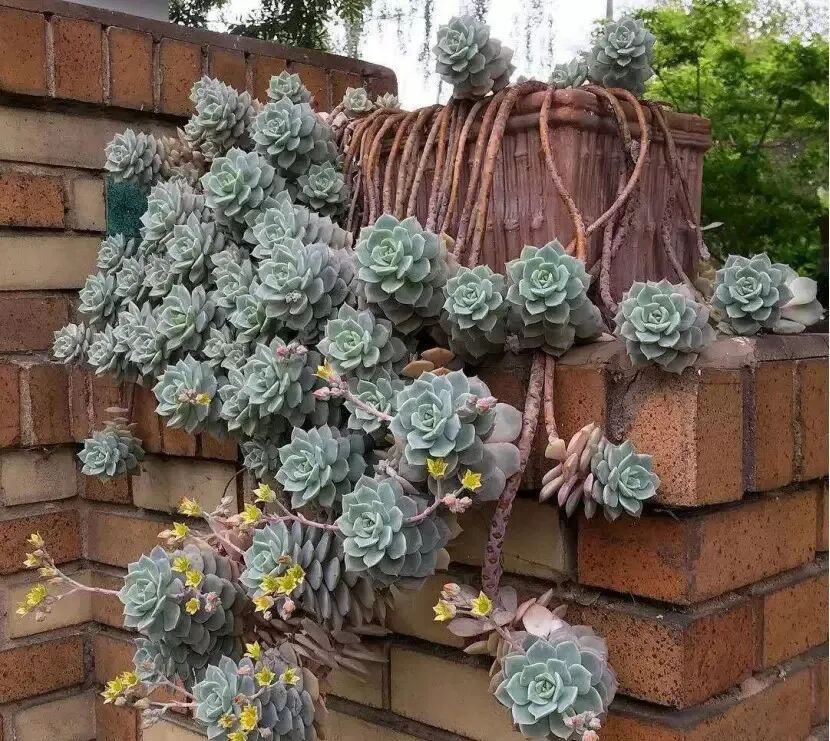
2. White Peony
When grown in optimal conditions, this rosette-shaped plant develops thick, powdery leaves. Mature stems can grow long and trail elegantly, often producing delicate yellow flowers during the blooming season.
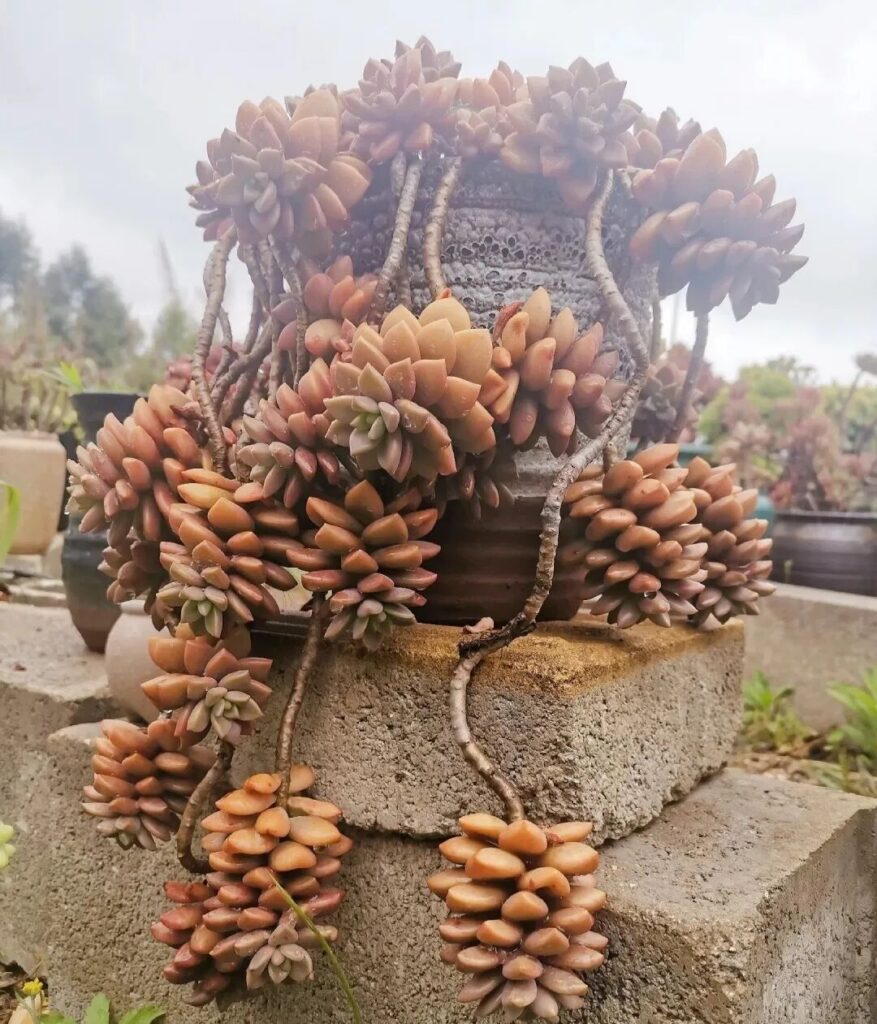
3. Bronze (Vera Higgins)
This is a classic, widely available variety that rewards proper care with stunning metallic-bronze foliage. Developing a thick, woody stem takes a few years, but the resulting mature plant adds excellent structural interest to any pot.
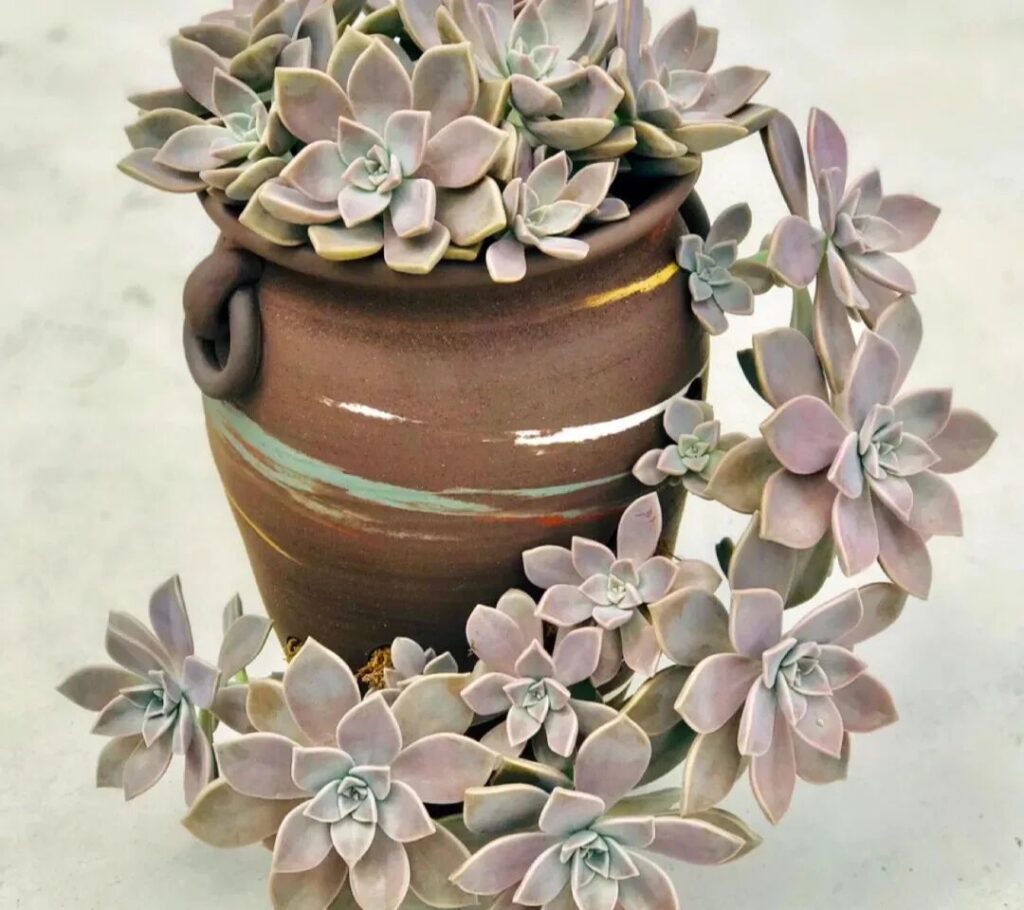
4. Ghost Plant
While sharing a similar name with the previous entry, the Ghost Plant has a distinct, flatter rosette shape. It grows vigorously and often cascades over the edges of containers, displaying pale, powdery leaves.
5. Raul
This compact plant is known for its sweet fragrance and chubby leaves. It grows relatively fast, forming a clustered, mature stem structure within just two to three years of proper care.
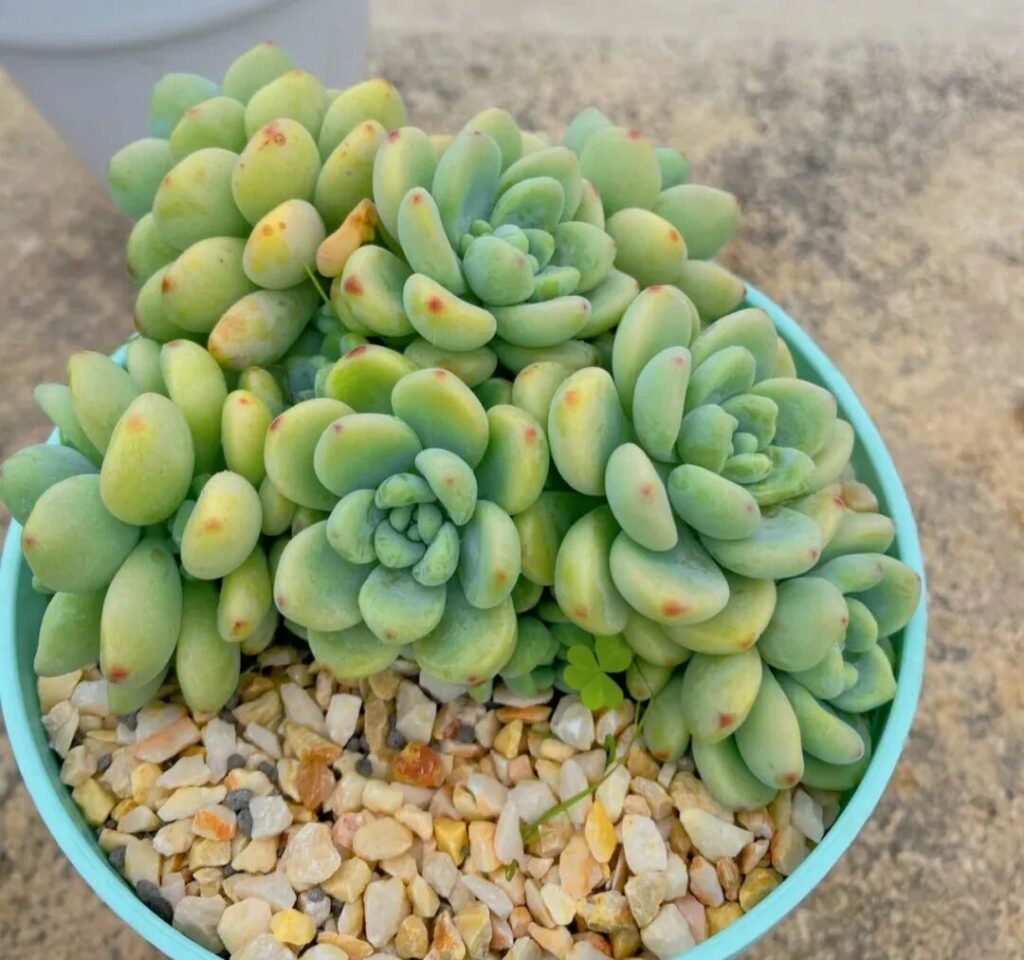
6. Blue Apple
Featuring blue-green leaves that develop bright red tips under sunlight, this plant looks spectacular when grown in dense clusters. The color contrast makes it a standout in mixed arrangements.
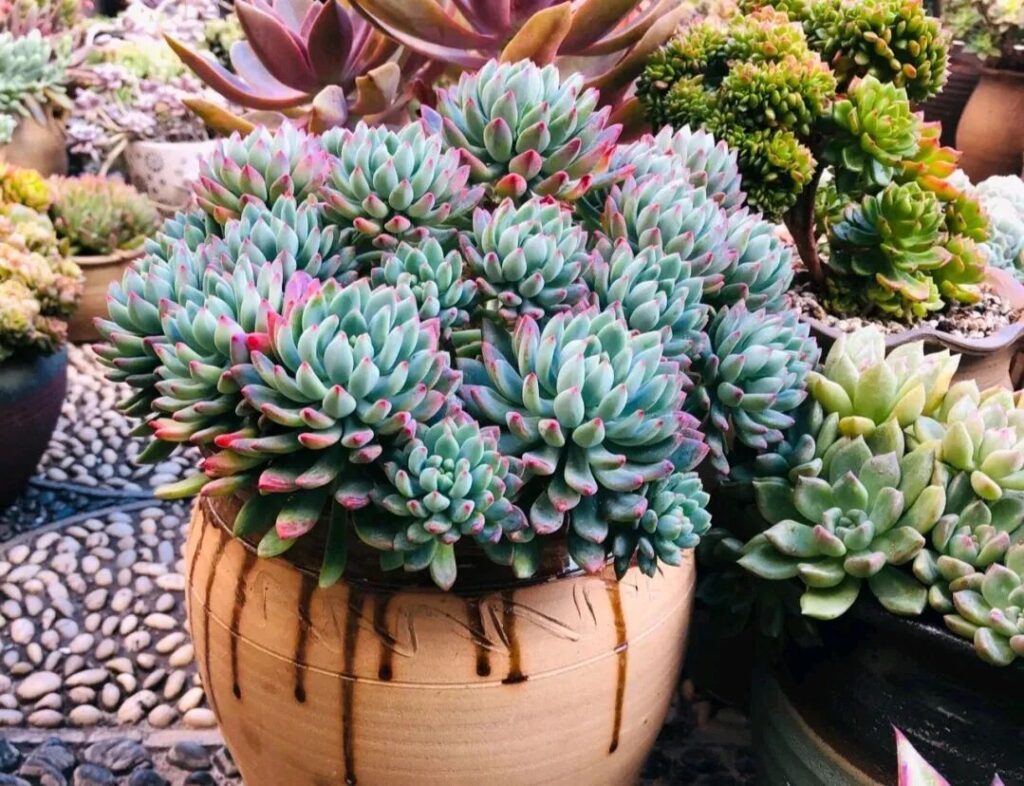
7. Crispate Beauty
Recognized by its wide, heavily ruffled leaves, this unique hybrid has become increasingly popular. Once considered a rare and expensive collector’s item, it is now much more accessible for everyday indoor gardens.
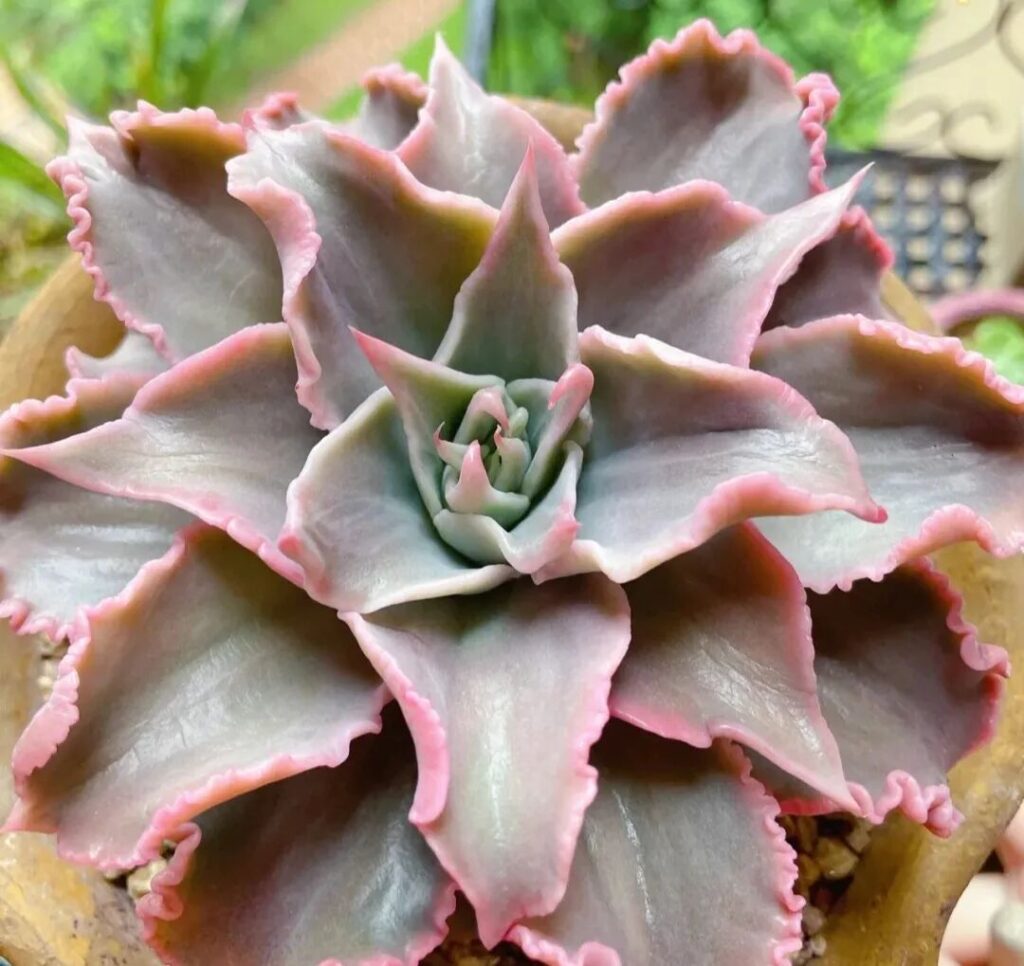
8. Autumn Joy
A classic and highly resilient option, this plant is perfect for beginners. It changes color dramatically based on sunlight and temperature, offering a dynamic visual display throughout the seasons.
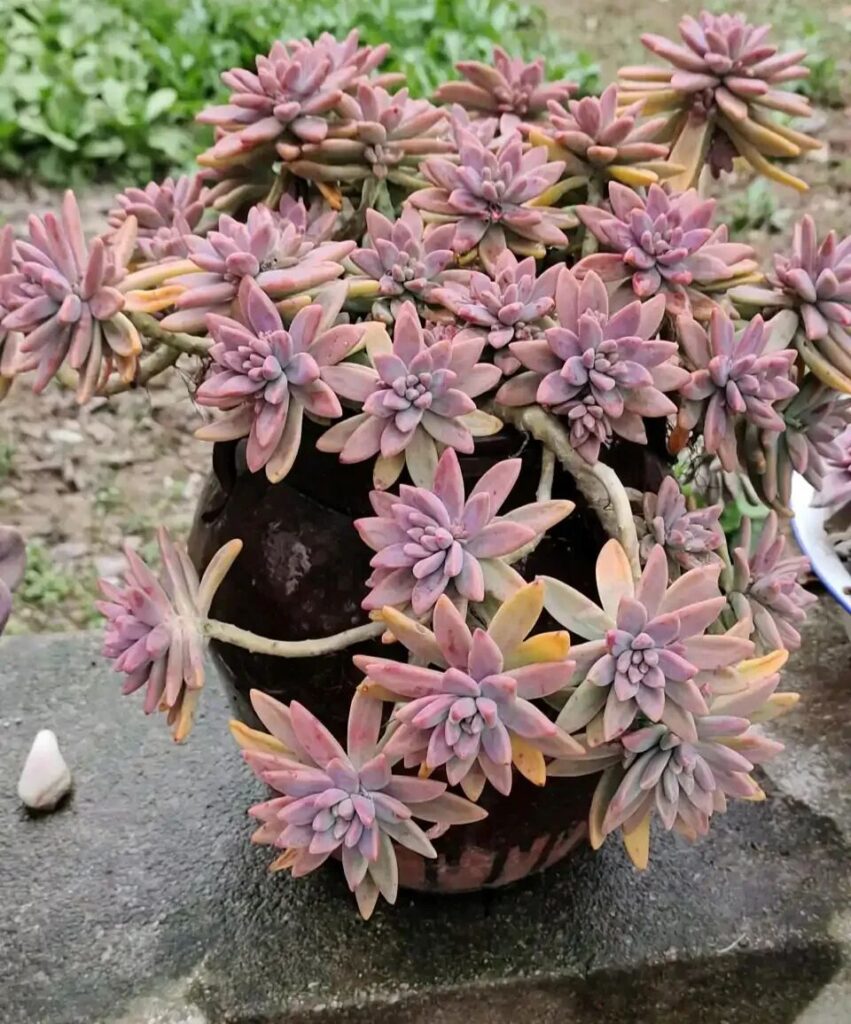
9. Pale Snow and 10. Pink Lady
These two varieties are excellent for cluster growth. Pale Snow easily forms multiple heads and thick stems, while Pink Lady offers a softer, pastel hue that complements darker plants.
11. Golden Glow (Pudding)
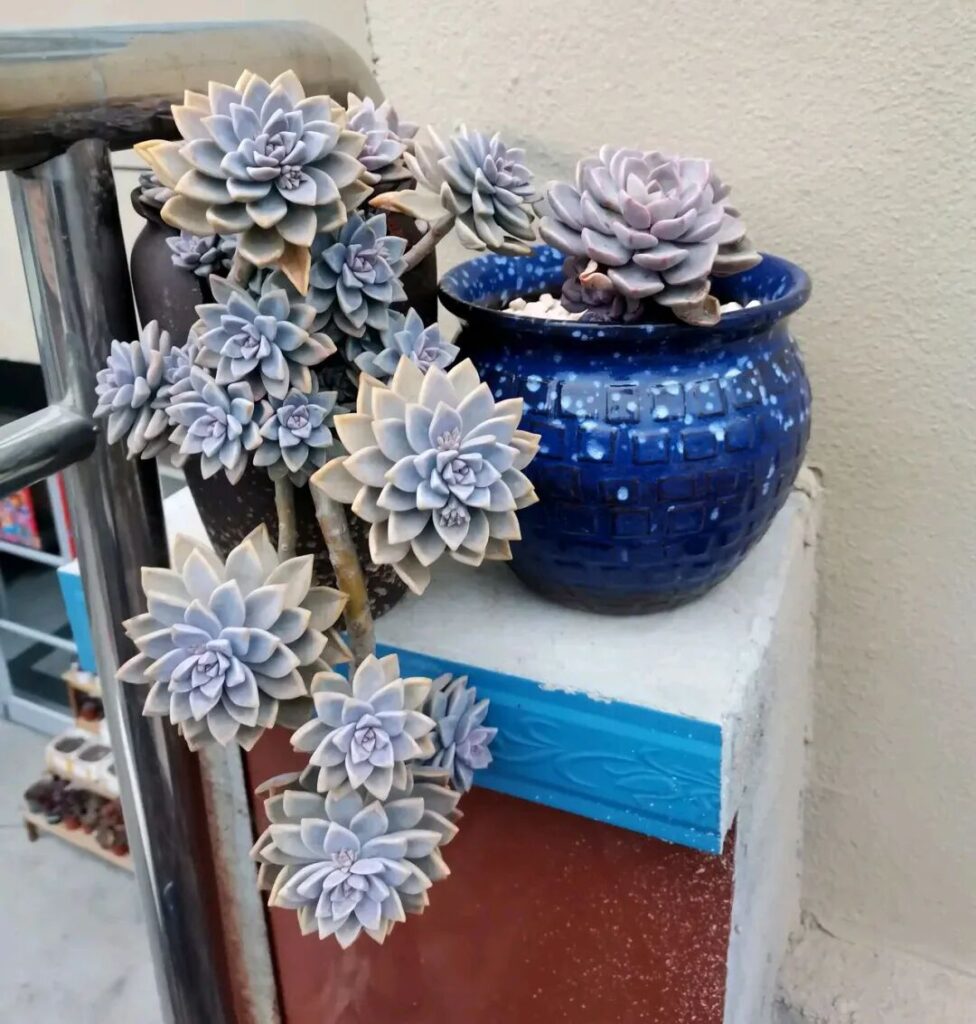
Often referred to by its dessert-inspired nickname, this plant develops a rich, translucent yellow-orange color when exposed to plenty of sunlight and cooler temperatures.
12. Green Rose
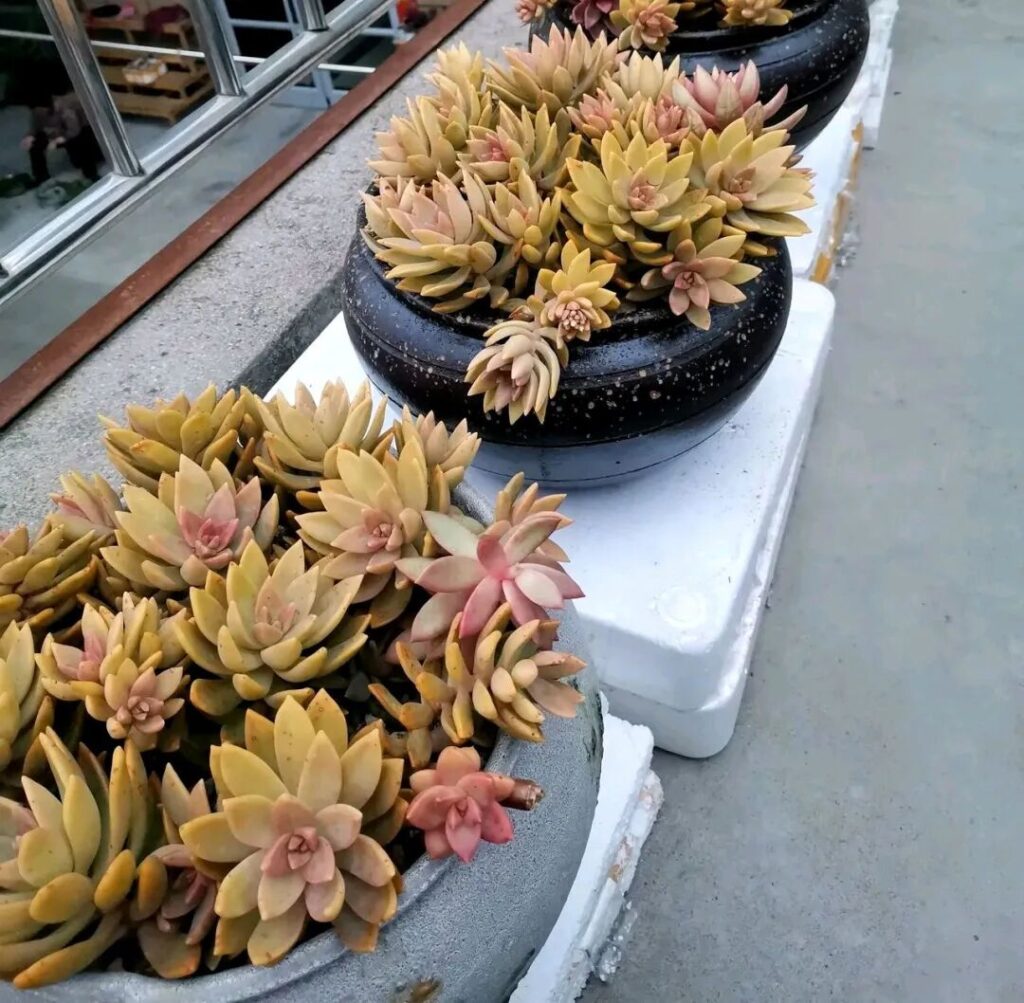
This variety maintains a fresh, bright green base color, with the very tips of the leaves blushing red when stressed by light or cold.
13. Marcus
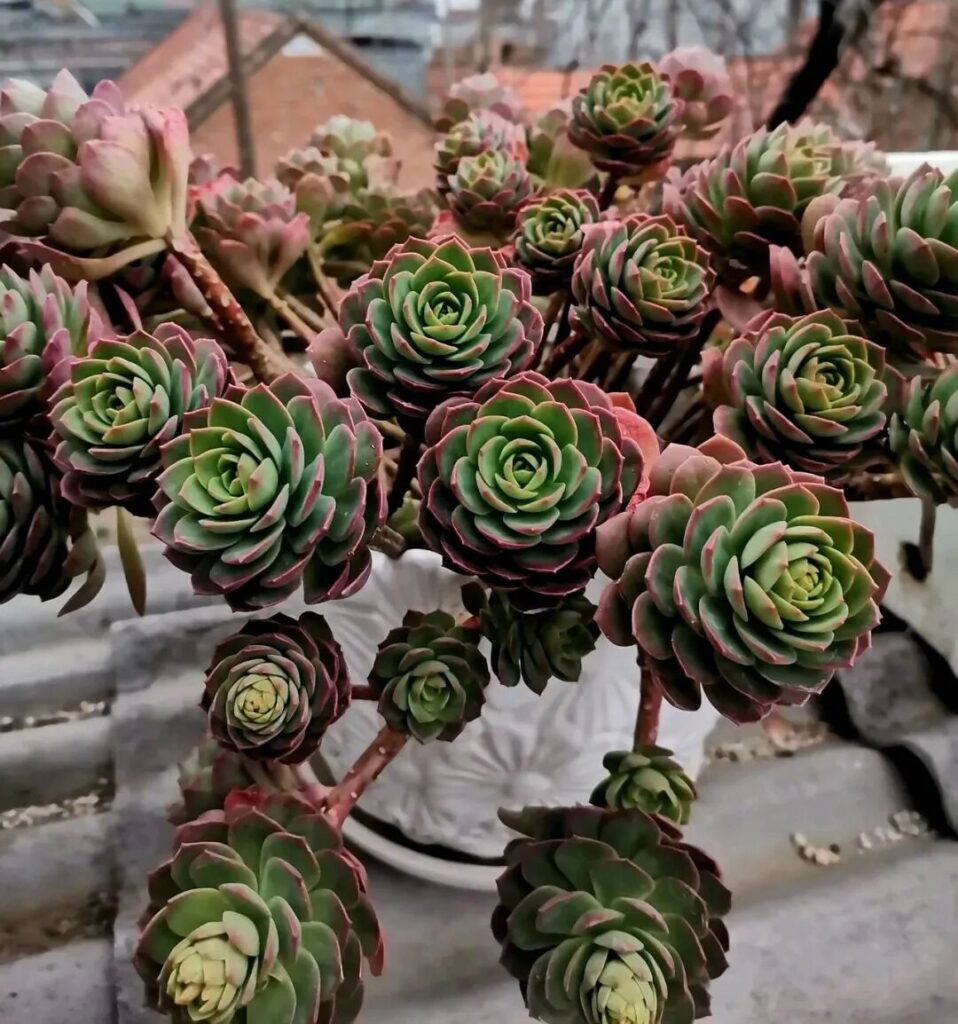
A small, incredibly hardy plant that multiplies quickly. It is very responsive to light, easily shifting from green to vibrant orange-red, making it a rewarding choice for new growers.
14. Opalina
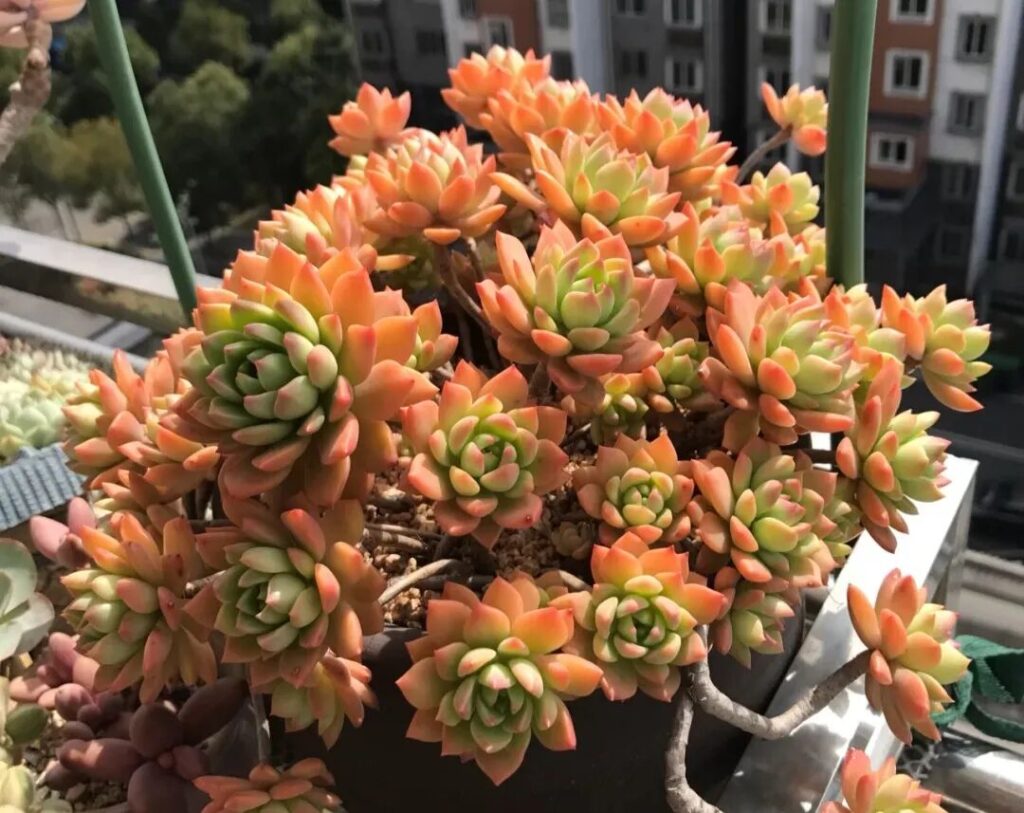
Known for its thick, powdery leaves, this plant usually appears dusty blue. Under optimal conditions, the blue base takes on beautiful shades of pink, red, or soft orange.
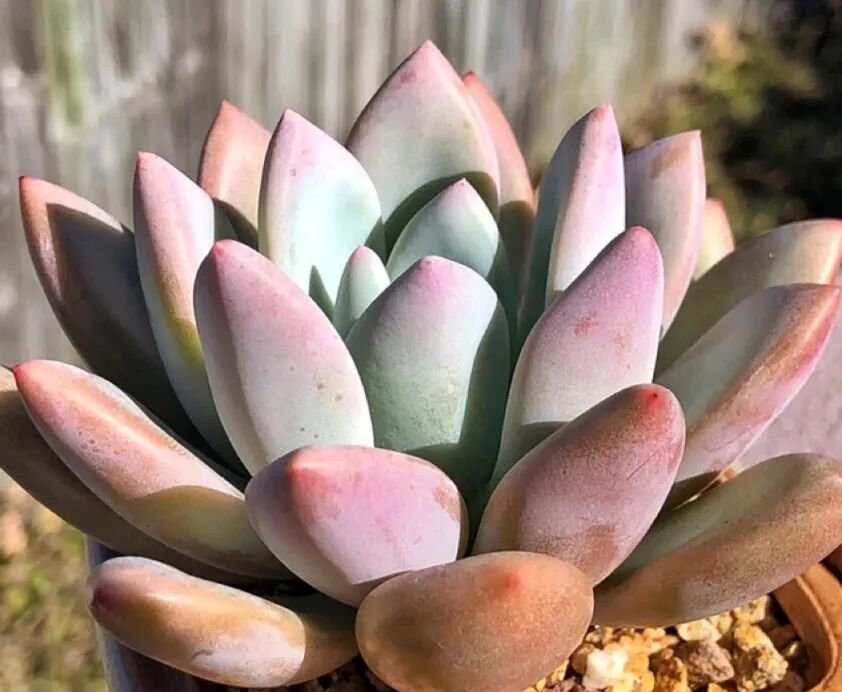
15. Mother of Thousands
If keeping plants alive is a struggle, this is the ultimate survivor. It requires almost no attention and adapts to extremely harsh conditions without failing.
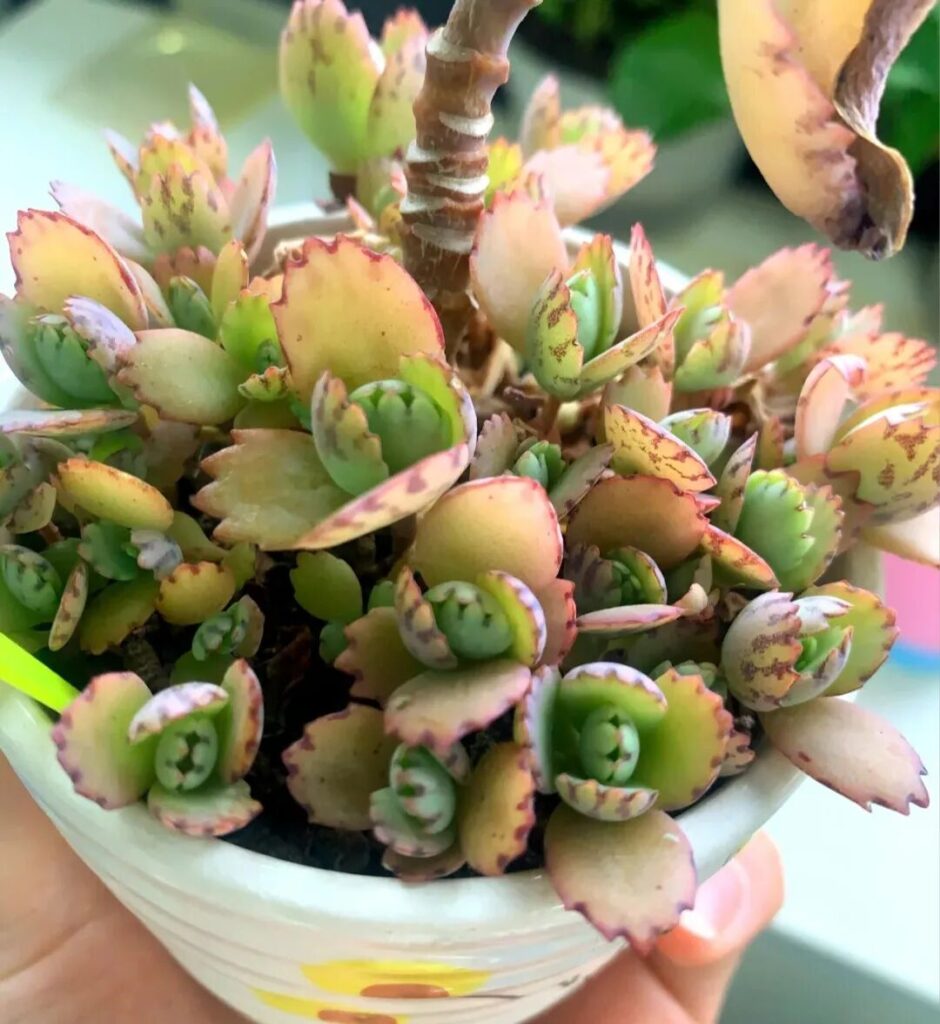
16. Variegated Mother of Thousands
Beyond the standard green version, colorful variegated types are also available. This plant reproduces rapidly by dropping tiny plantlets from its leaf margins, which root instantly upon touching the soil.
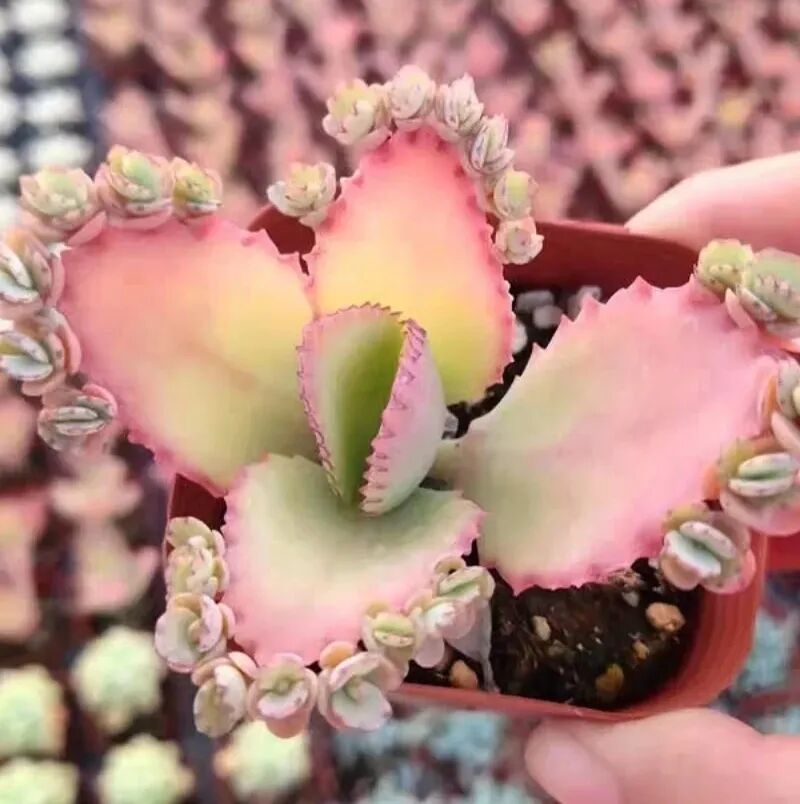
17. Firestorm
A long-standing favorite in the gardening community. While normally yellow-green, proper light exposure turns the leaves into a translucent, jelly-like golden color that is truly striking.
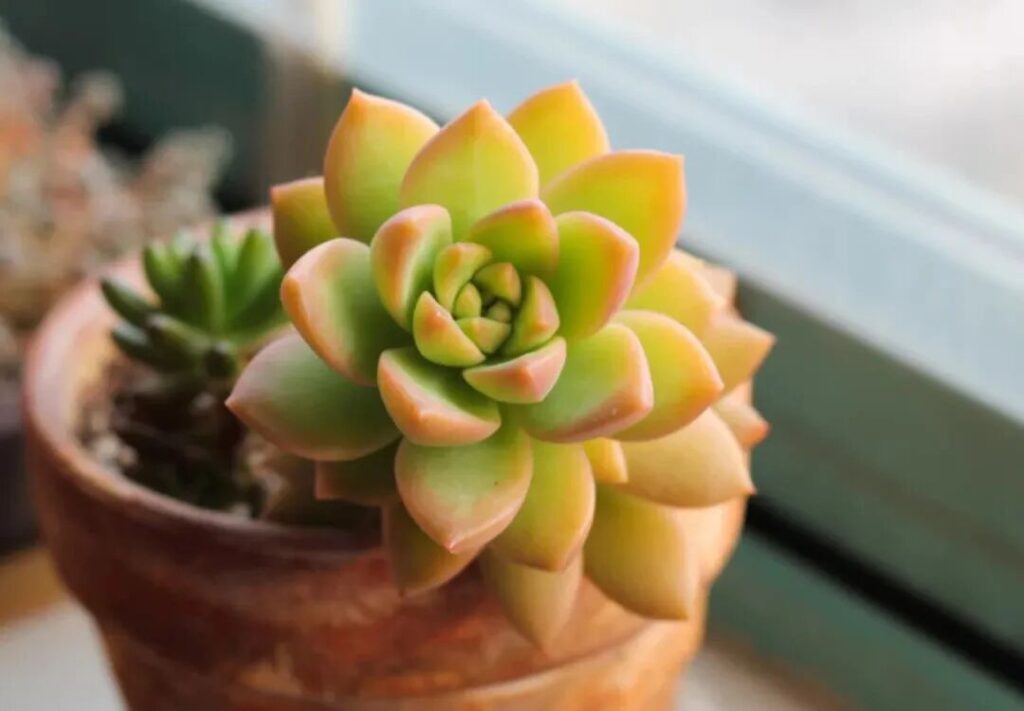
18. Winter Beauty
Part of the thick-leaf family, this plant often looks pale and dusty green. However, when properly stressed, it takes on a soft, misty pinkish-purple hue.
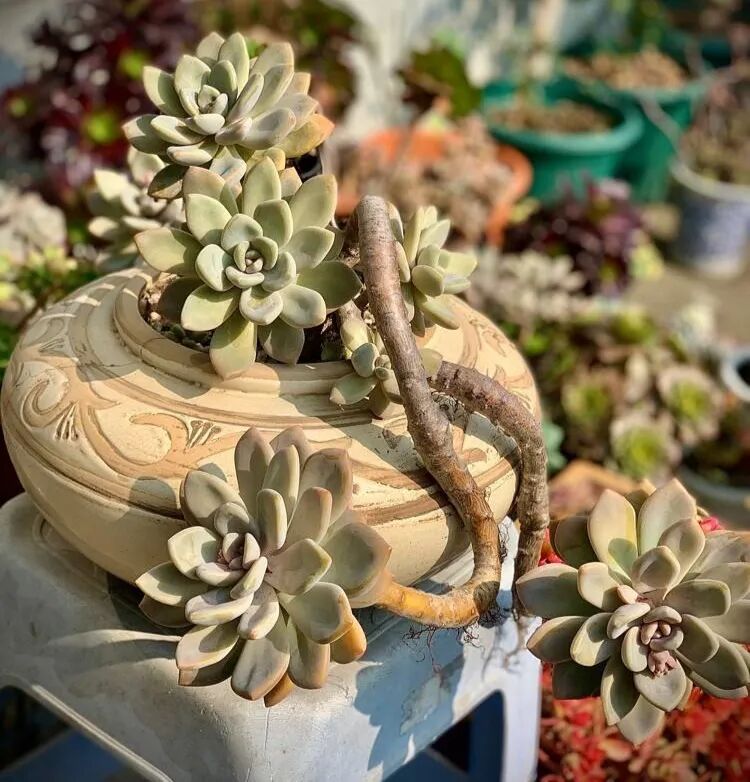
19. Letizia
This fast-growing plant easily forms large clusters. The leaves are typically dark green, but with enough sun, the edges turn a brilliant fiery red, creating a beautiful two-toned effect.
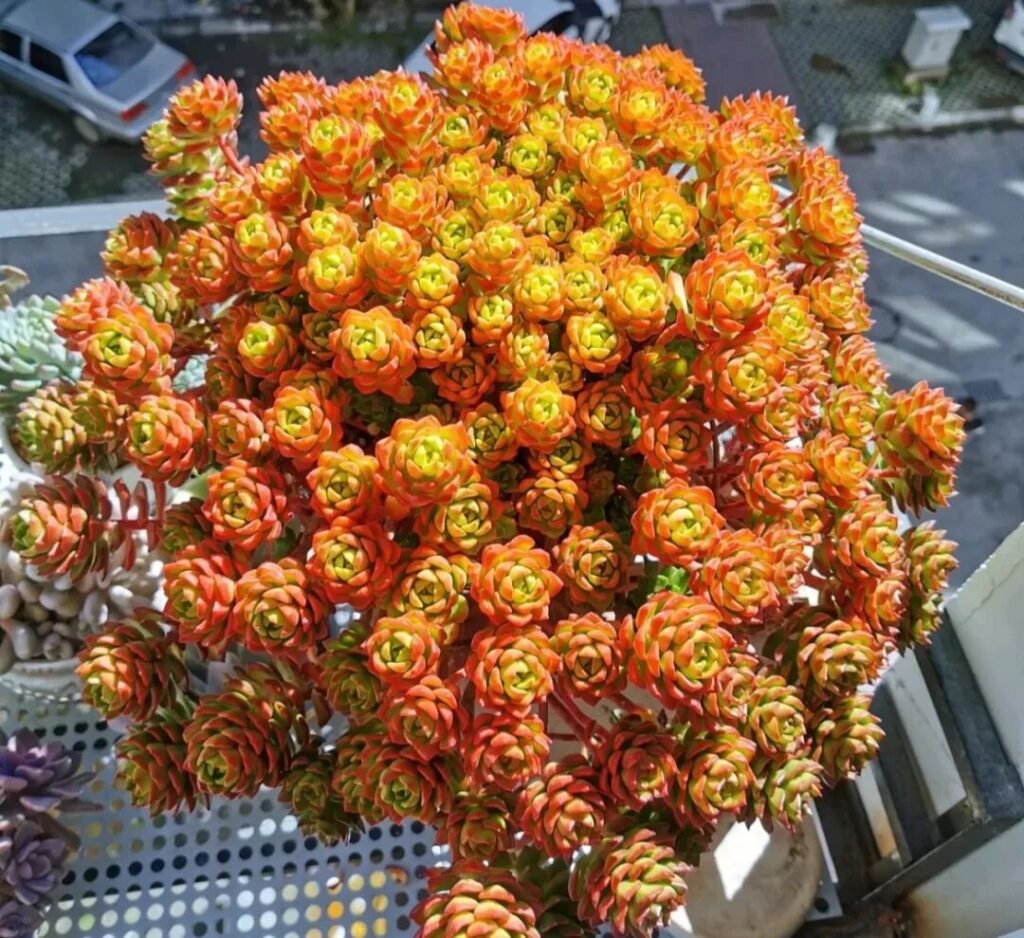
20. Ellen
Visually similar to the popular Moonstones, this variety is generally easier to care for and less prone to overwatering issues, making it a great alternative for achieving that chubby-leaf look.
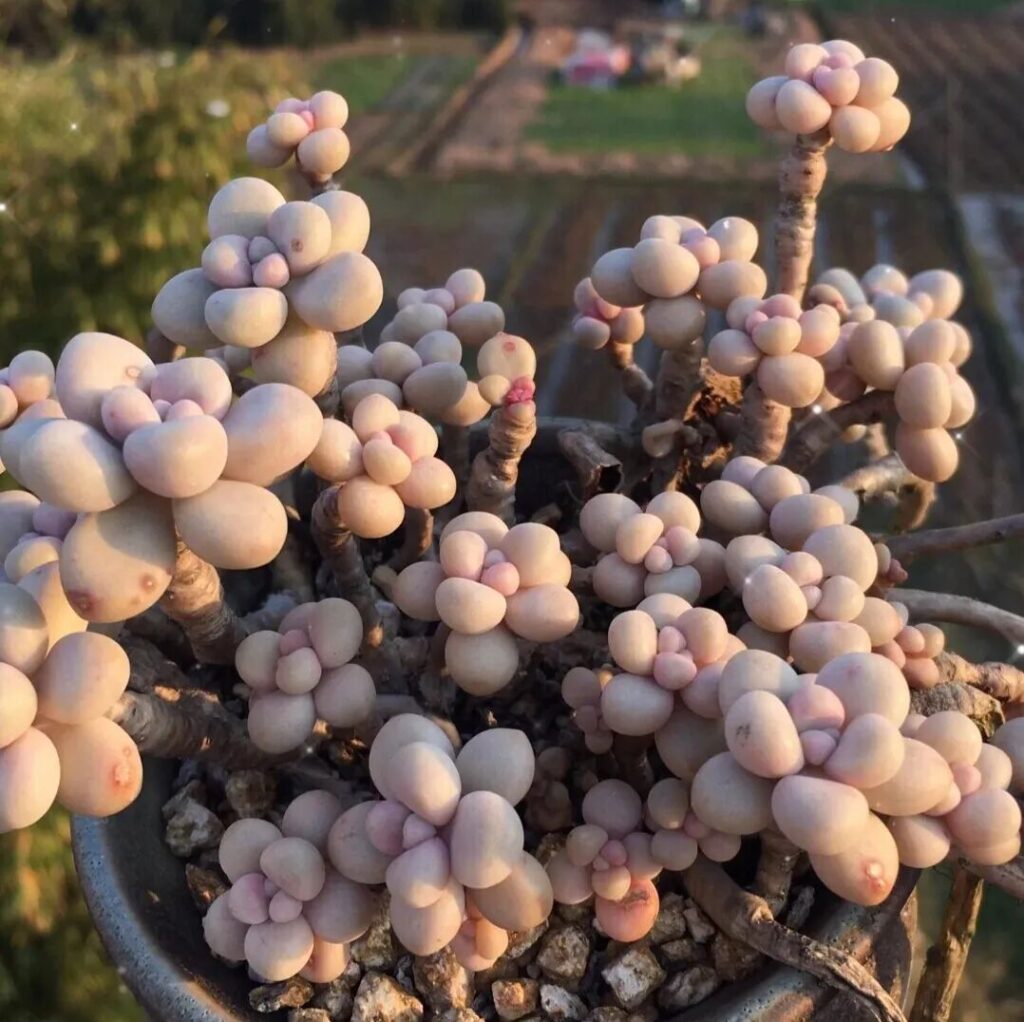
21. Bear’s Paw and 22. Variegated Bear’s Paw
Loved for its fuzzy leaves shaped exactly like animal paws, complete with dark red “claws” at the tips. The variegated version features creamy white stripes or patches mixed with the green.
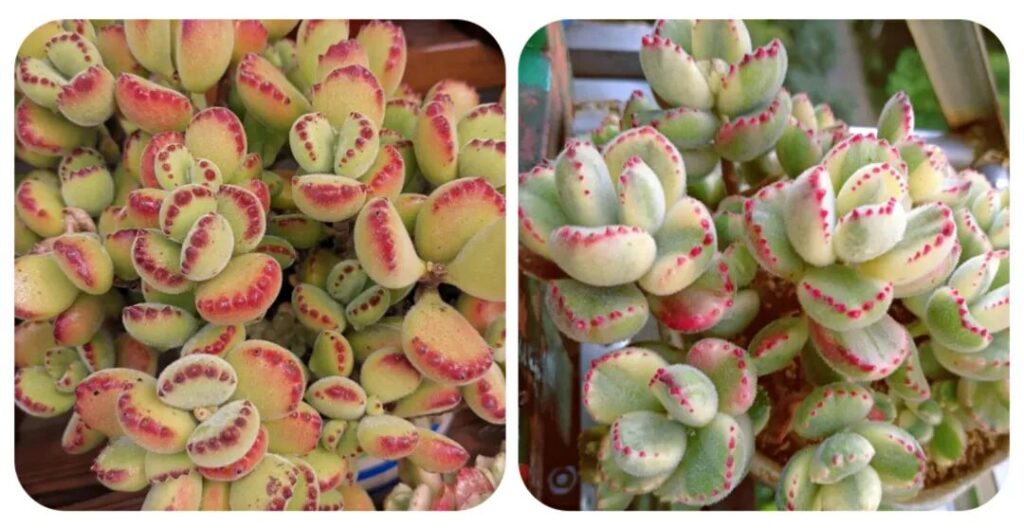
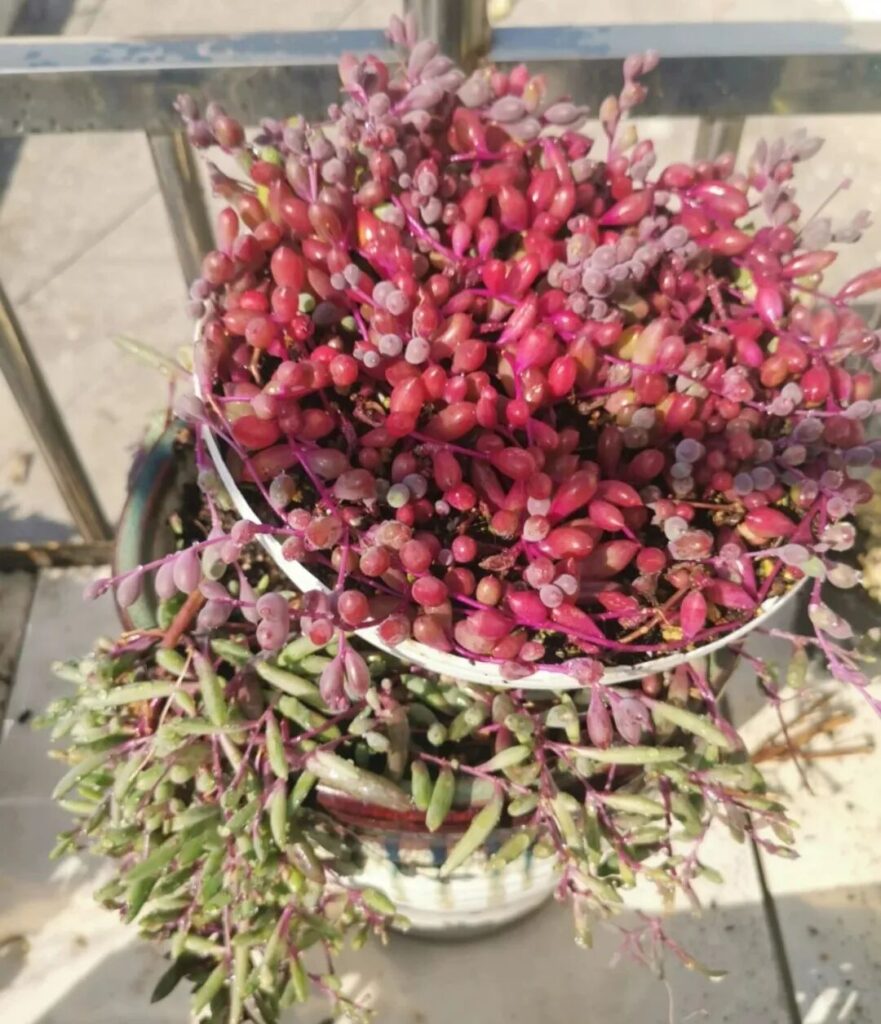
23. Ruby Necklace and 24. Round-Leaf Ruby Necklace
An excellent trailing plant that produces plump, bean-like leaves along purple stems. It looks beautiful hanging from a basket.
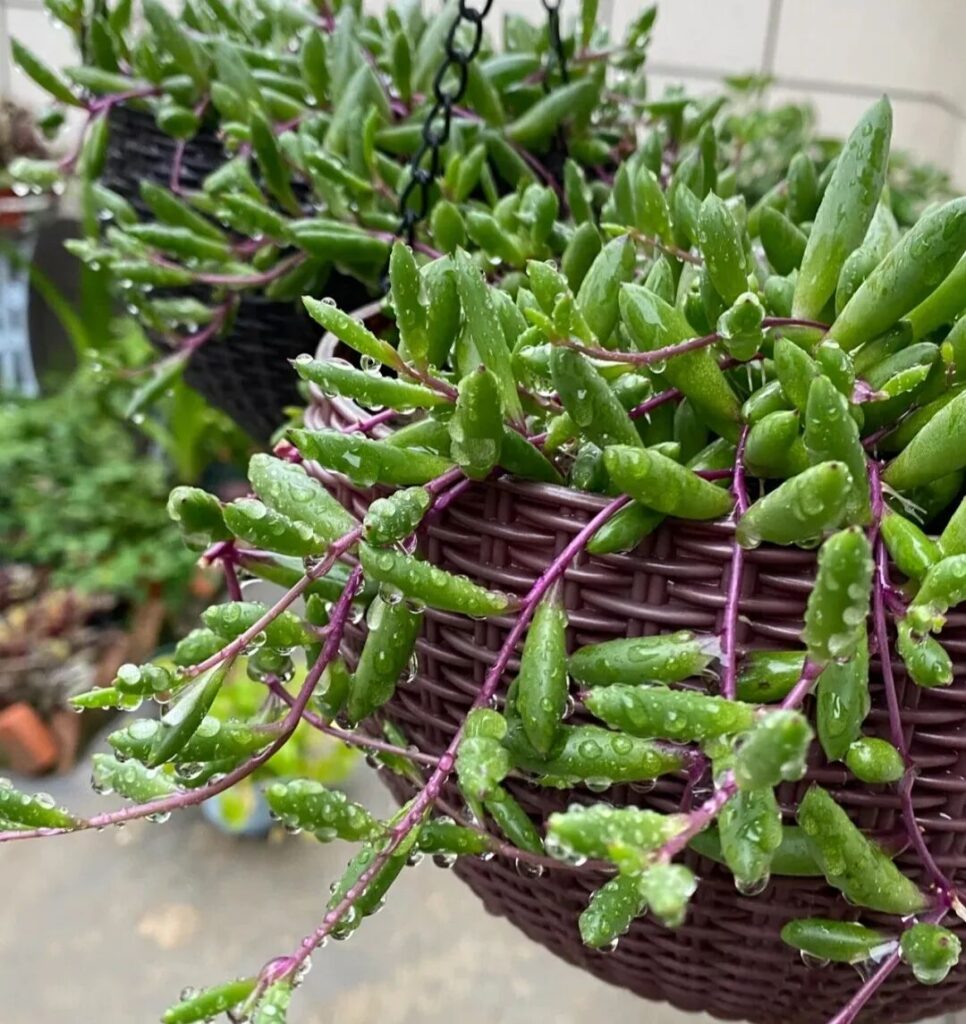
The round-leaf variation has shorter, more spherical leaves and tends to develop a deeper, richer purple color, offering an even more striking visual impact.
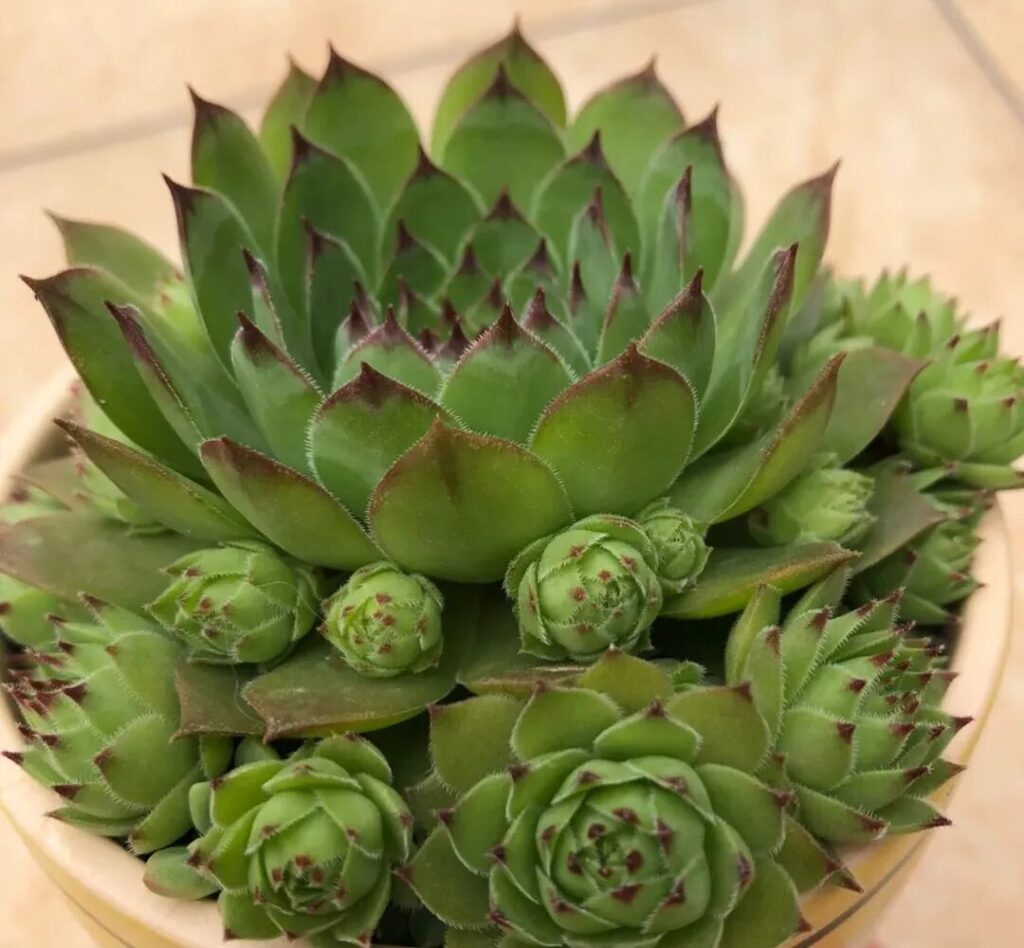
25. Hens and Chicks
True to its name, this plant forms a perfect, tight lotus shape. It readily produces offsets in a neat circle around the main rosette, creating a beautiful geometric cluster.
26. Chihuahuaensis
A compact rosette with a powdery blue-green base. When stressed, the leaf tips turn a sharp, deep red, resembling tiny painted claws.
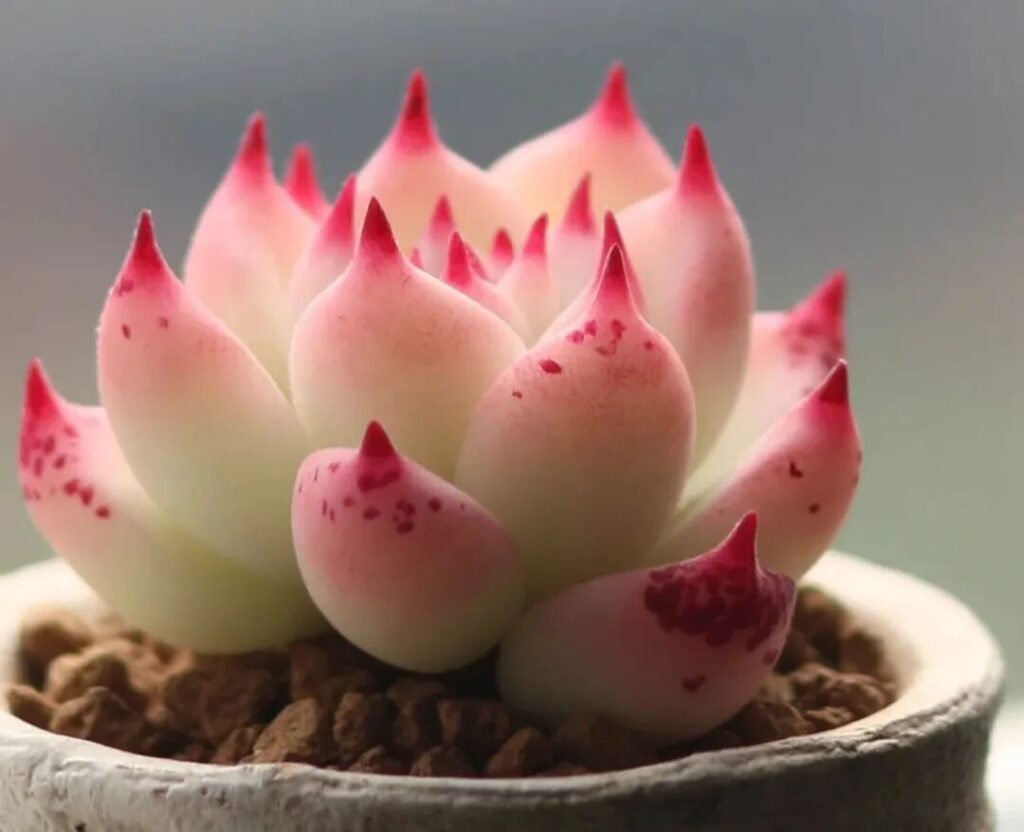
27. Luoshen
When this plant reaches its peak coloration, it displays a stunning, soft pastel pink that looks incredibly elegant and delicate.
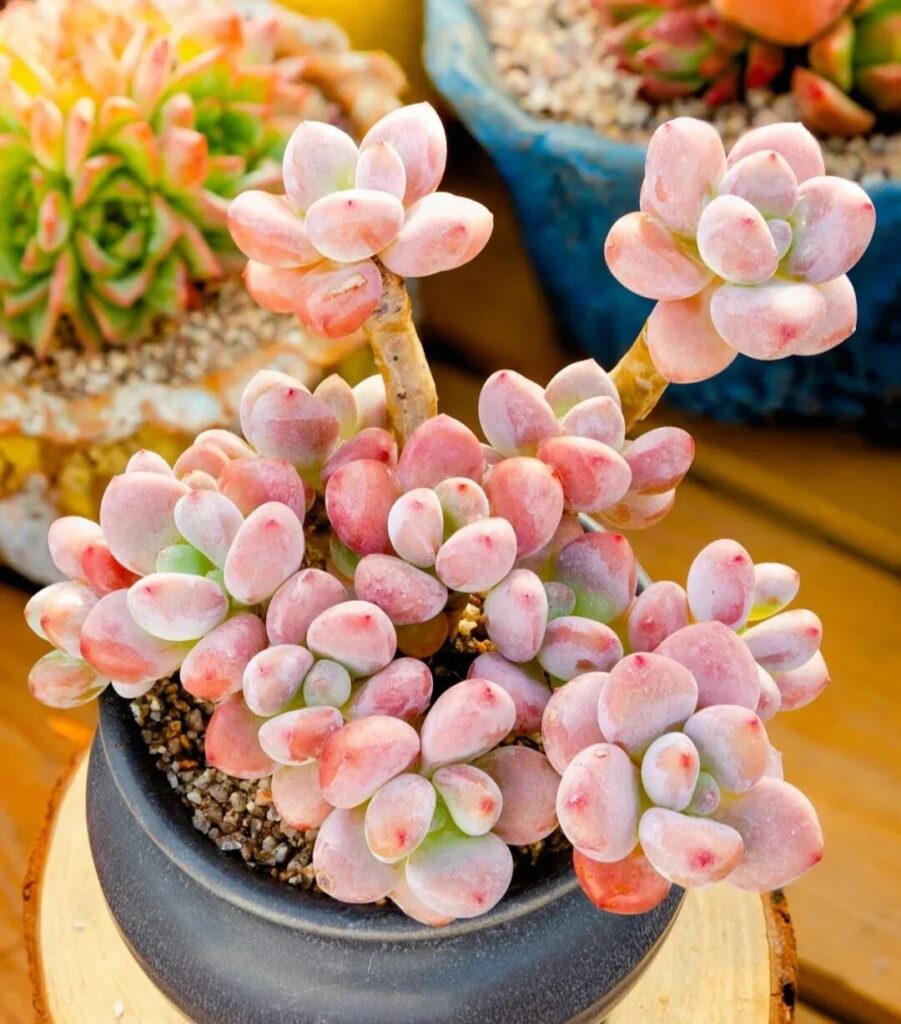
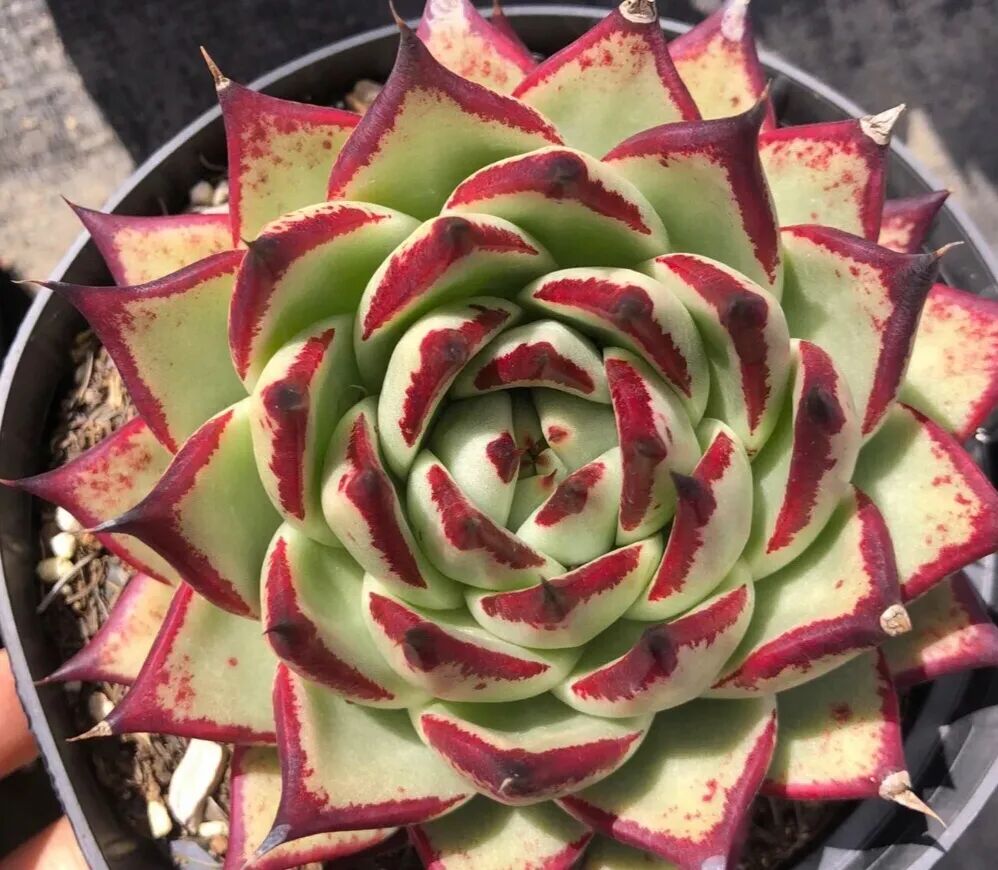
28. Ebony
A bold, architectural plant that can grow quite large. Its sharp leaves feature striking dark red to nearly black edges, giving it a strong visual presence.
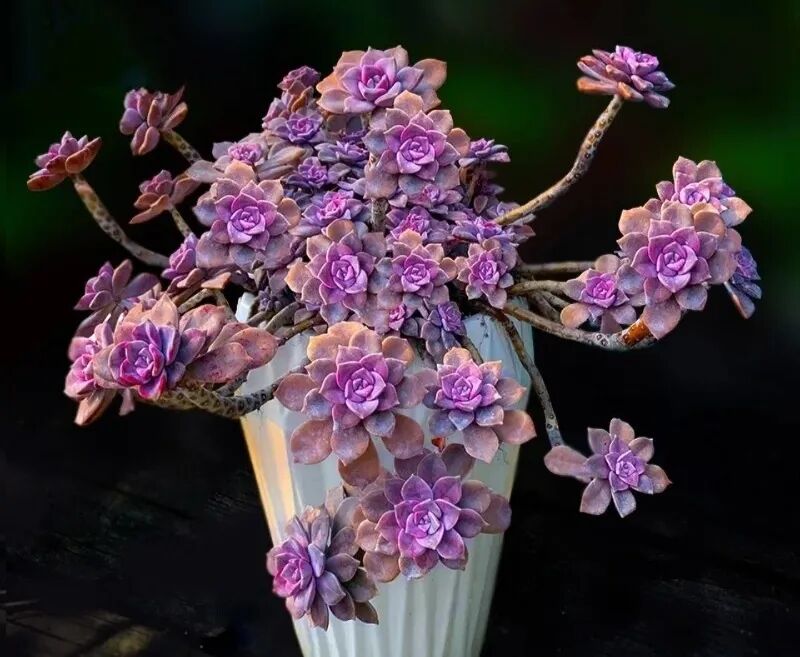
29. Purple Delight
Starting out green, this plant gradually shifts to a deep, mottled purple. It is highly resilient and an excellent starting point for those who love purple foliage.
30. Ice Green
This variety features thick, angular leaves with a translucent quality. When stressed, it takes on a pale, icy hue that resembles polished jade.
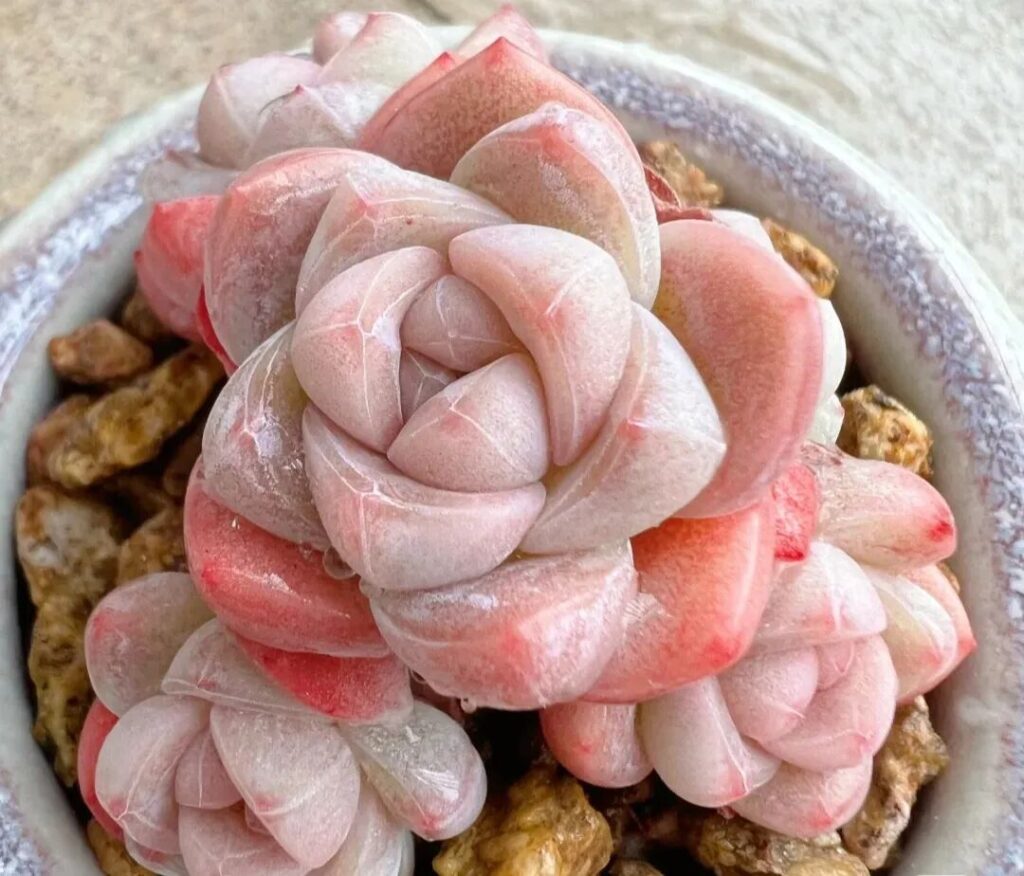
31. Moonstones and 32. Peach Beauty
Moonstones are famous for their perfectly round, pastel-pink leaves. Peach Beauty is very similar but has slightly longer leaves with a more defined tip.
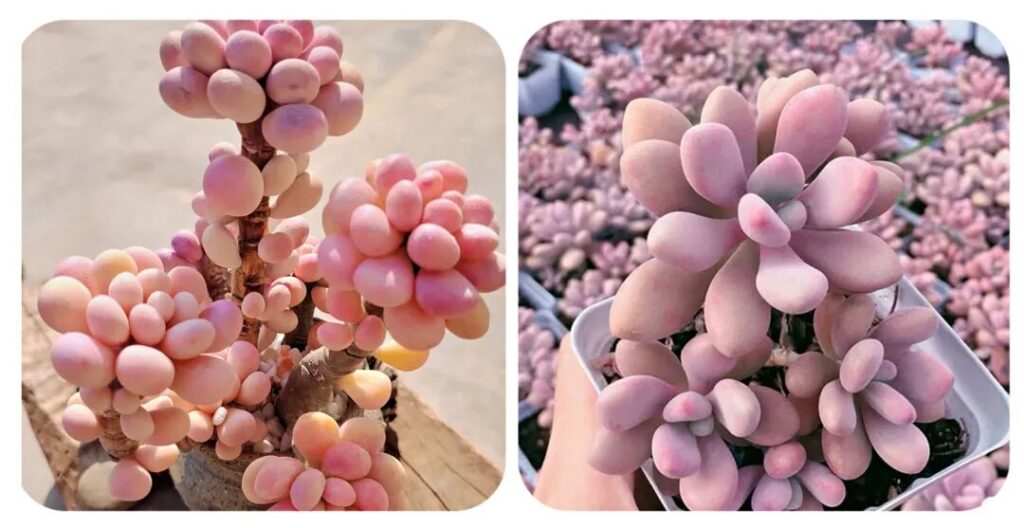
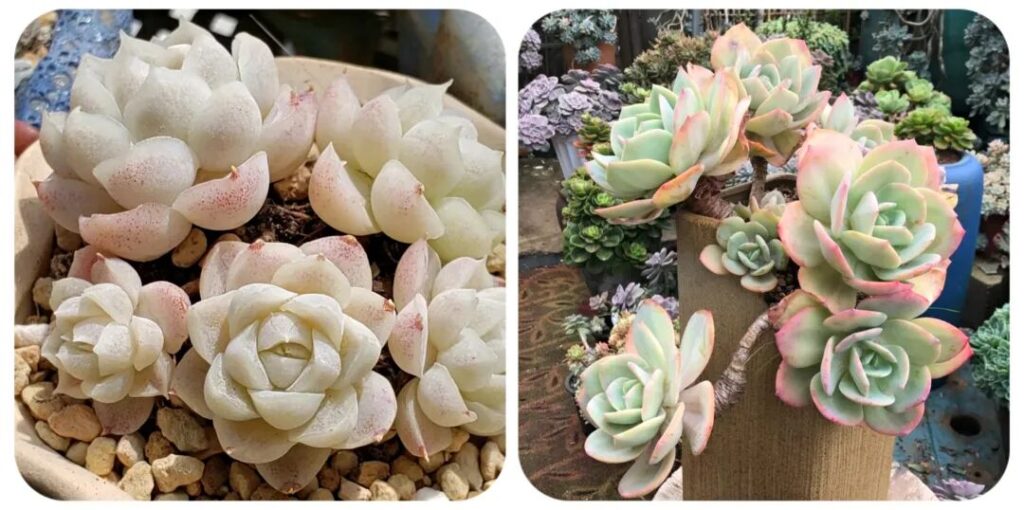
33. Mexican Snowball and 34. Hakuhou
While both have pale, powdery leaves, their growth habits differ greatly. The Mexican Snowball stays small and compact, whereas Hakuhou grows into a large, broad rosette.
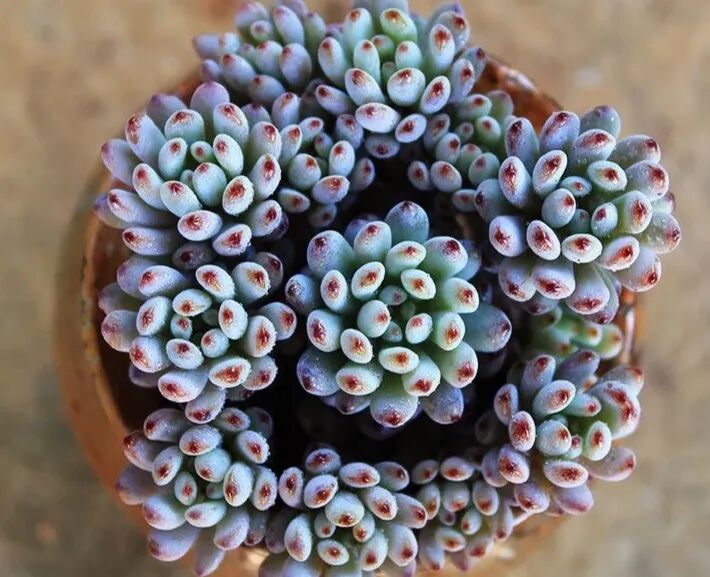
35. Blue Bean
This plant produces tiny, spherical blue-green leaves that grow in tight clusters. The very tips of the leaves feature dark, contrasting dots.
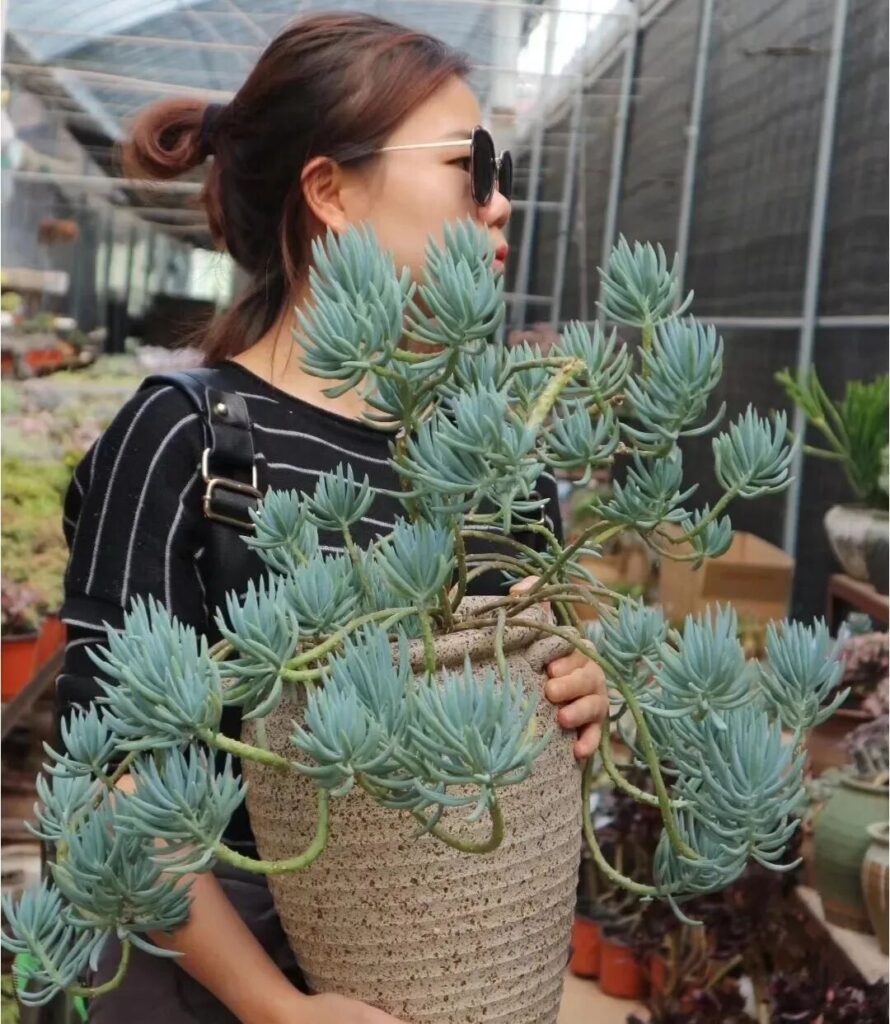
36. Blue Chalksticks
Unlike typical rosette shapes, this plant has long, cylindrical blue leaves. It is highly tolerant of heavy rainfall and humidity, making it great for outdoor beds.
37. Star Shadow and 38. Orange Monroe
Star Shadow develops a translucent, pale orange-red tint. Orange Monroe, while similar in name, has wider leaves, a larger overall shape, and a softer powdery finish.
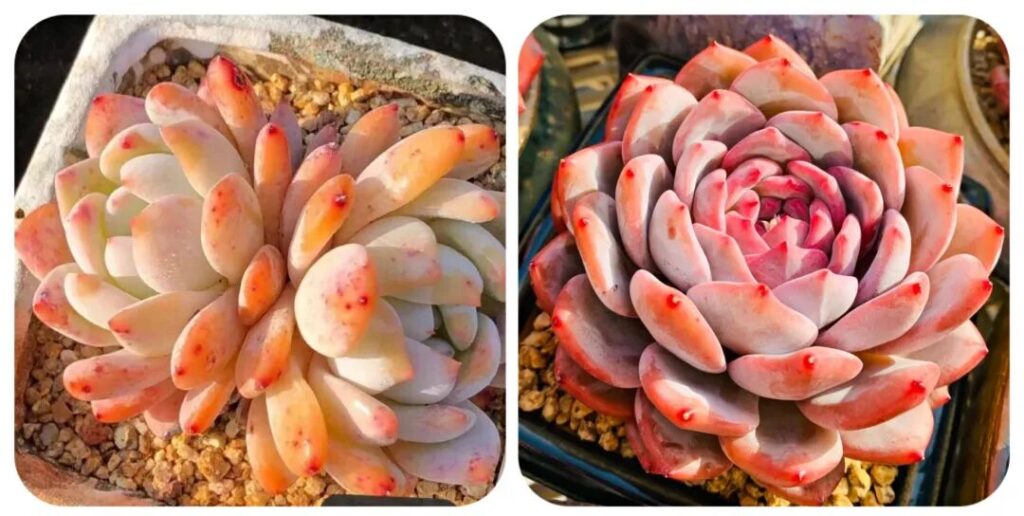
39. String of Buttons and 40. Baby’s Necklace
These two stacked varieties look incredibly similar. However, Baby’s Necklace generally has slightly larger, more pointed leaves compared to the tightly stacked String of Buttons.
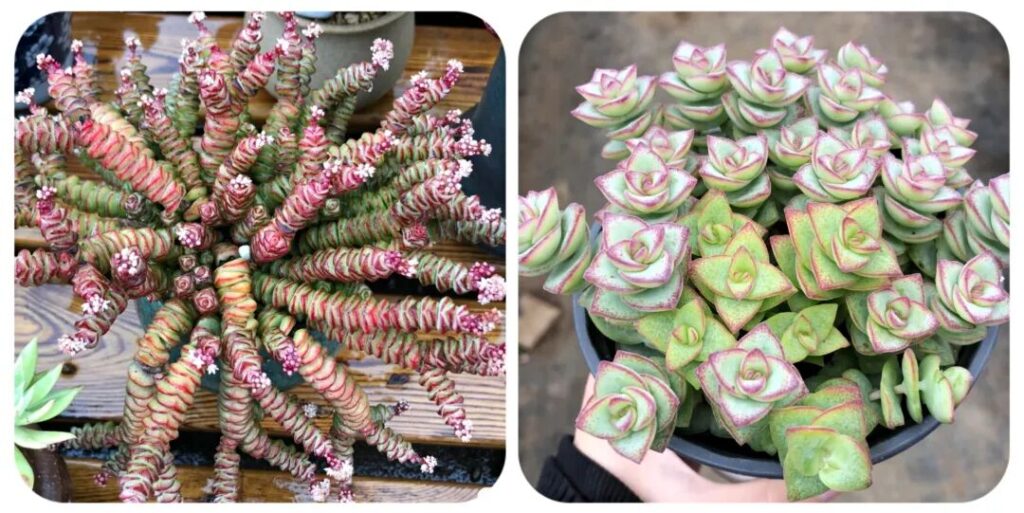
41. Campfire and 42. Red Pagoda
Planted together, the differences become clear. Campfire has larger leaves that turn bright, fiery red, while Red Pagoda features narrower, sharper leaves with a darker, brownish-red tone.
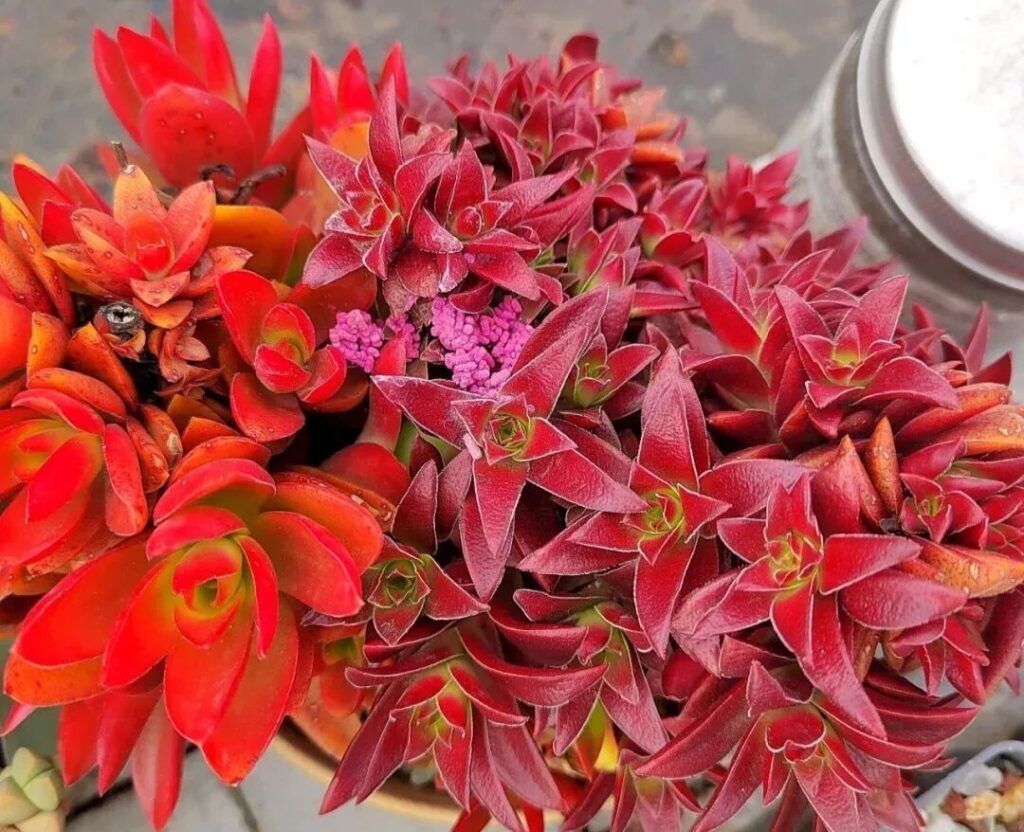
43. String of Pearls and 44. String of Tears
Both are excellent trailing plants. String of Pearls has perfectly spherical leaves, while String of Tears features slightly elongated, teardrop-shaped foliage.
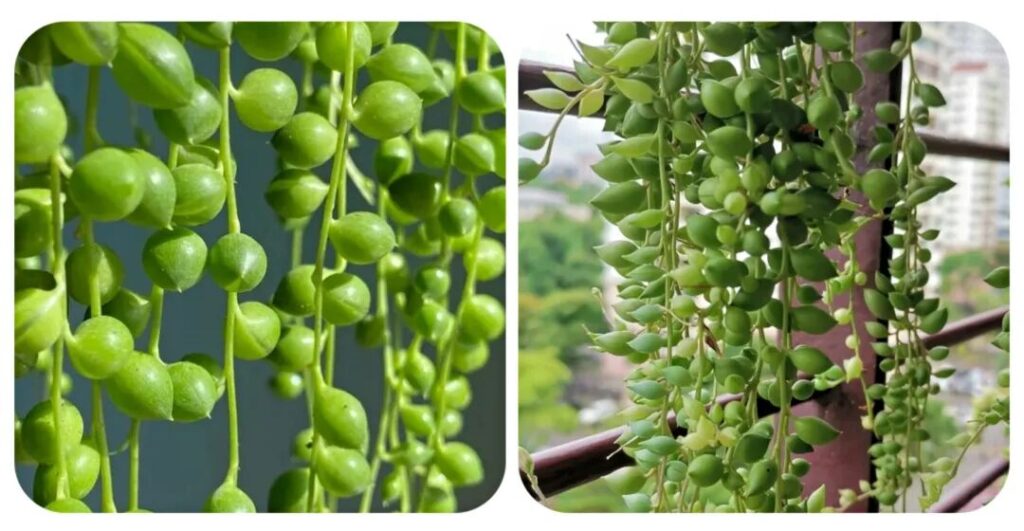
45. Jade Butterfly
This is the unstressed, blue-green state of the Ice Green variety mentioned earlier. With proper light and temperature drops, it will transition to its famous translucent pink.
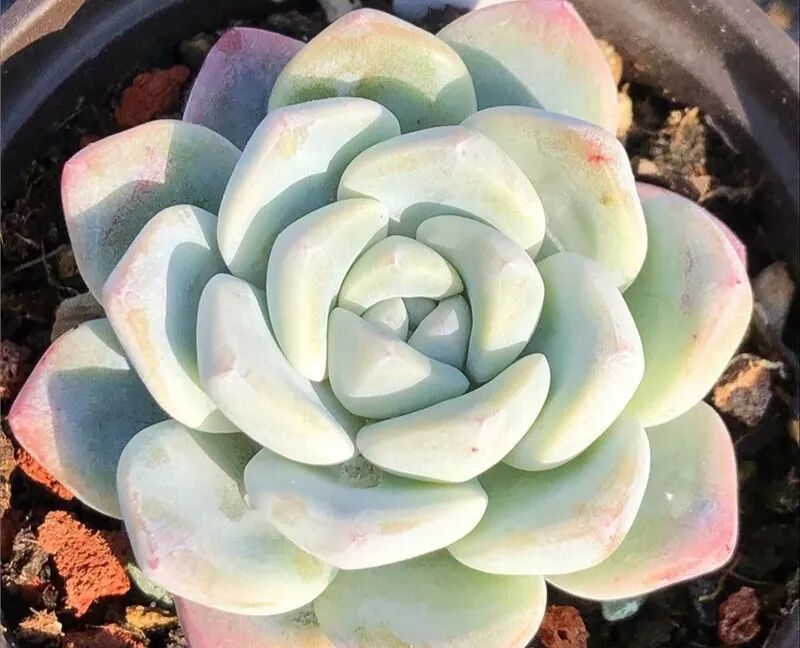
46. Frank Reinelt
A medium-to-large variety with smooth, pointed leaves that turn a glossy, deep red when exposed to strong sunlight.
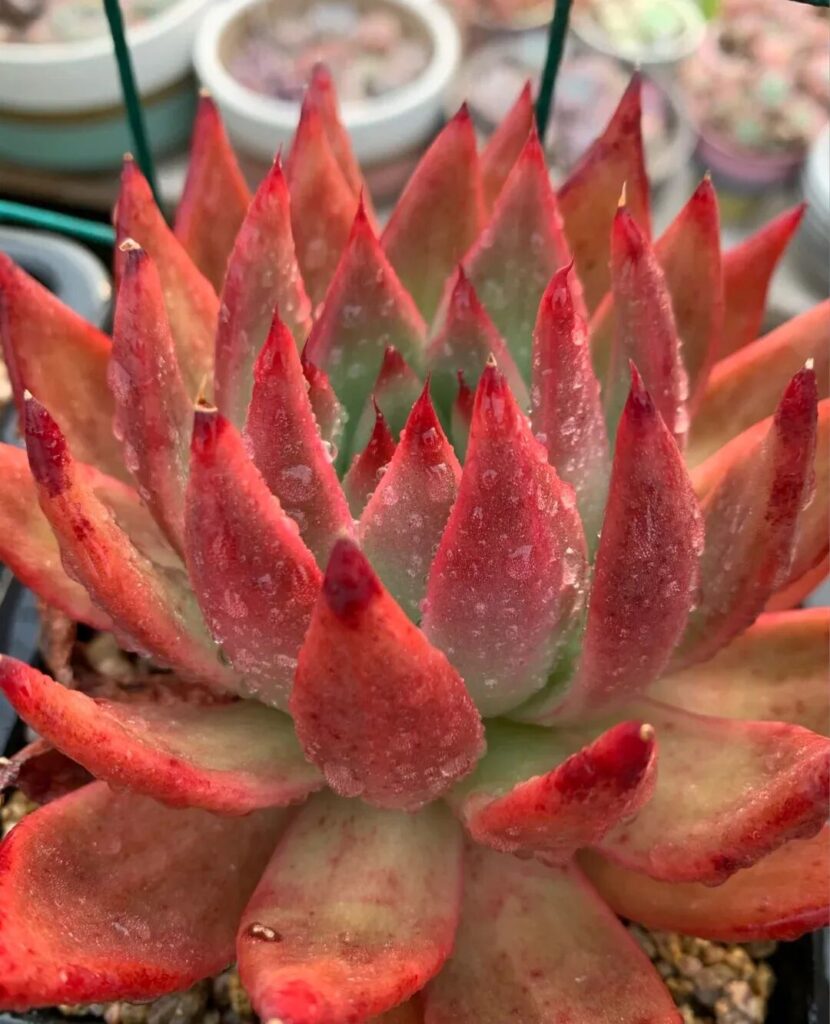
47. String of Hearts
A delicate trailing plant featuring thin vines covered in fleshy, perfectly heart-shaped leaves with intricate silver mottling.
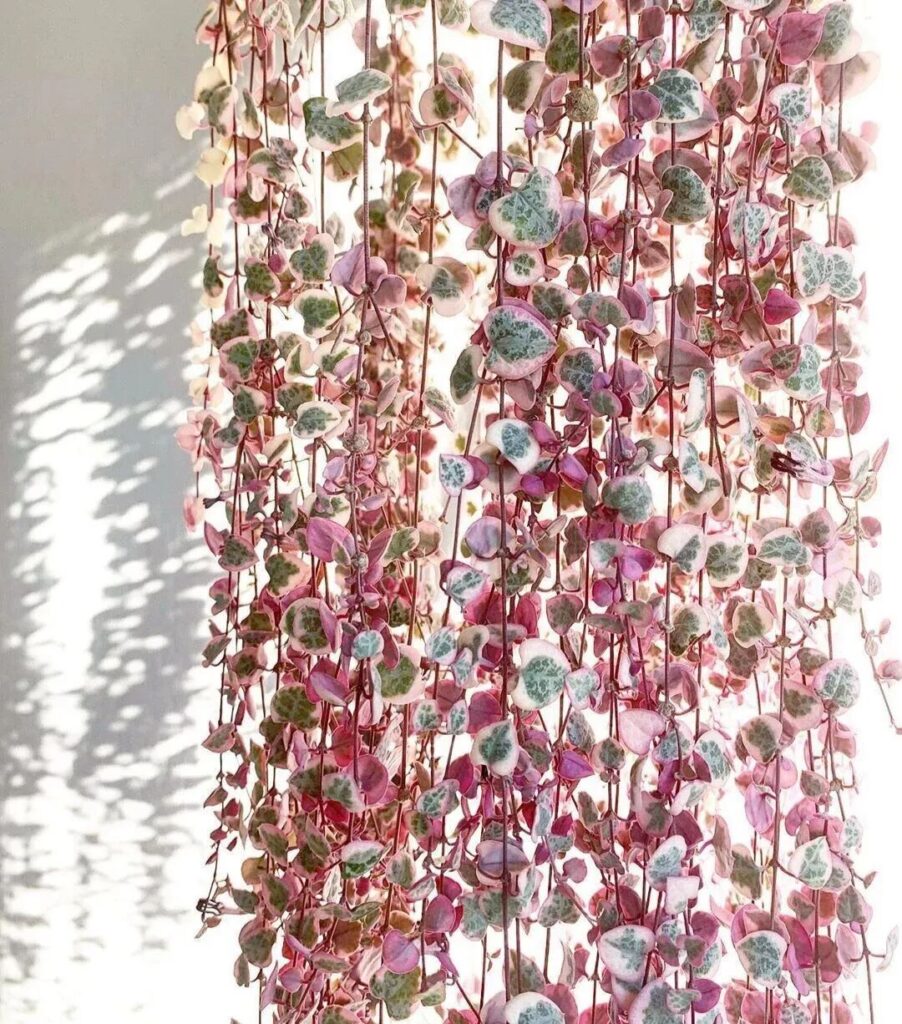
48. Blue Bird
This elegant rosette features pale blue leaves covered in a thick layer of white farina (powder), giving it a soft, frosted appearance.
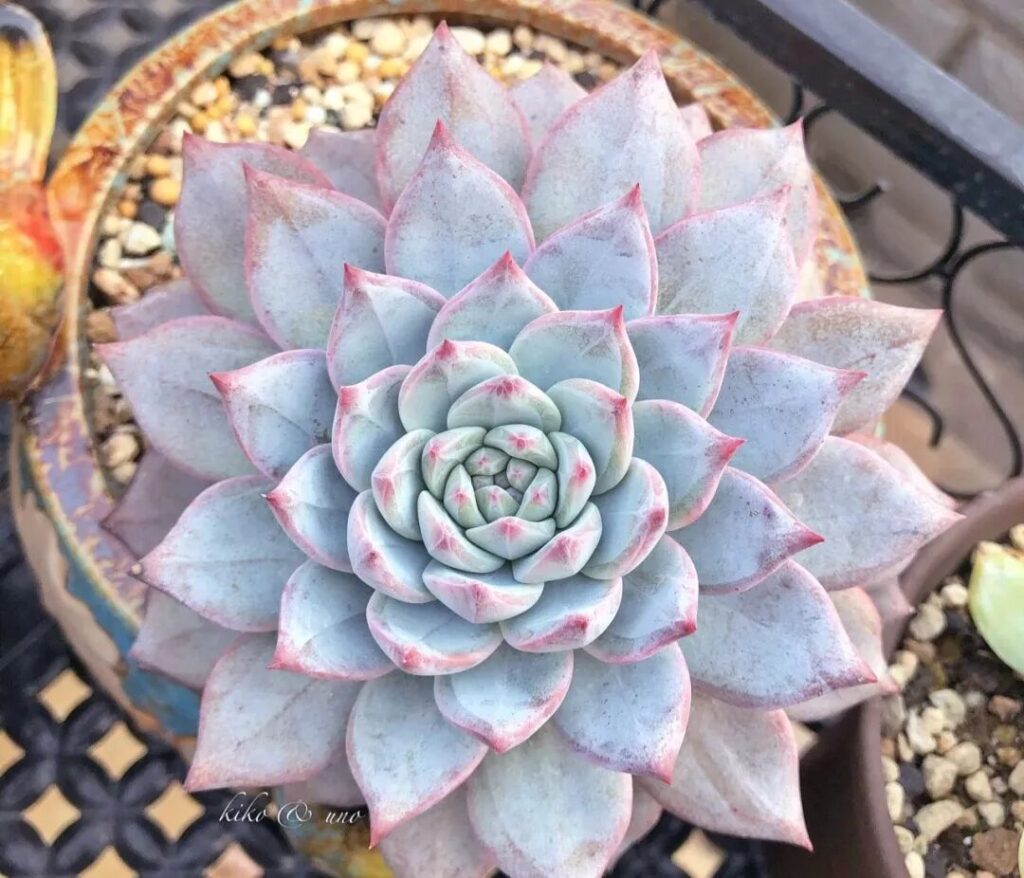
49. Salad Bowl
A relatively rare and visually striking hybrid. It forms dense, textured rosettes that look fantastic in decorative containers.
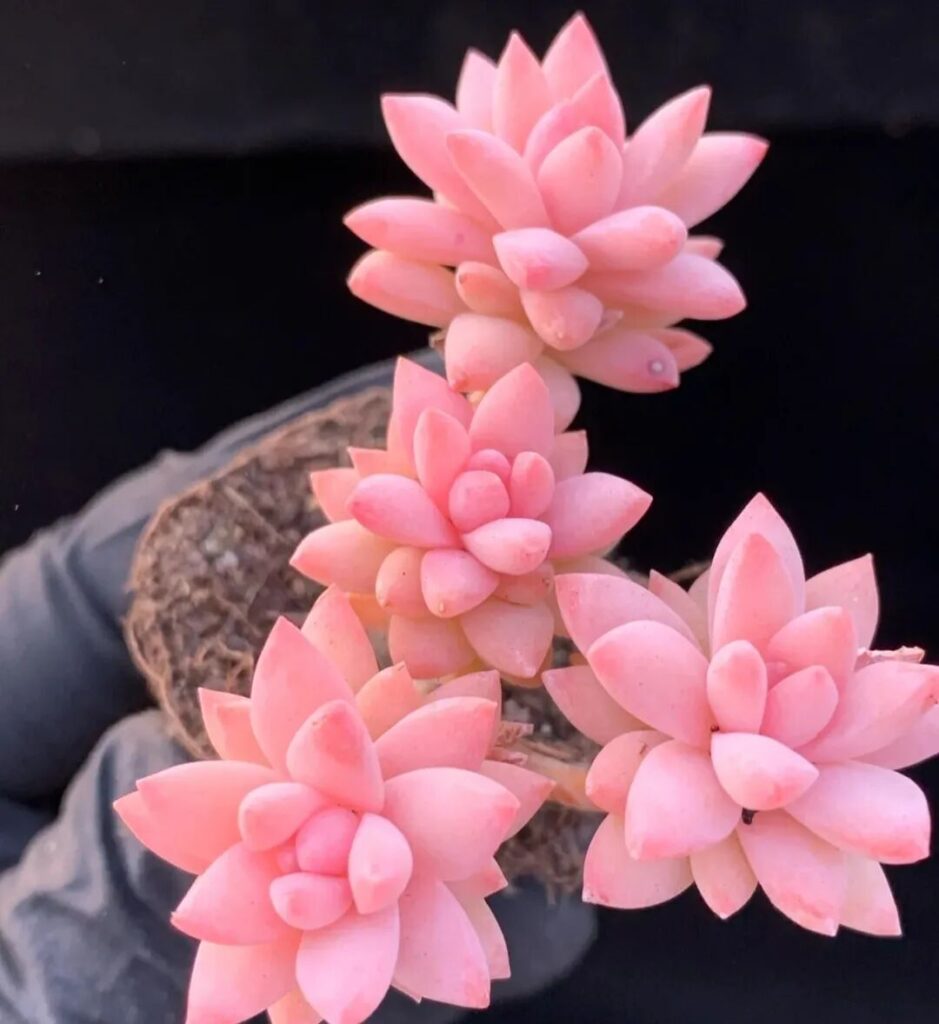
50. Dark Autumn Joy
This is an example of the Autumn Joy variety pushed to its absolute limit with sun stress, resulting in a deep, almost black-red coloration.
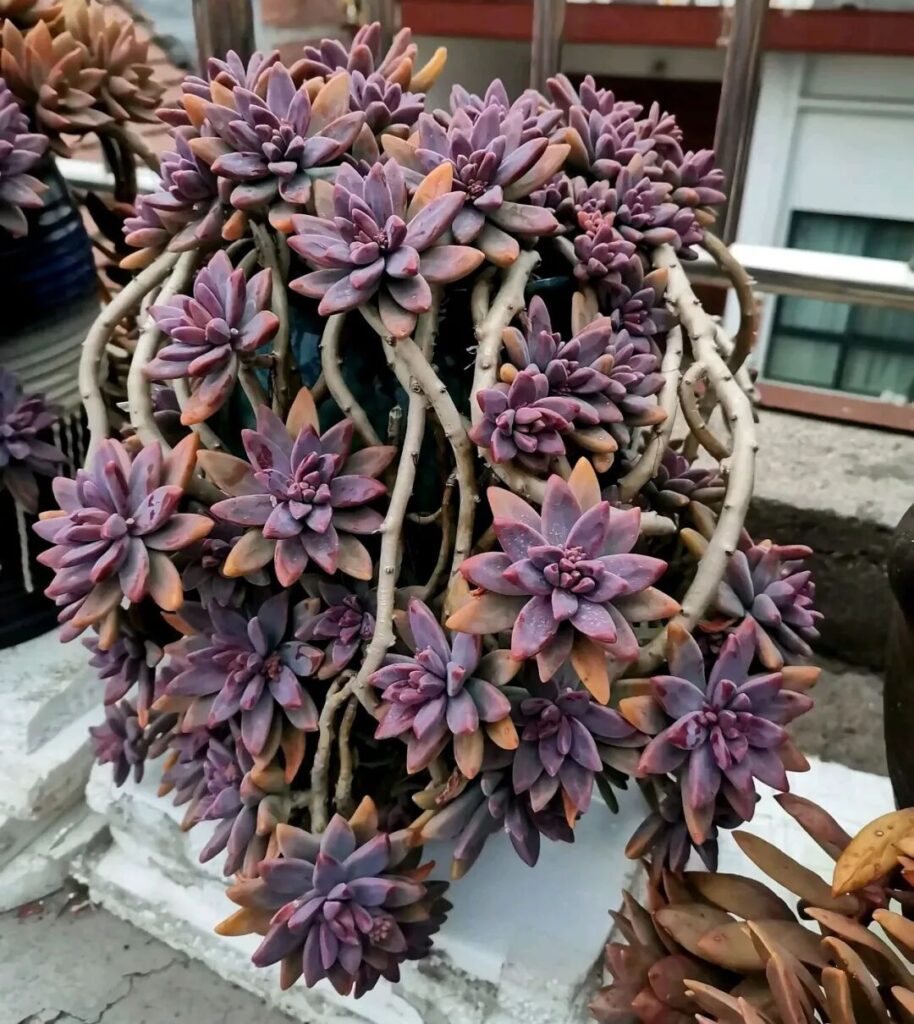
51. Palm-leaf Oxalis
Grown primarily for its unique foliage, this plant produces tightly packed, fan-like leaves that resemble the spread tail of a peacock.
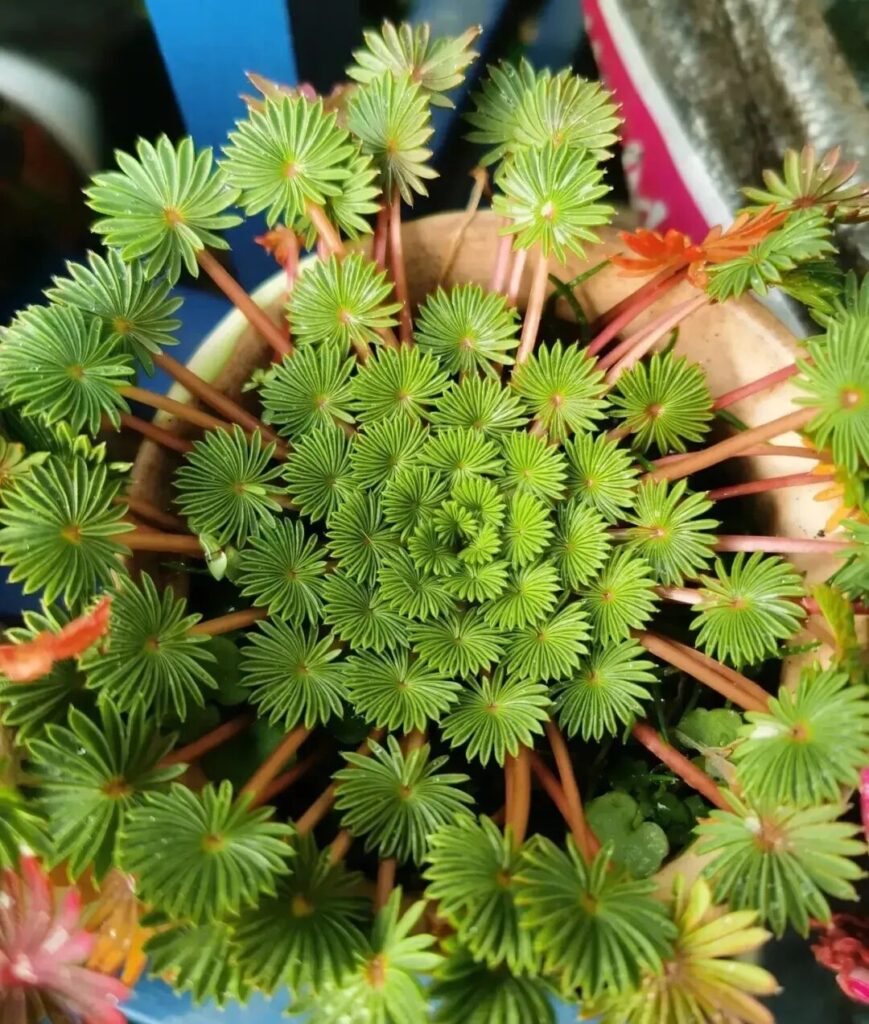
52. Black Rose and 53. Purple Fleece
These belong to a large family of tree-like succulents. The Black Rose features dark, glossy rosettes, while other variations offer different textures and purple hues.
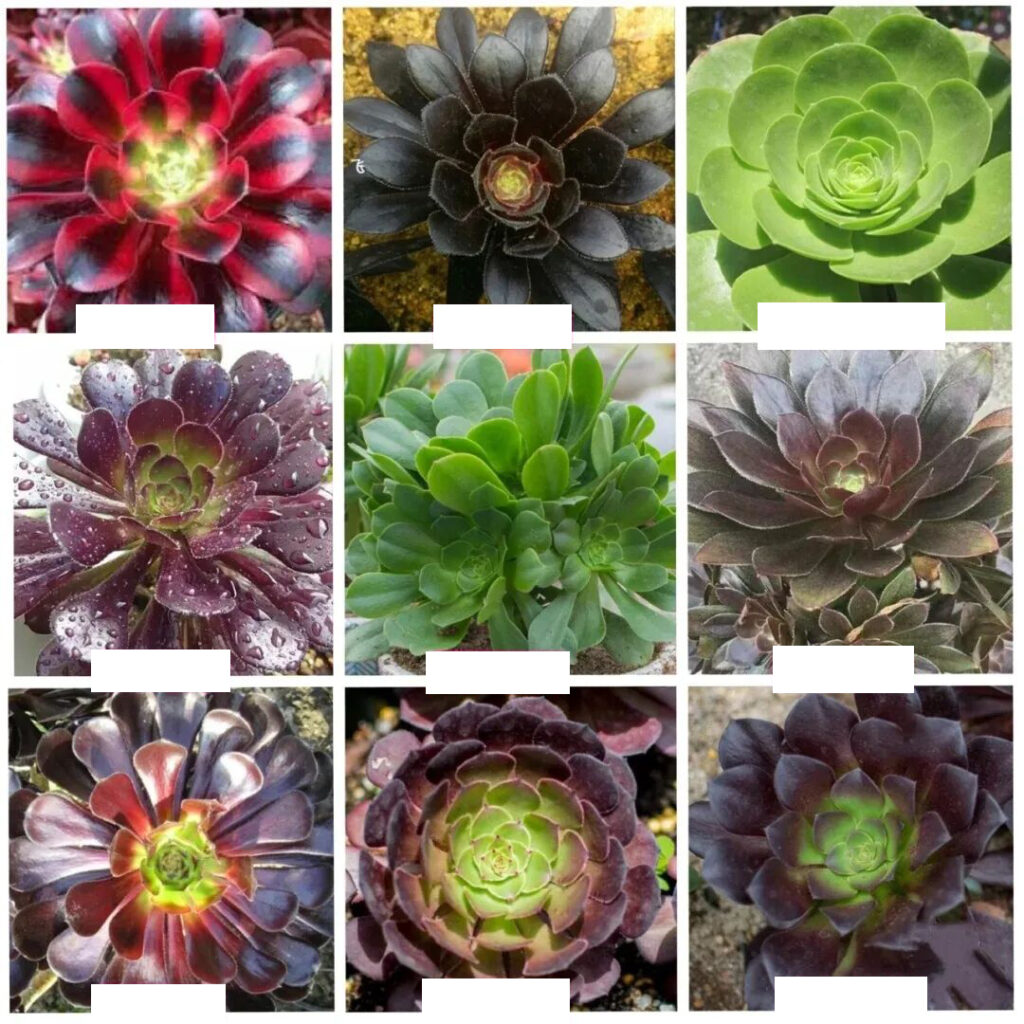
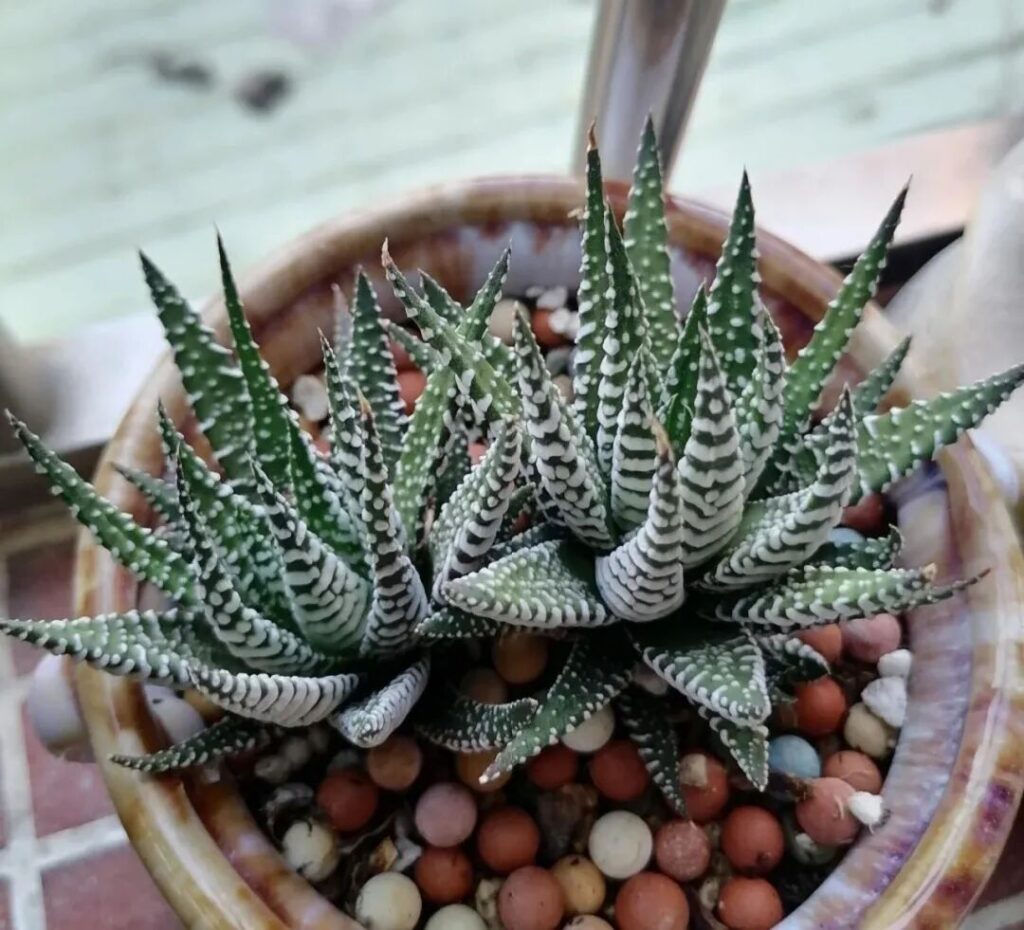
54. Zebra Plant
Resembling a small aloe, this tough plant is distinguished by the raised, bright white horizontal stripes across the dark green backs of its leaves.
55. Aloe Vera
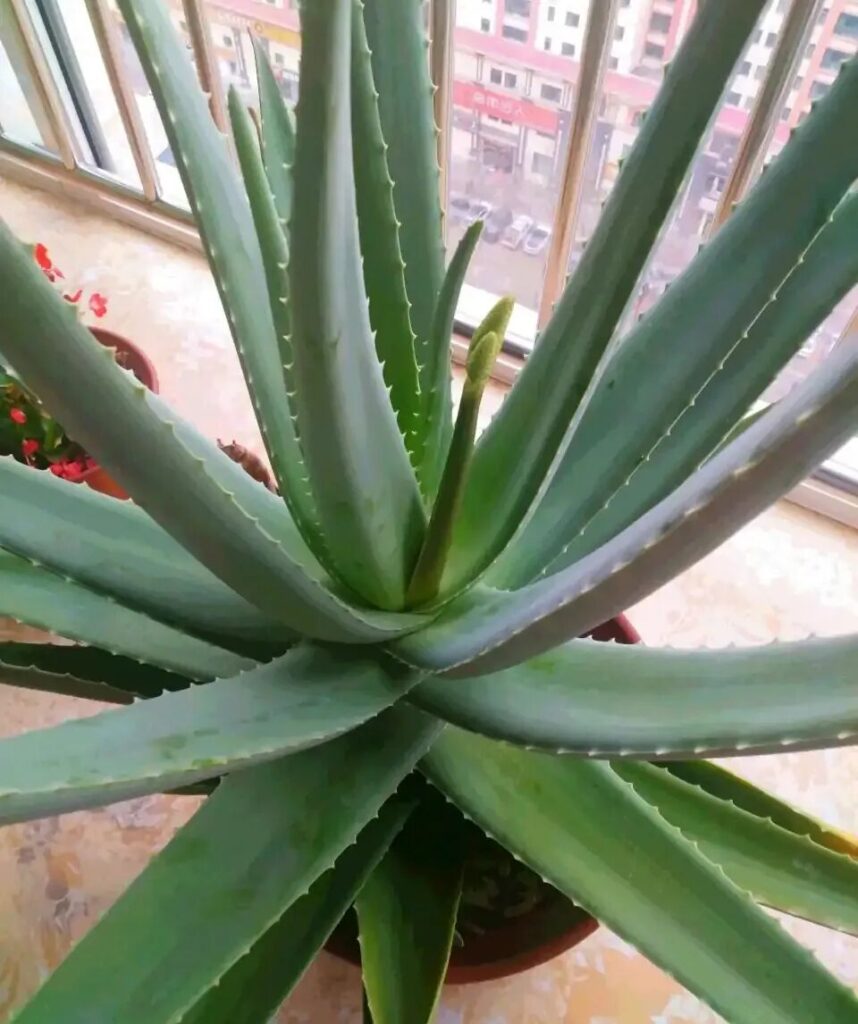
A household staple, this fleshy plant is incredibly easy to grow, requires minimal water, and offers well-known practical uses for skin care.
56. First Love
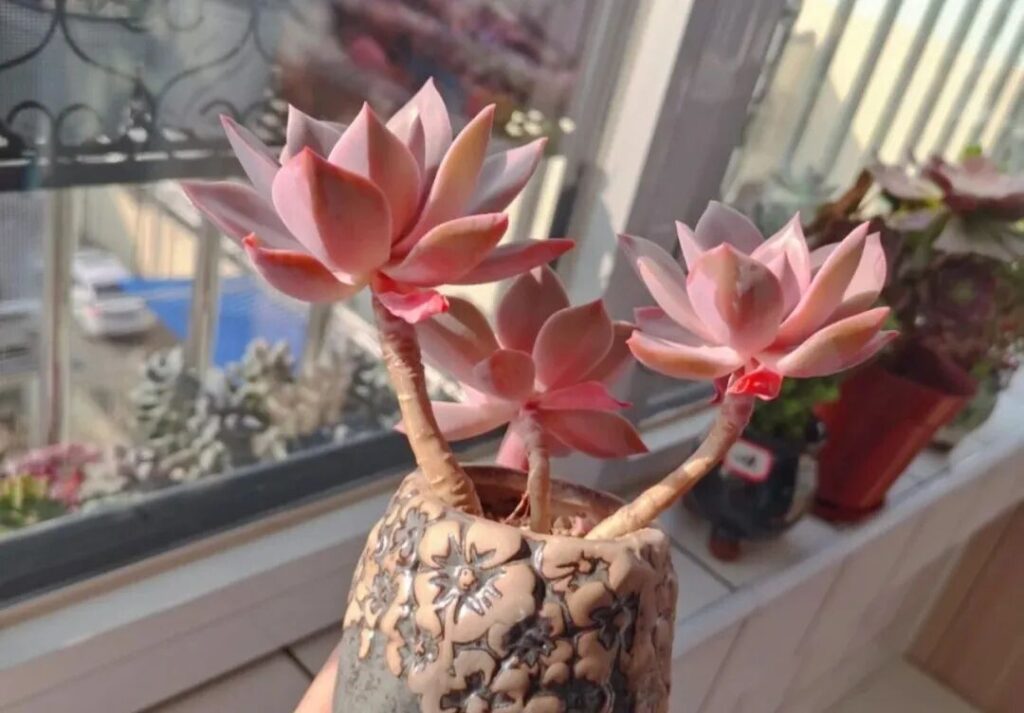
When properly stressed, this plant develops a soft, romantic pink color across its wide, slightly angular leaves.
57. Sweetheart Hoya
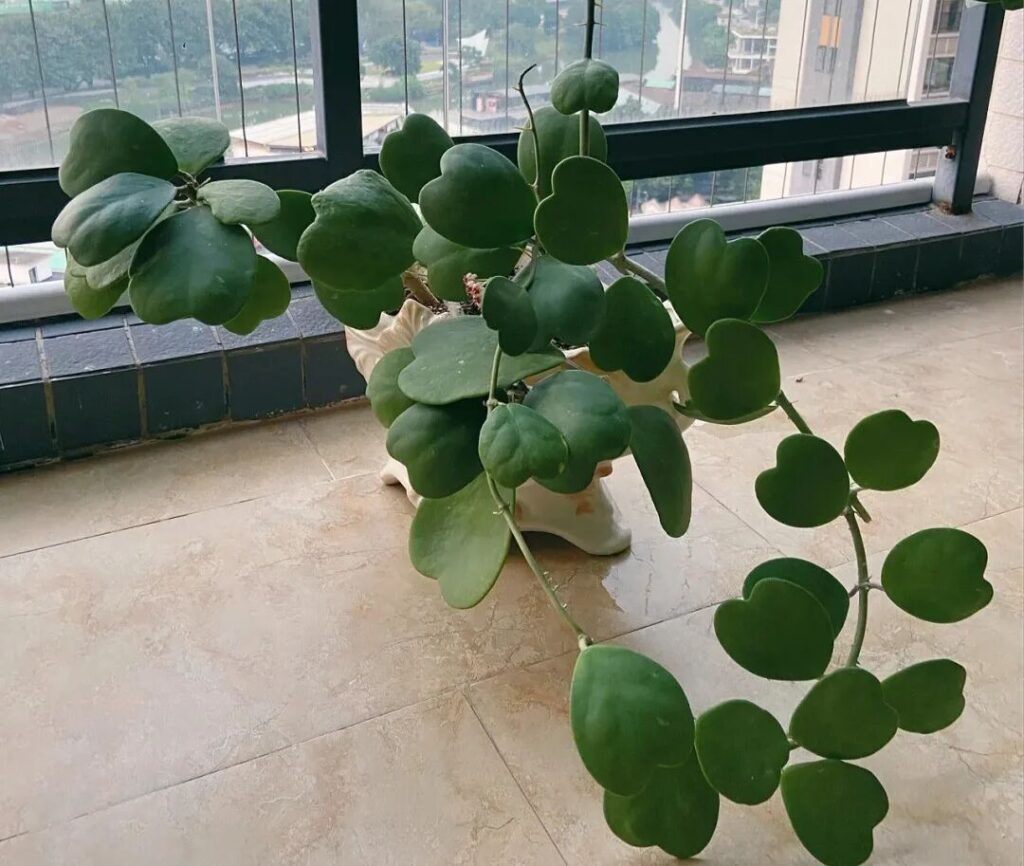
A vining plant famous for its thick, perfectly heart-shaped leaves. It is often sold as a single rooted leaf during holidays.
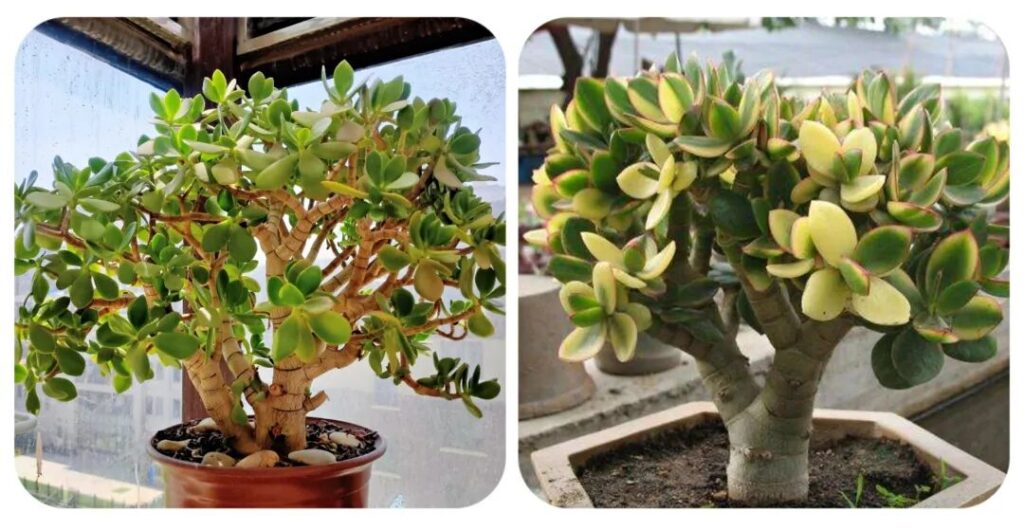
58. Jade Plant and 59. Gollum Jade
These grow into small, tree-like structures with thick woody trunks. The standard Jade has flat, oval leaves, while the Gollum variety features tubular leaves with suction-cup-like tips.
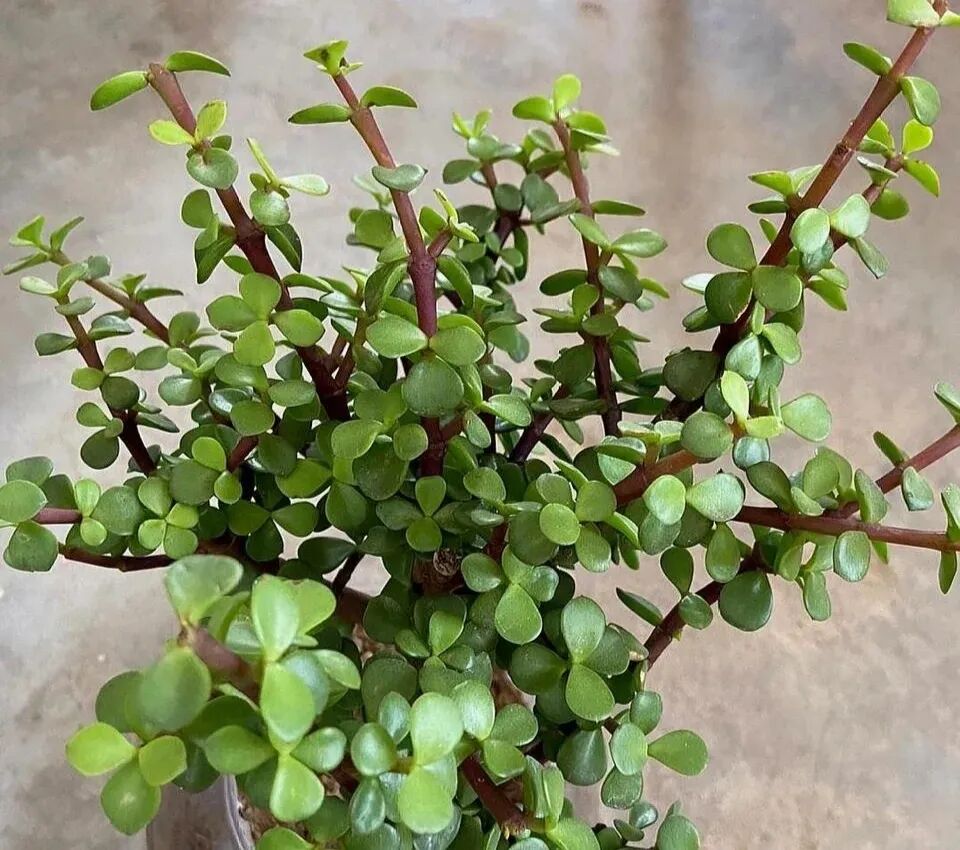
60. Elephant Bush
Visually similar to a miniature Jade Plant, this species has reddish-brown stems and small, round green leaves. It responds very well to pruning and shaping.
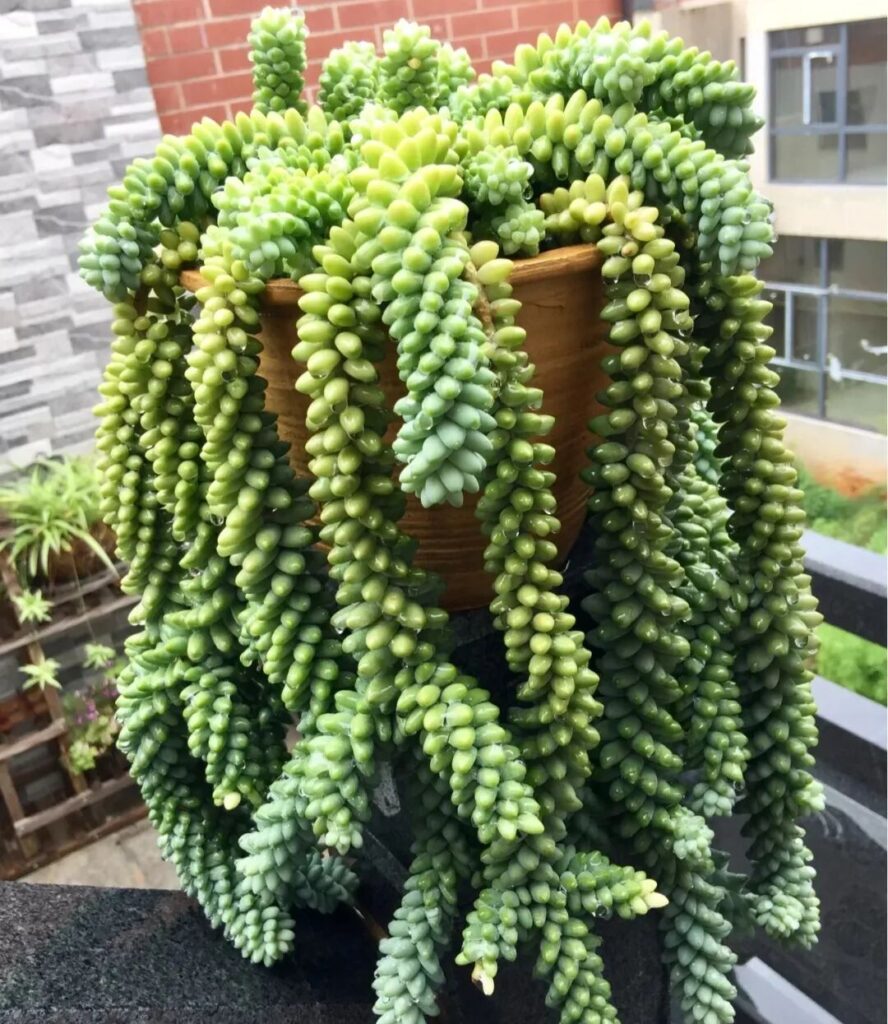
61. Burro’s Tail
A stunning hanging plant with long stems densely packed with plump, overlapping pale green leaves.
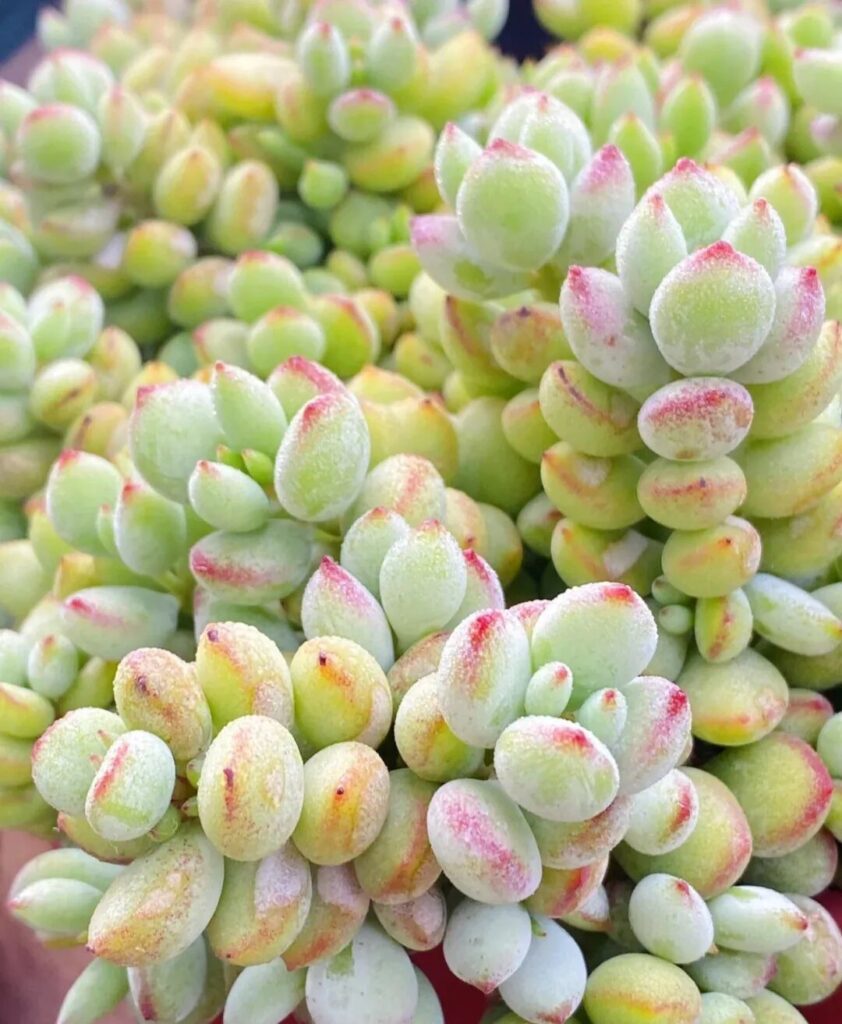
62. Pig’s Ear (Ping Pong)
This variety features thick, rounded leaves covered in white powder, often developing a distinct red margin along the edge.
63. Painted Lady
A small, compact rosette with pale green leaves that develop neat, red-painted tips and margins under bright light.
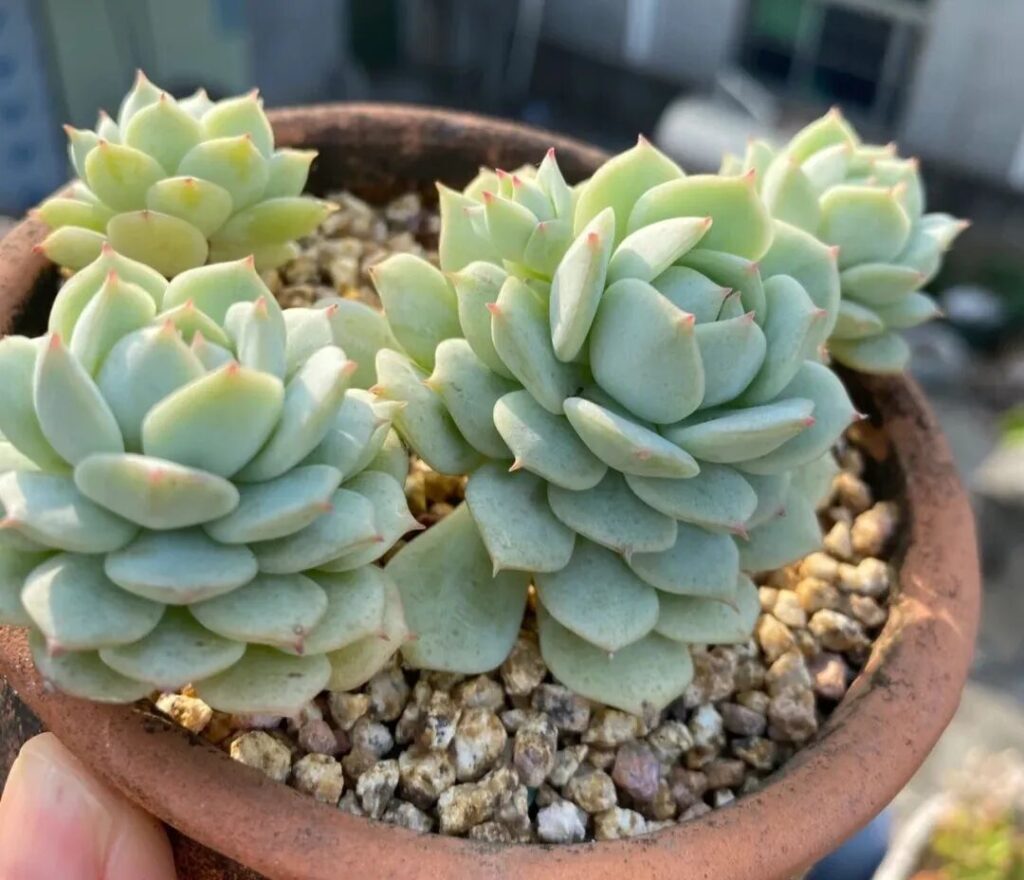
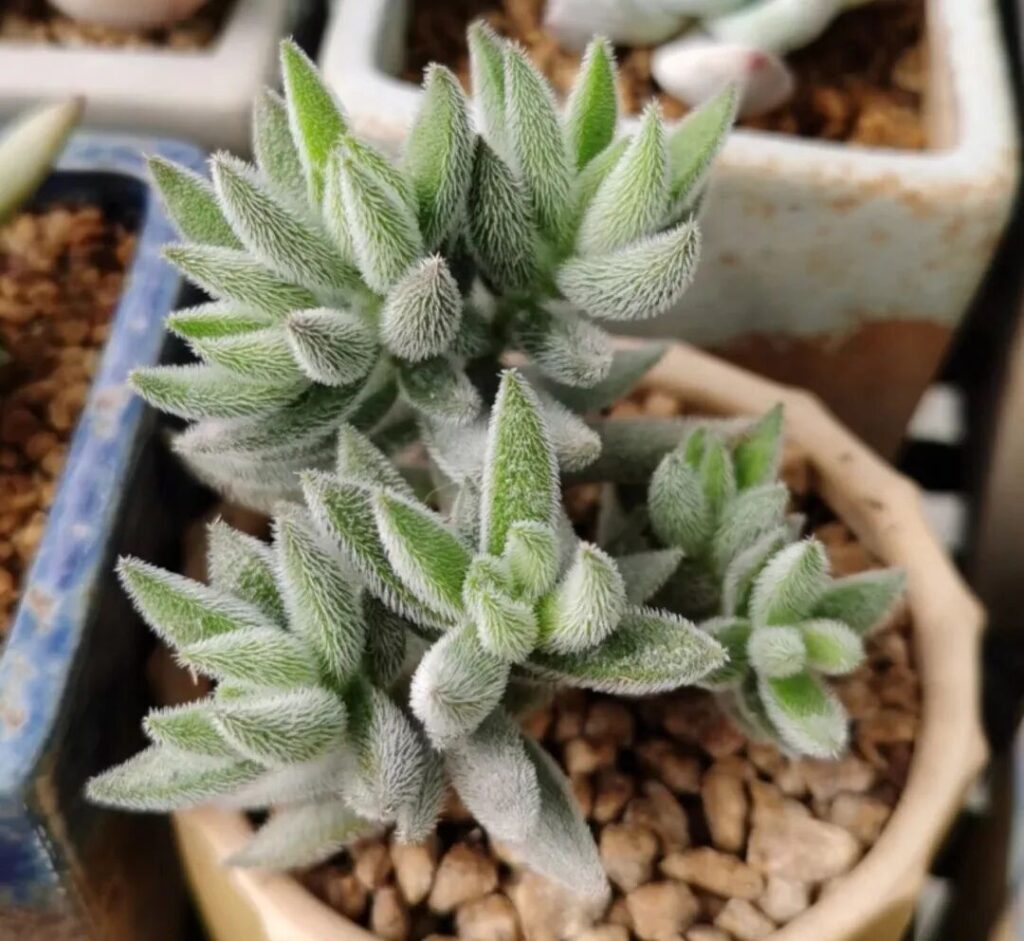
64. Crassula mesembryanthemoides
This unique plant stands out due to the fine, bristly white hairs covering its elongated green leaves.
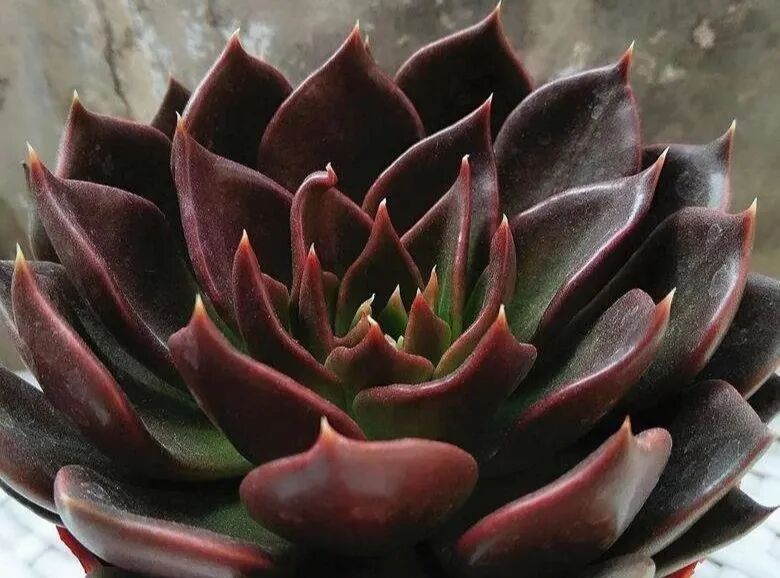
65. Black Prince
A striking dark-foliage plant. Its wide, pointed leaves turn a deep purple-black when grown in full sun.
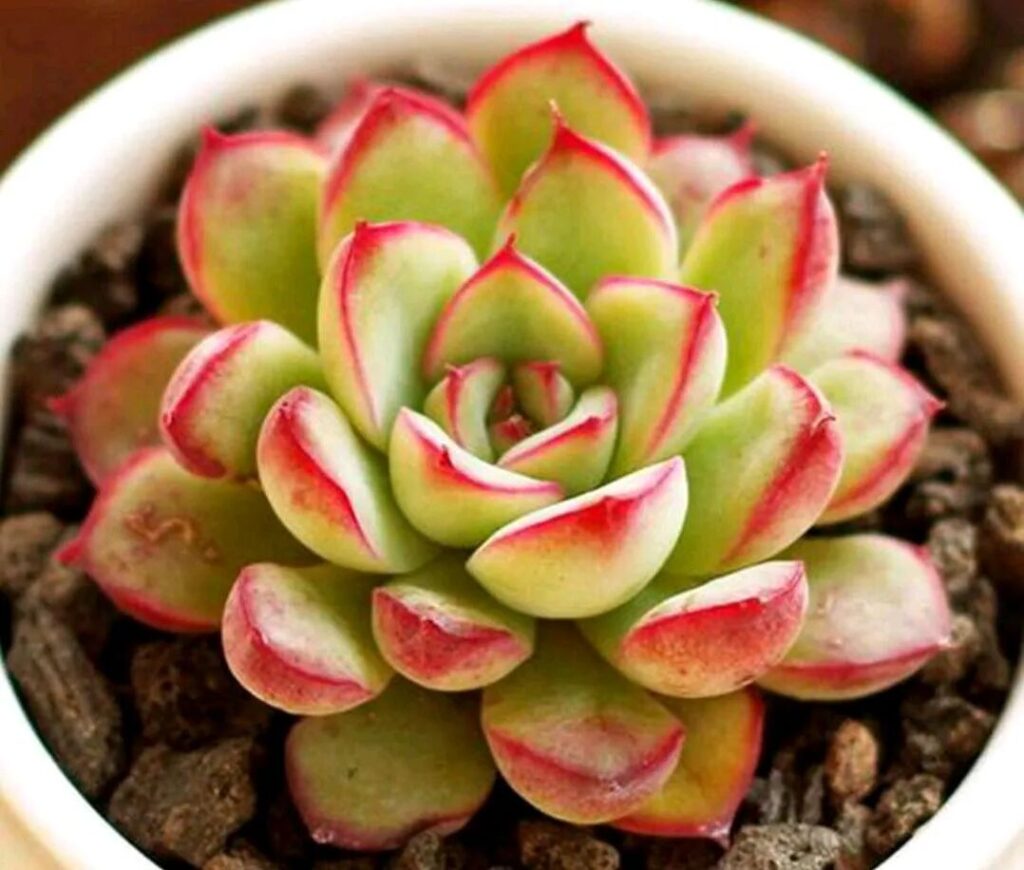
66. Pulidonis
A highly resilient, medium-sized rosette with slightly cupped blue-green leaves and a sharp, bright red edge.
67. Macdougallii
This plant easily forms woody stems and small, colorful rosettes, making it look like a miniature blooming tree.
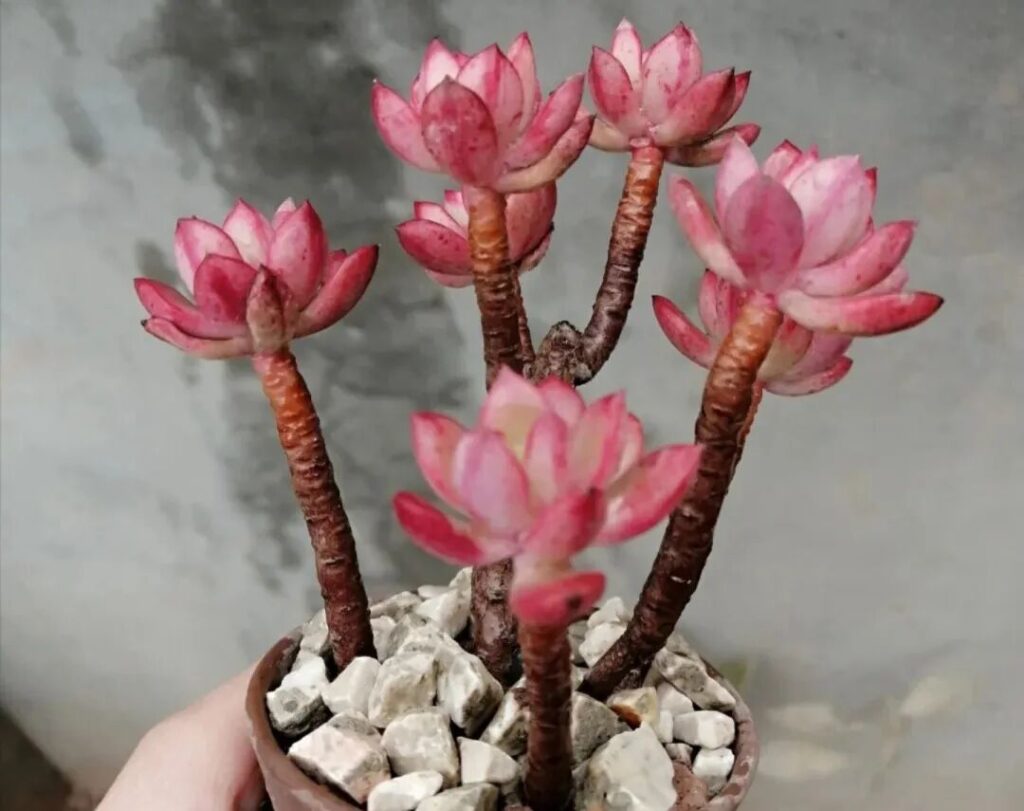
68. Violet Queen
A fast-growing, elegant rosette that produces many offsets. Its long, slightly curving leaves turn a beautiful violet-pink.
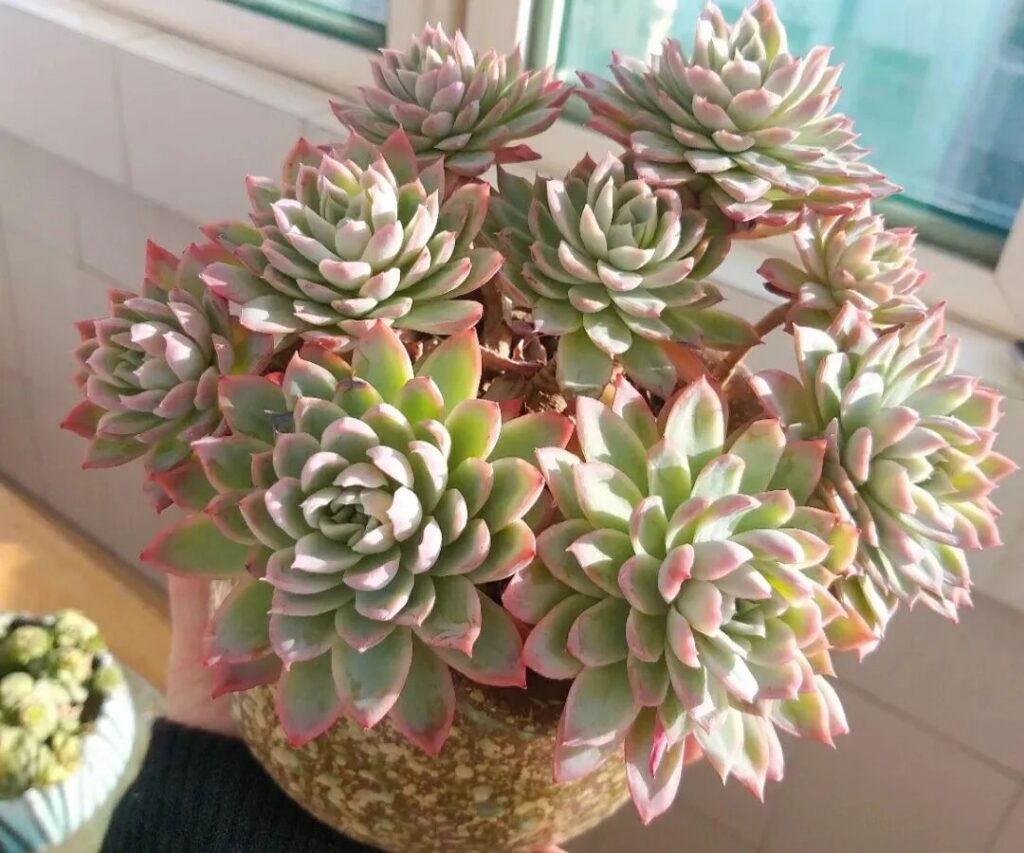
69. Debbie
One of the few plants that maintains a strong purple-pink coloration year-round, even without extreme light stress.
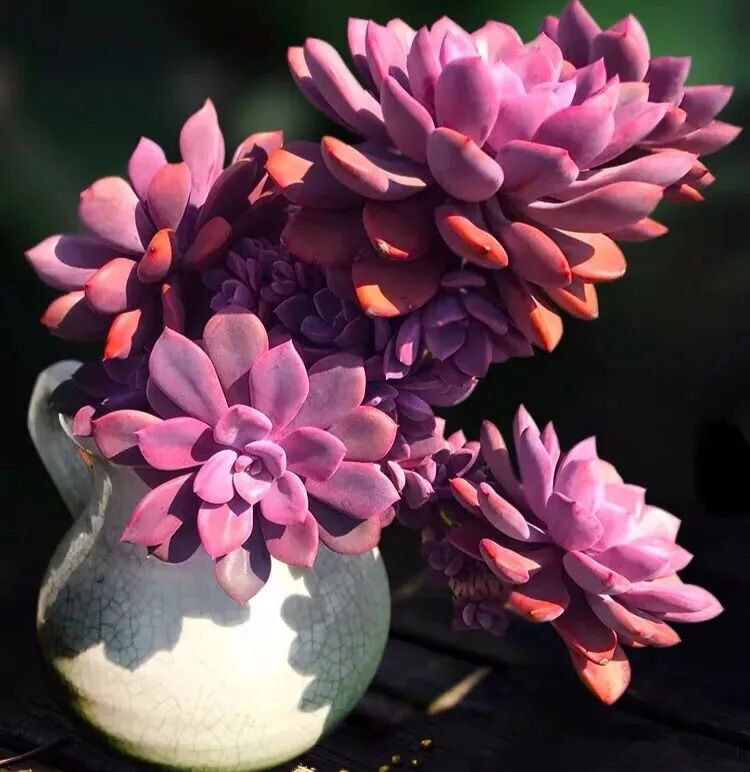
70. Romeo
A mutation of the Agavoides family, this plant features smooth, stiff leaves that turn a solid, glossy purplish-red.
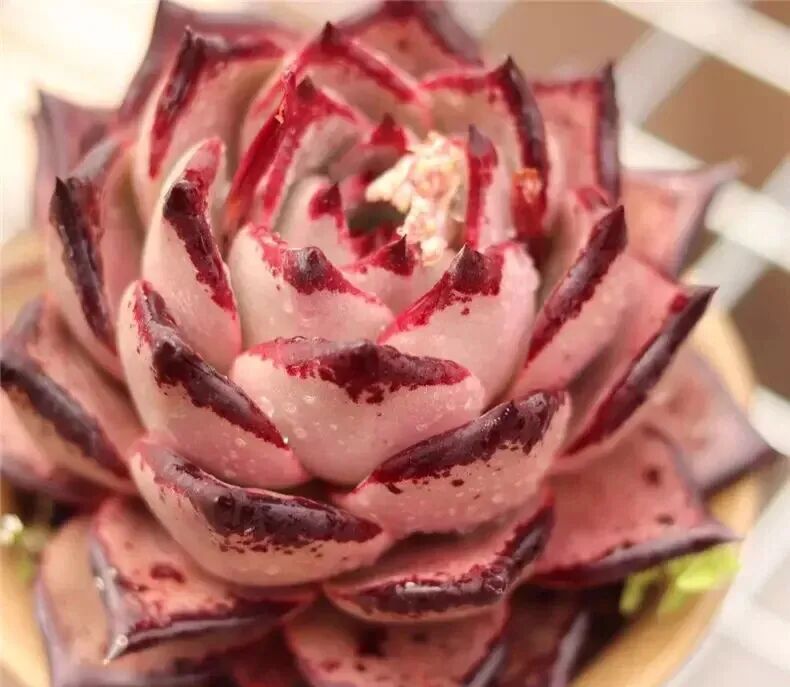
71. Lavender Scallops
With proper watering and plenty of sunlight, the scalloped edges of this plant’s leaves display a beautiful mix of cream, pink, and purple.
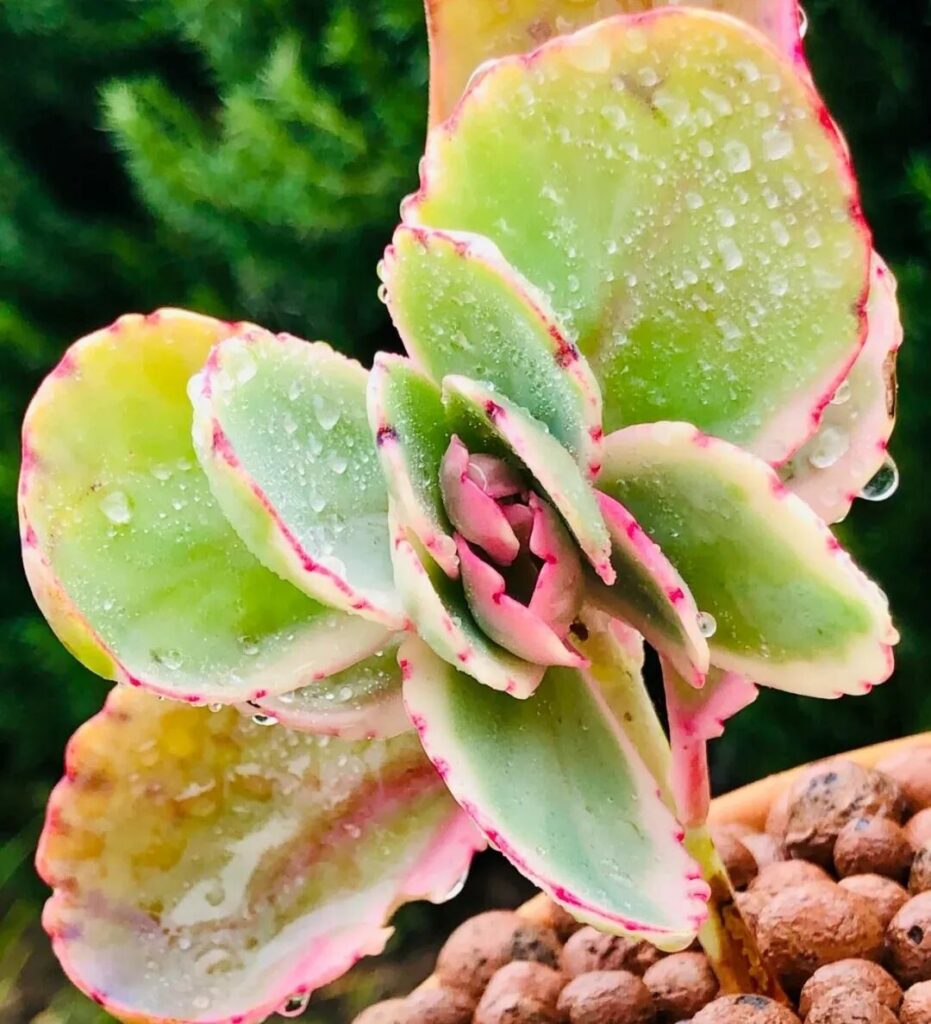
72. Secunda
A large, fast-growing rosette with thin, pale blue leaves. Under stress, the very edges develop a crisp red outline.
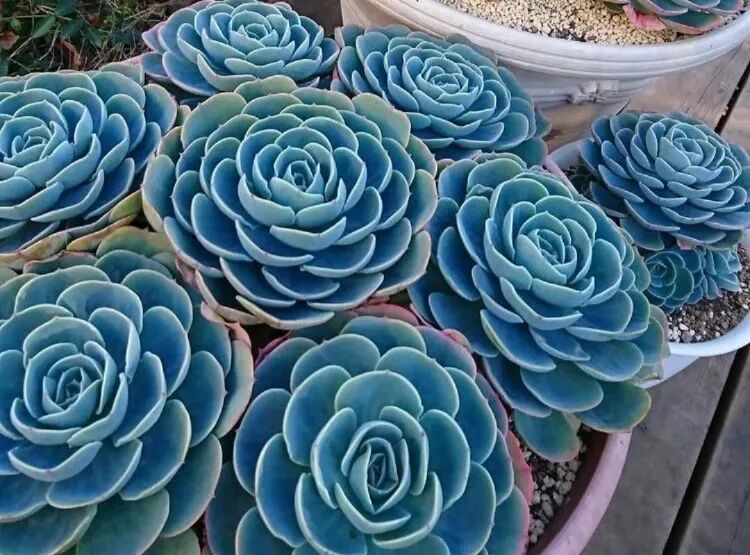
73. Peacockii
While also blue, this plant differs from Secunda by having much sharper, more pointed leaves covered in a thicker layer of white powder.
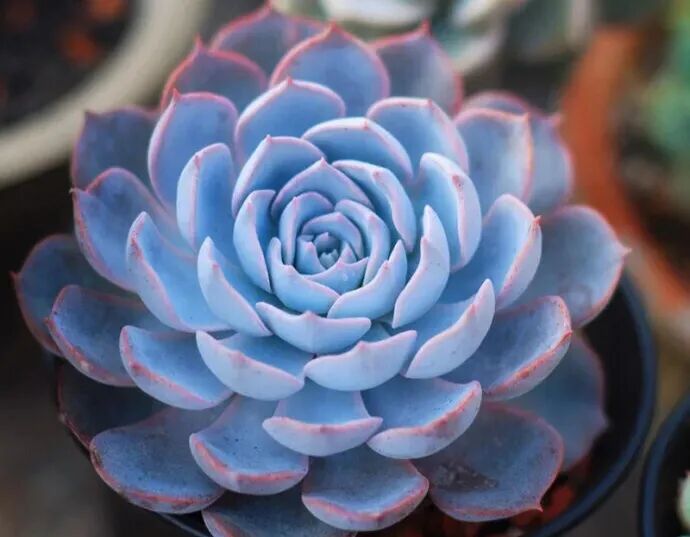
74. Plush Plant
Covered in fine, velvety hairs, the green leaves of this plant turn a brilliant, glowing red along the edges when exposed to cool temperatures.
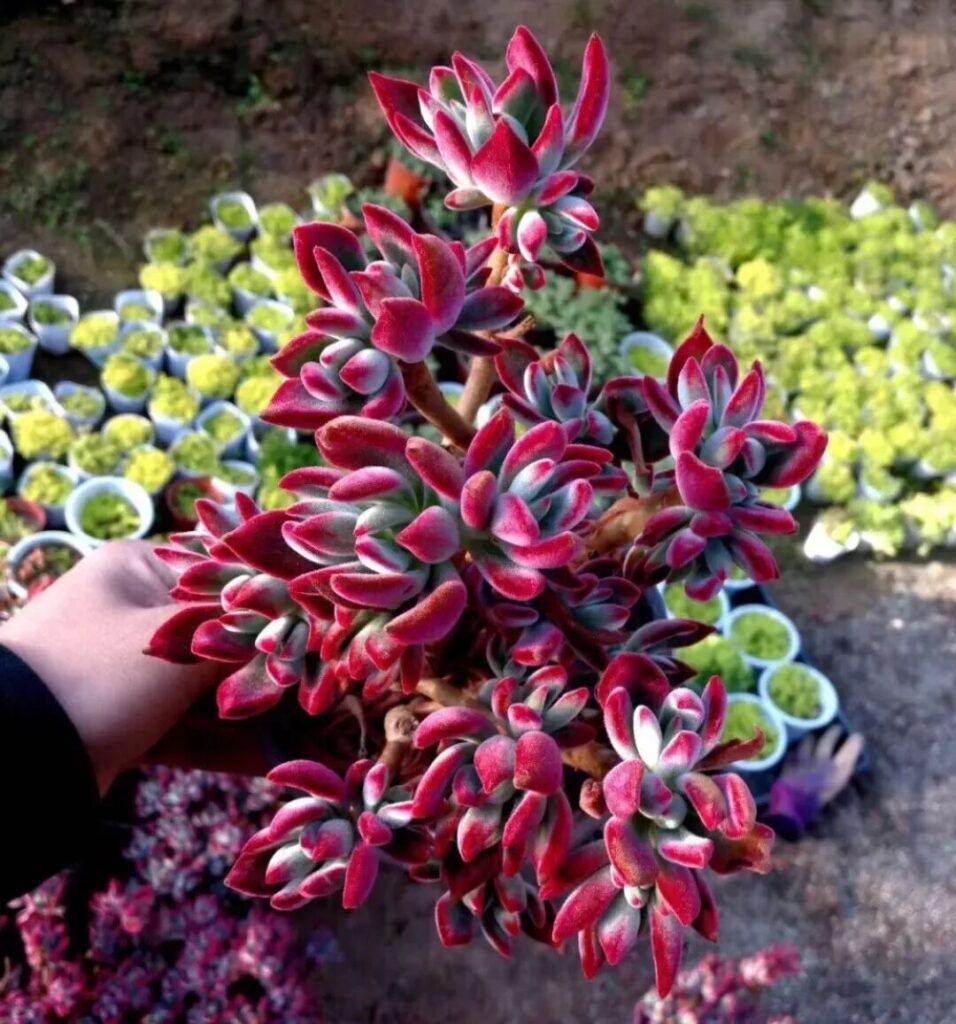
75. Harry Butterfield
A hybrid combining the trailing habit of Burro’s Tail with the larger, more pointed leaves of the Painted Lady. It is much hardier and less prone to dropping leaves.
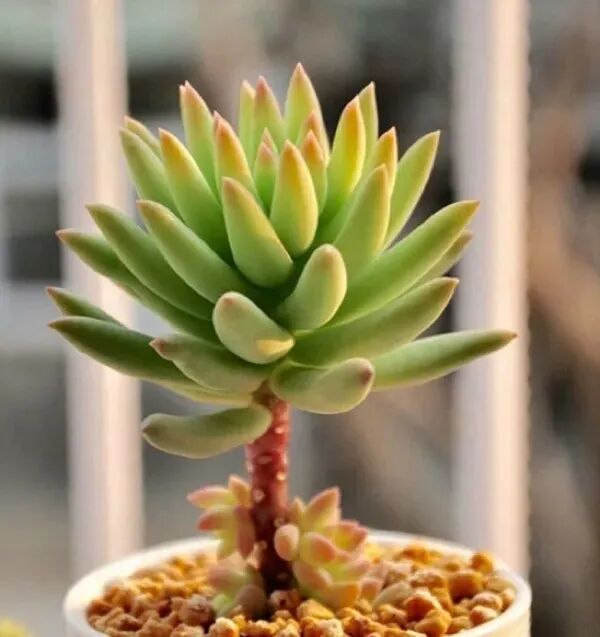
76. Fairy Washboard
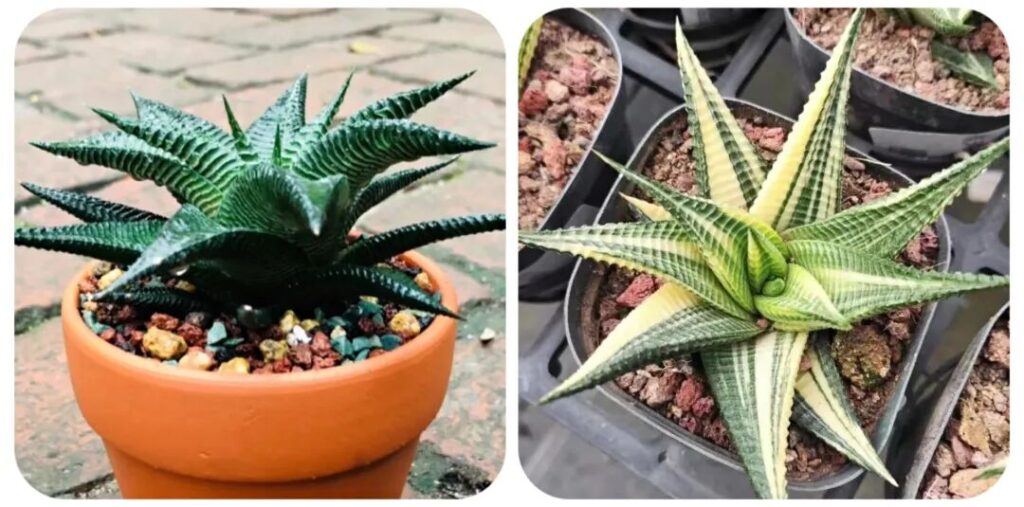
Typically dark green with raised ridges, variegated versions of this tough plant feature striking creamy-white vertical stripes.
77. Panda Plant
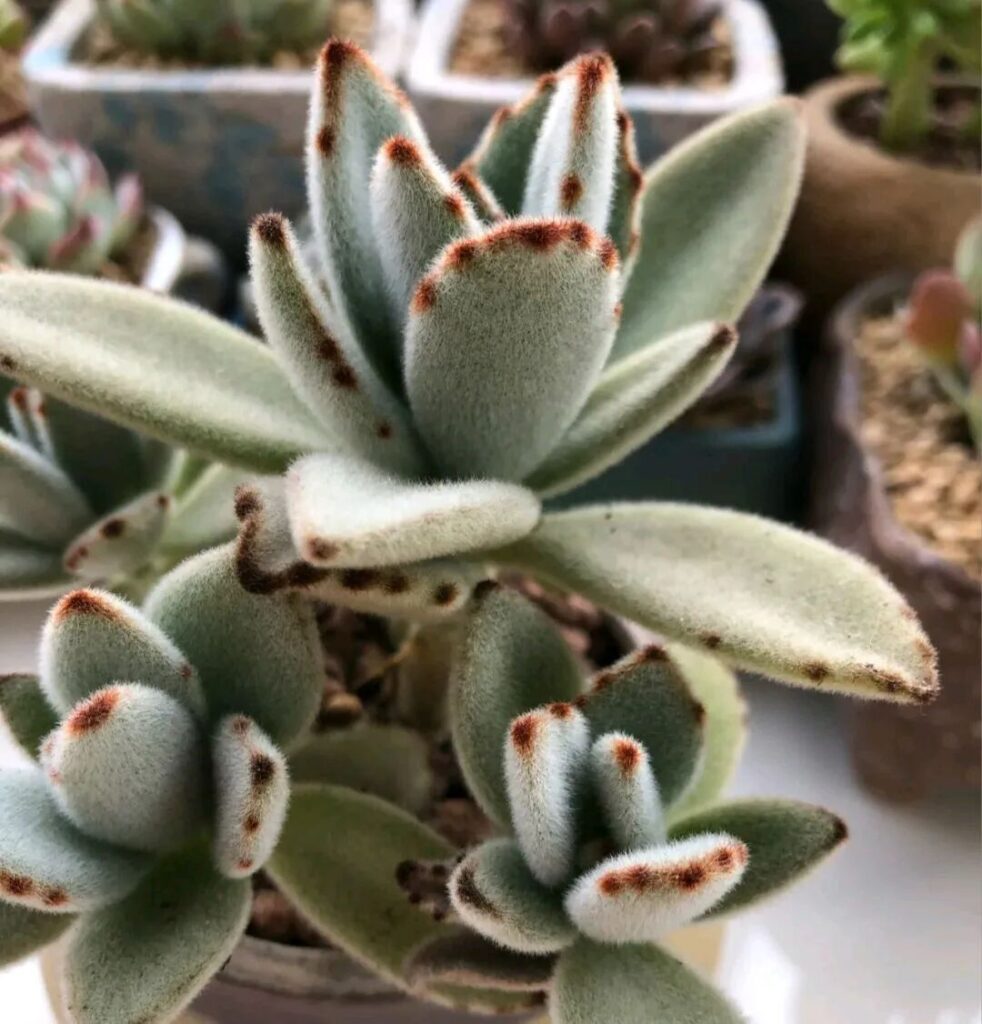
Another fuzzy favorite, this plant has soft, silver-grey leaves dotted with dark brown markings along the tips.
78. Mountain Rose
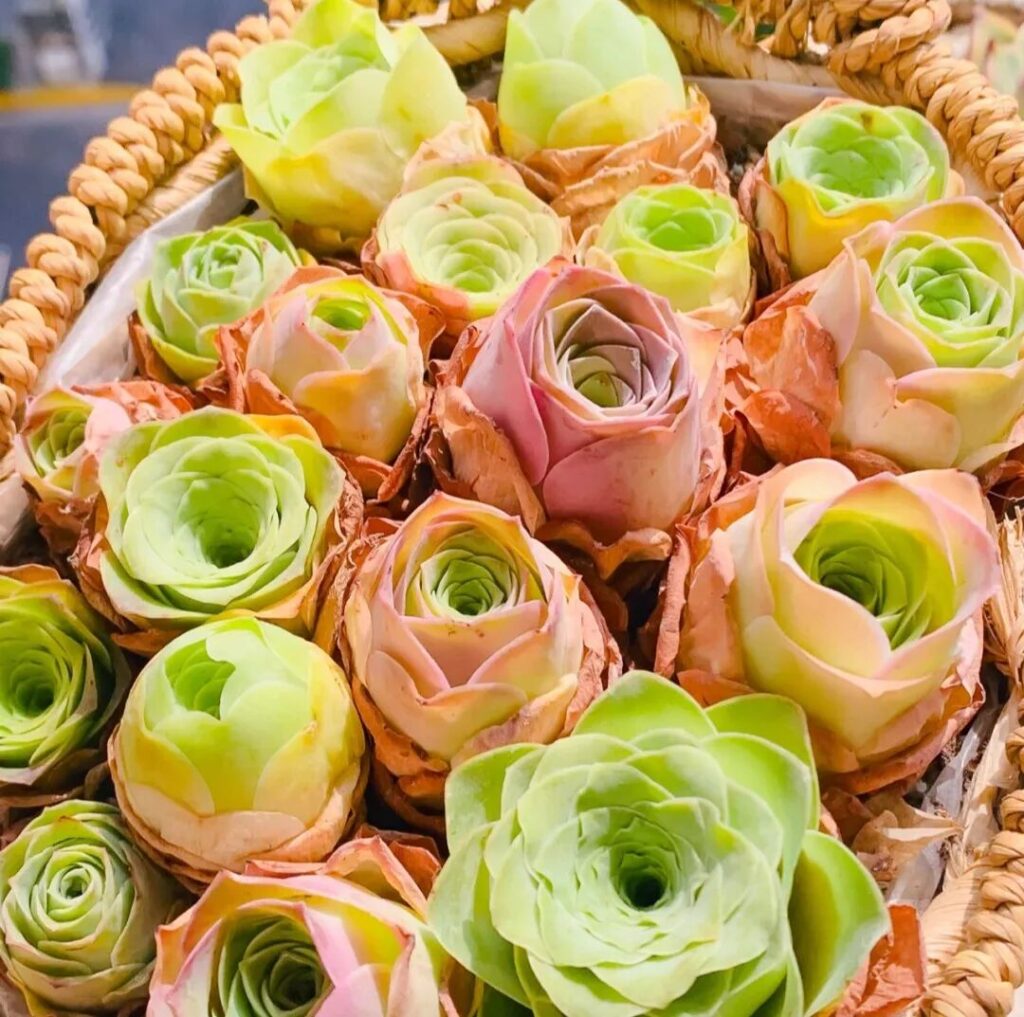
During its dormant period, the leaves of this plant fold tightly together, perfectly mimicking a closed green rosebud. Careful watering is required to maintain this shape.
79. Cante
A large, majestic rosette covered in a dense layer of white farina, giving it a cool, frosty appearance with subtle pink margins.
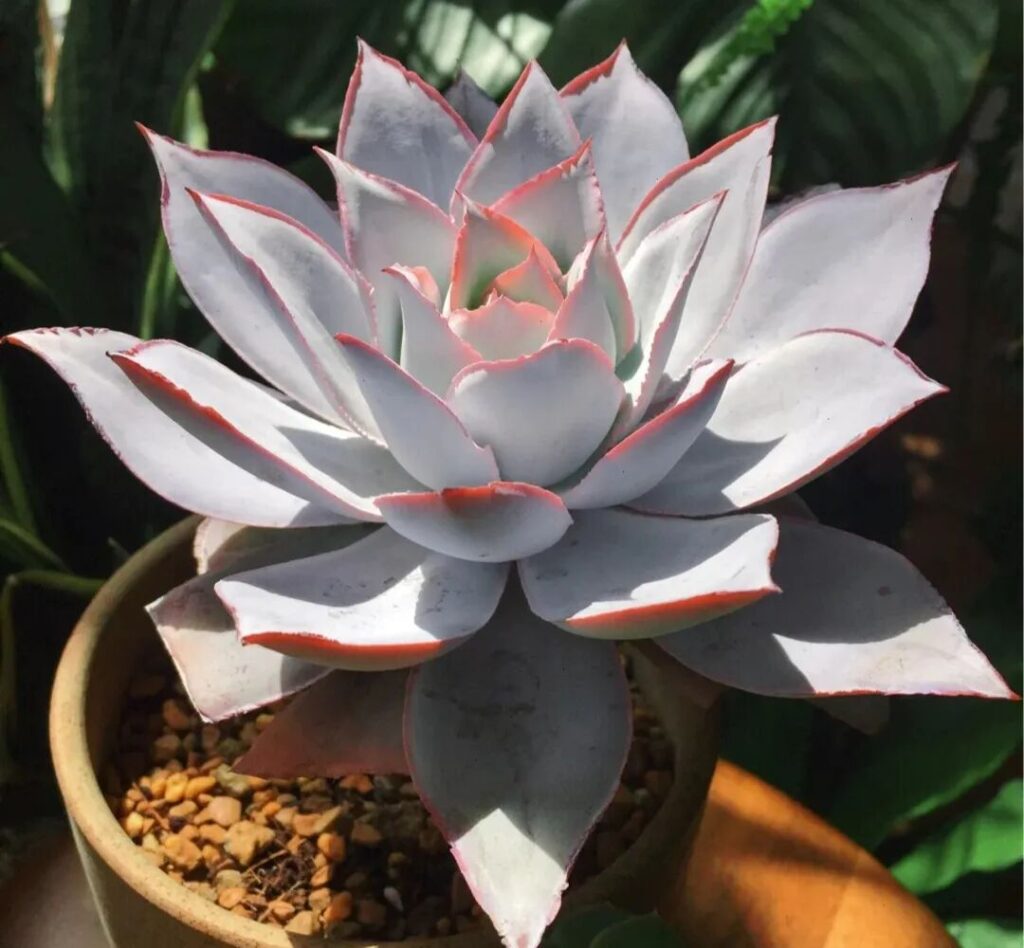
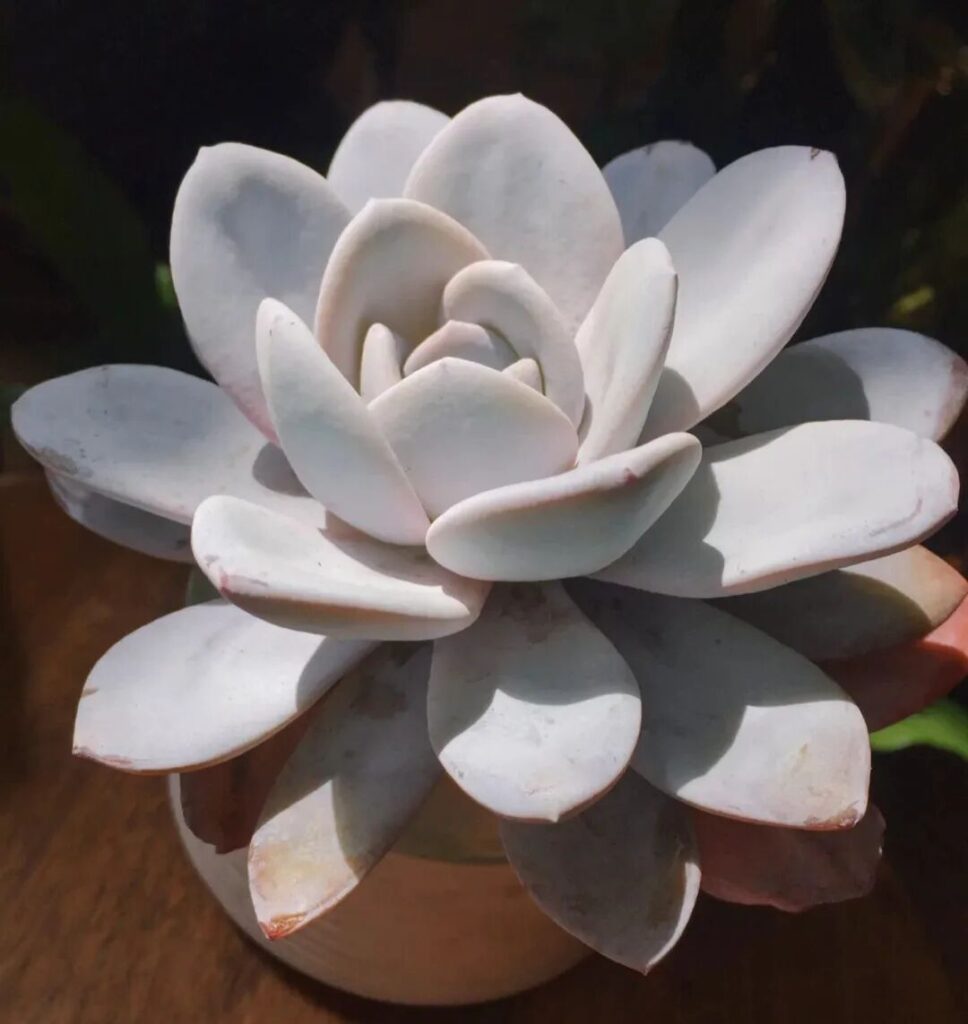
80. Laui
Similar to Cante with its heavy white powder, but this variety stays smaller and features much rounder, softer-looking leaves.
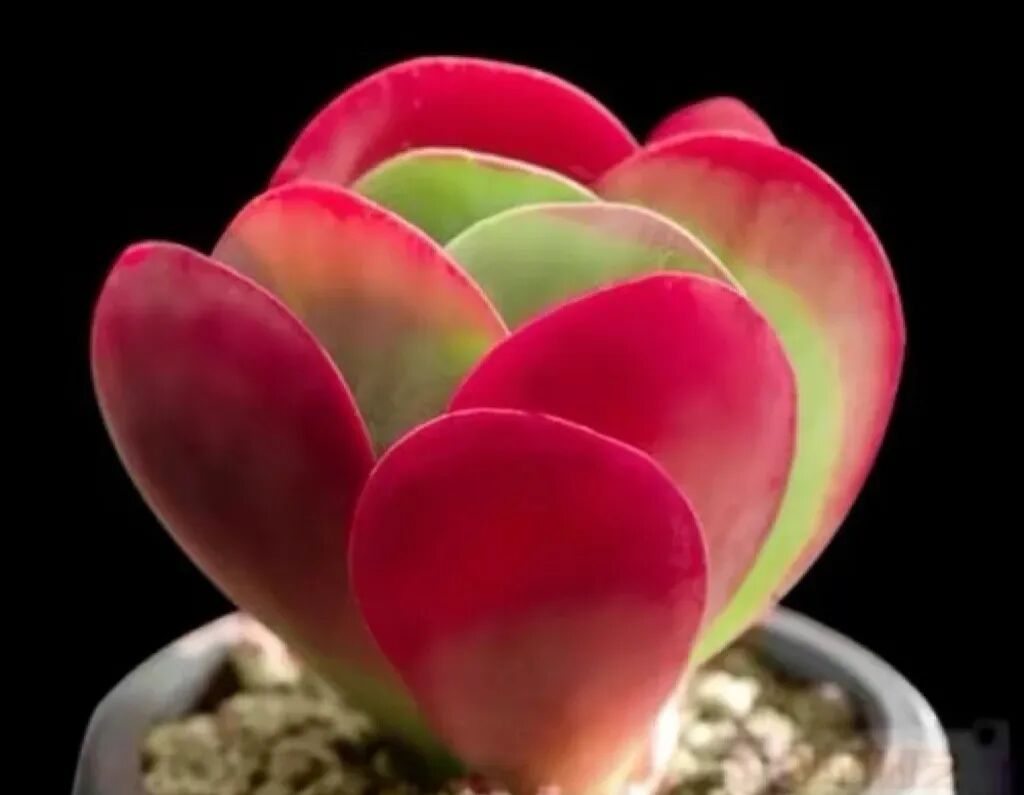
81. Paddle Plant
Known for its large, flat, rounded leaves. When exposed to bright light, the green leaves turn a vibrant, striking red.
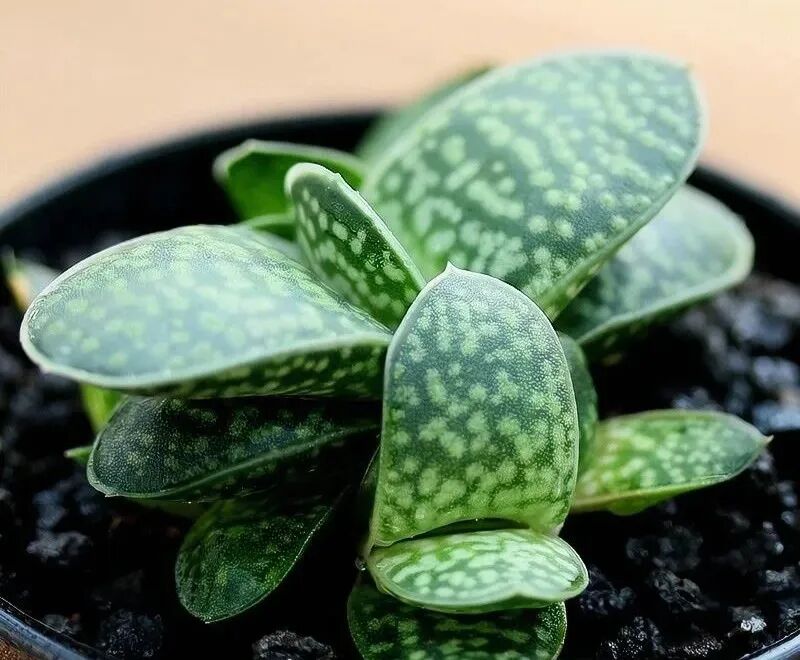
82. Ox Tongue
A slow-growing, shade-tolerant plant with thick, textured leaves that stack neatly on top of each other.
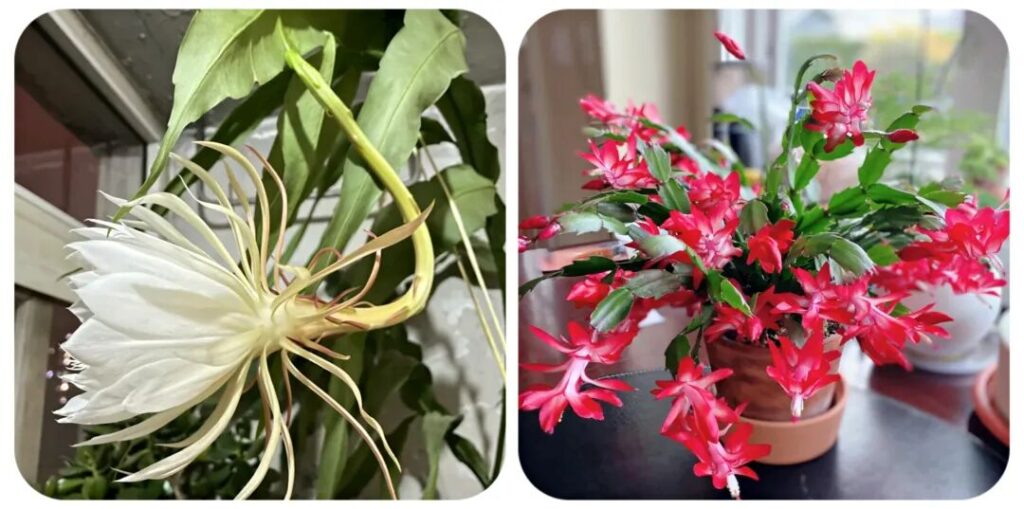
83. Queen of the Night and 84. Christmas Cactus
Many jungle cacti are also classified as fleshy plants. The Queen of the Night produces massive, fragrant white blooms, while the Christmas Cactus offers bright, tubular flowers in winter.
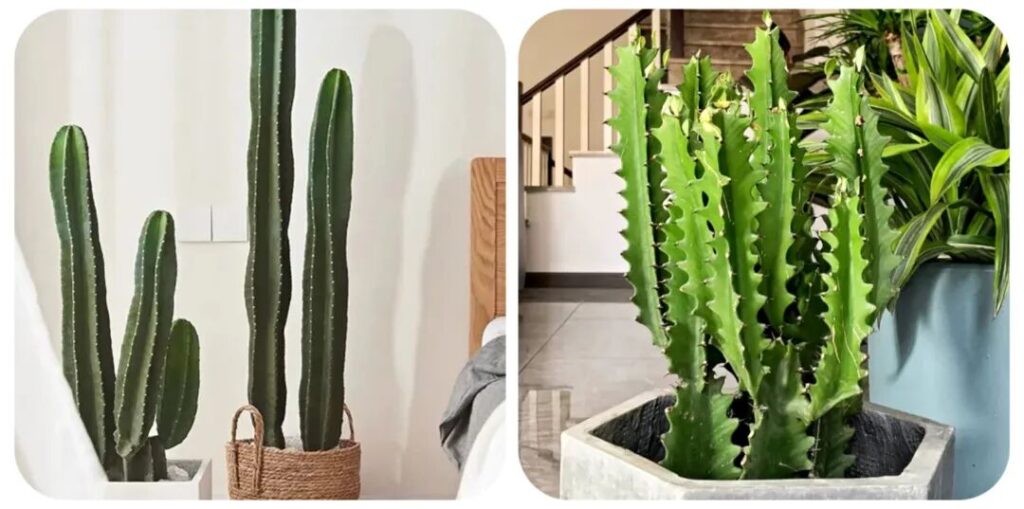
85. Dragon Fruit Cactus and 86. African Milk Tree
Though they look similar, the Dragon Fruit is a true climbing cactus, while the African Milk Tree belongs to the Euphorbia family, which contains a toxic, irritating white sap.
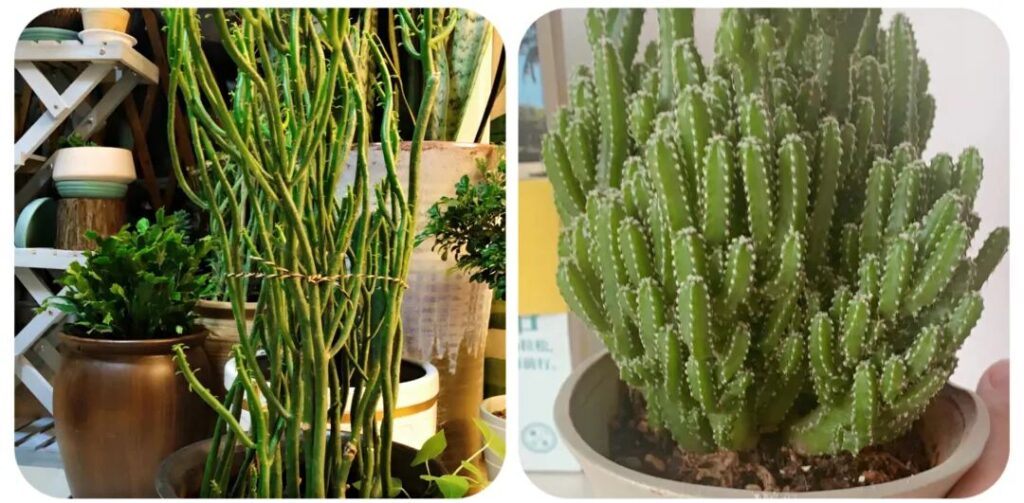
87. Pencil Cactus and 88. Monstrose Apple Cactus
The Pencil Cactus is another Euphorbia with toxic sap, requiring care when pruning. The Monstrose Apple Cactus is a true cactus with a fascinating, irregular growth pattern.
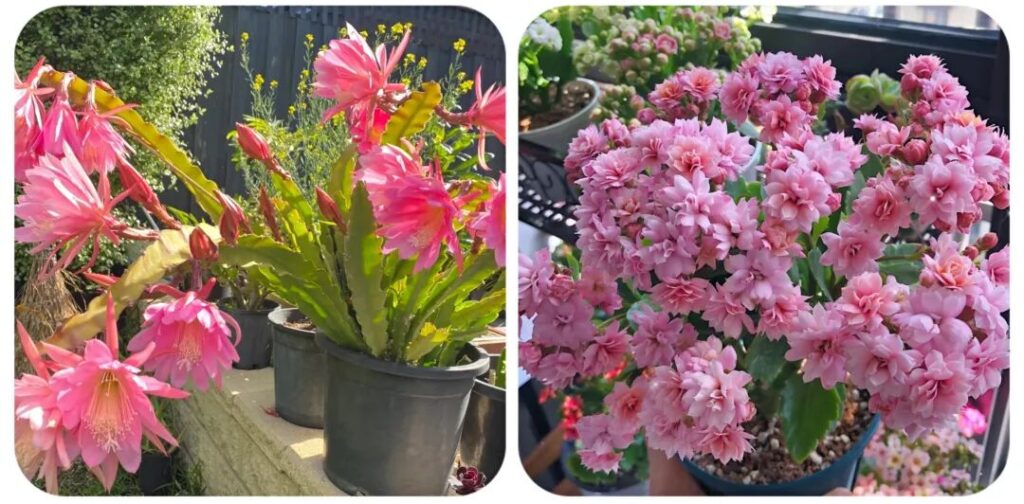
89. Orchid Cactus and 90. Flaming Katy
The Orchid Cactus produces large, colorful blooms similar to the Queen of the Night. The Flaming Katy is a popular houseplant known for its long-lasting clusters of small, bright flowers.
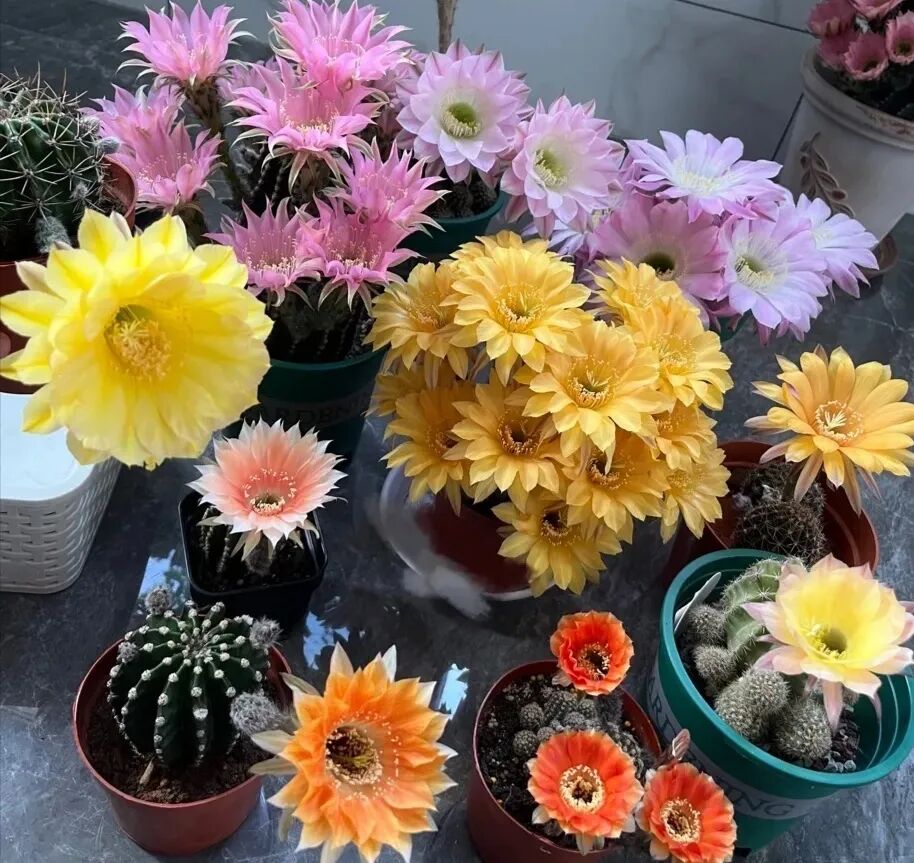
91. Sea Urchin Cactus
A classic round cactus available in hundreds of horticultural varieties, many of which produce incredibly large and intricate flowers.
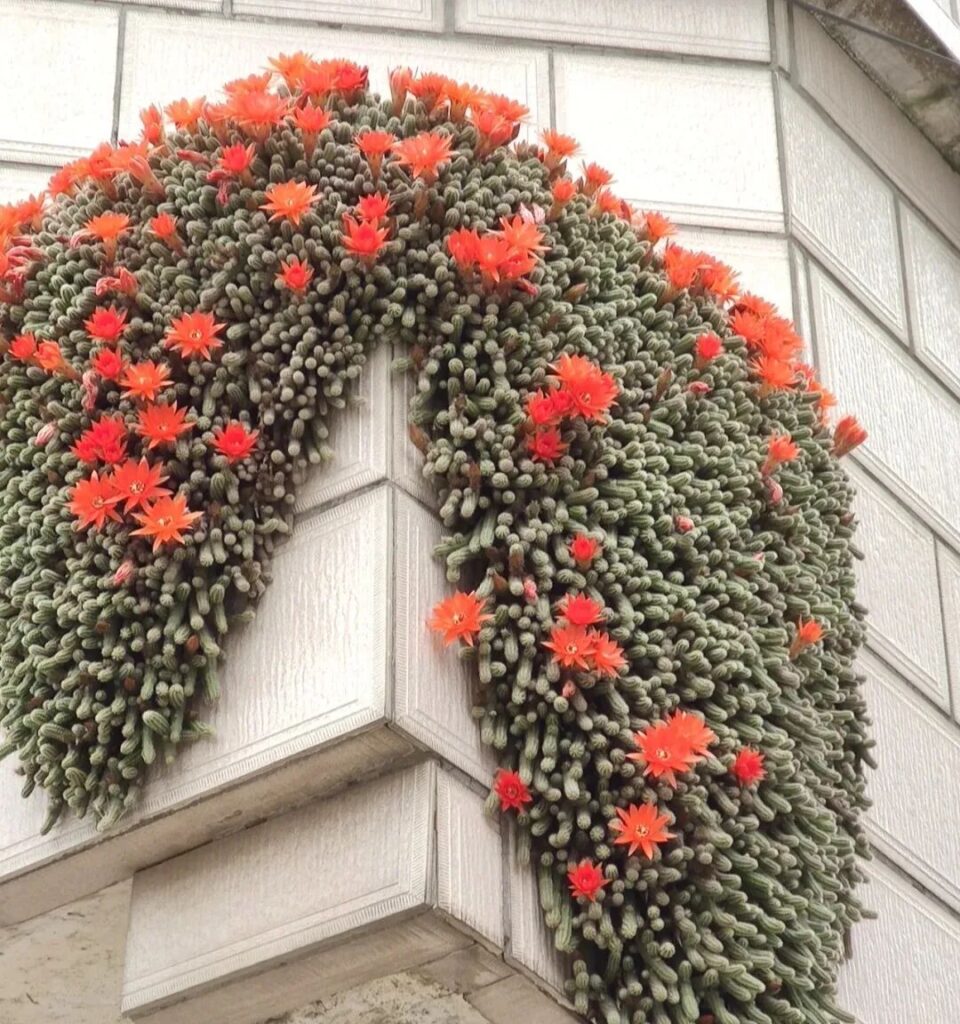
92. Peanut Cactus
This clustering cactus produces many finger-like stems and blooms prolifically with bright orange-red flowers.
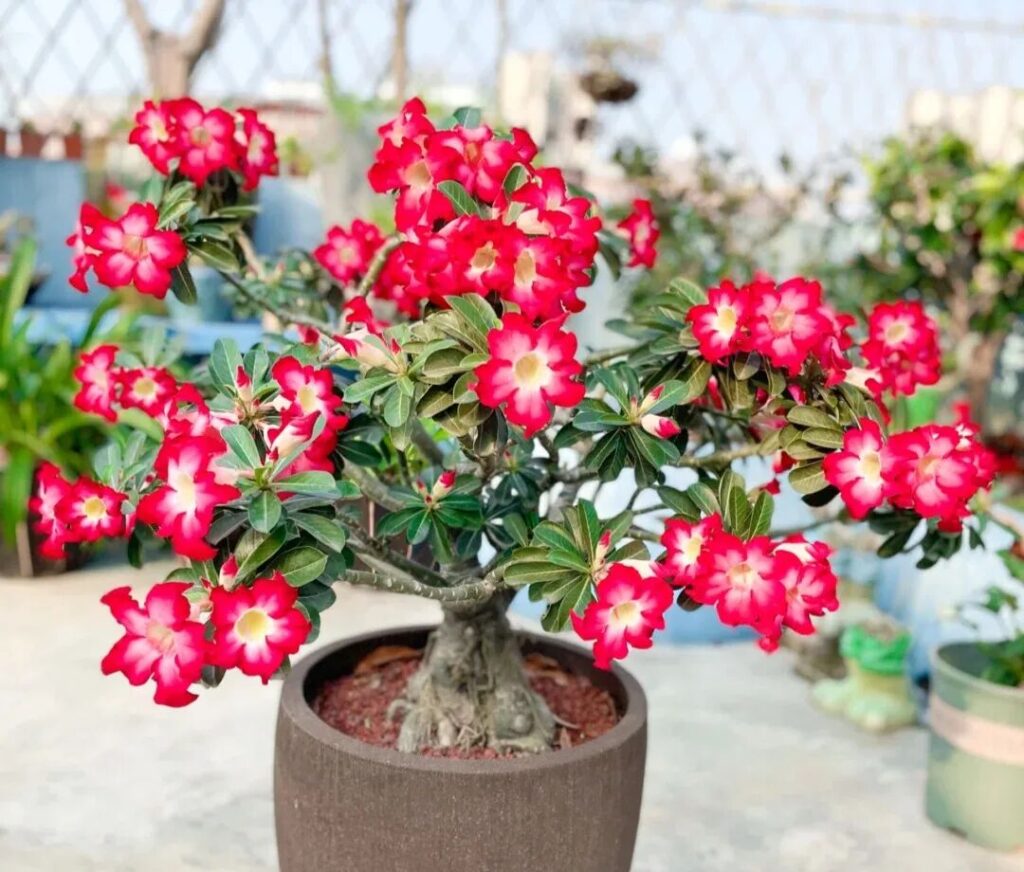
93. Desert Rose
A small succulent tree with a thick, swollen trunk designed for water storage, making it extremely drought-tolerant. It produces beautiful, trumpet-shaped flowers.
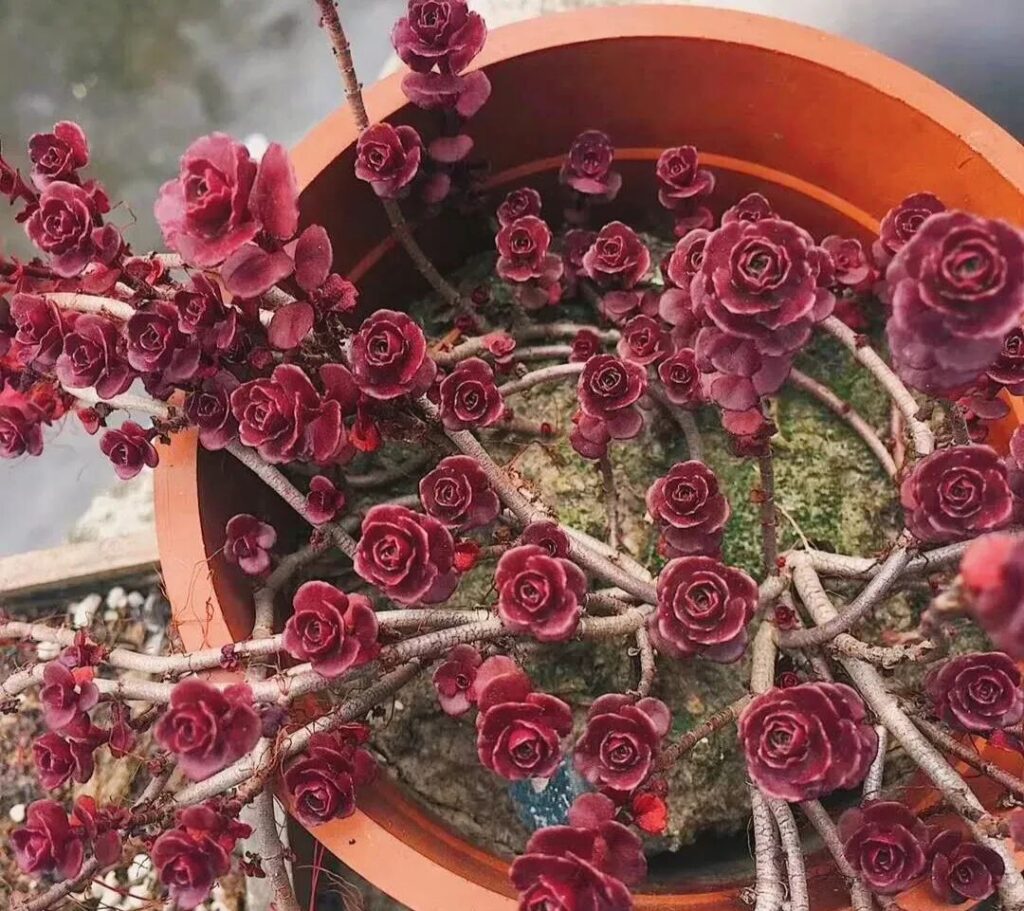
94. Dragon’s Blood
A low-growing ground cover that forms tight rosettes. Its leaves turn a deep, blood-red color during cooler months.
95. Haworthia cooperi
Famous for its fleshy, translucent leaf tips that look like tiny water bubbles. This family includes dozens of highly collectible variations.
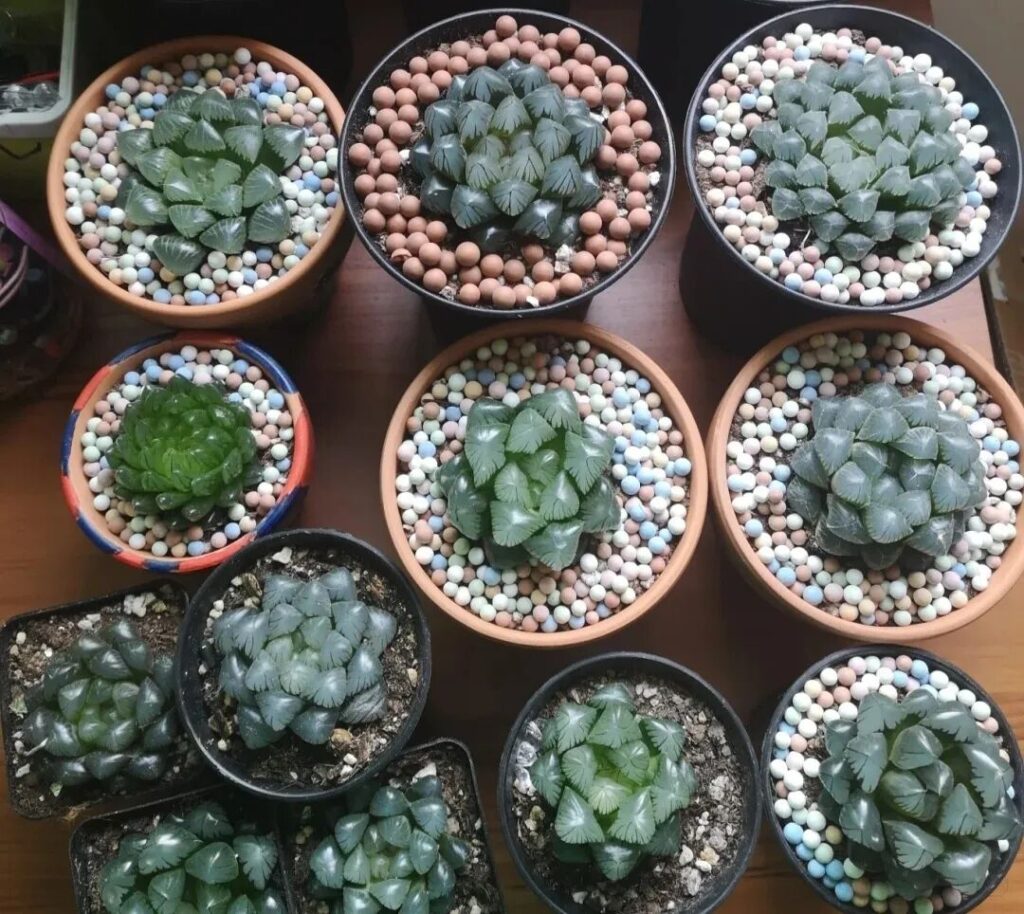
96. Haworthia truncata
A highly unusual plant where the leaves grow in a straight line and appear as if the tops have been cleanly sliced off.
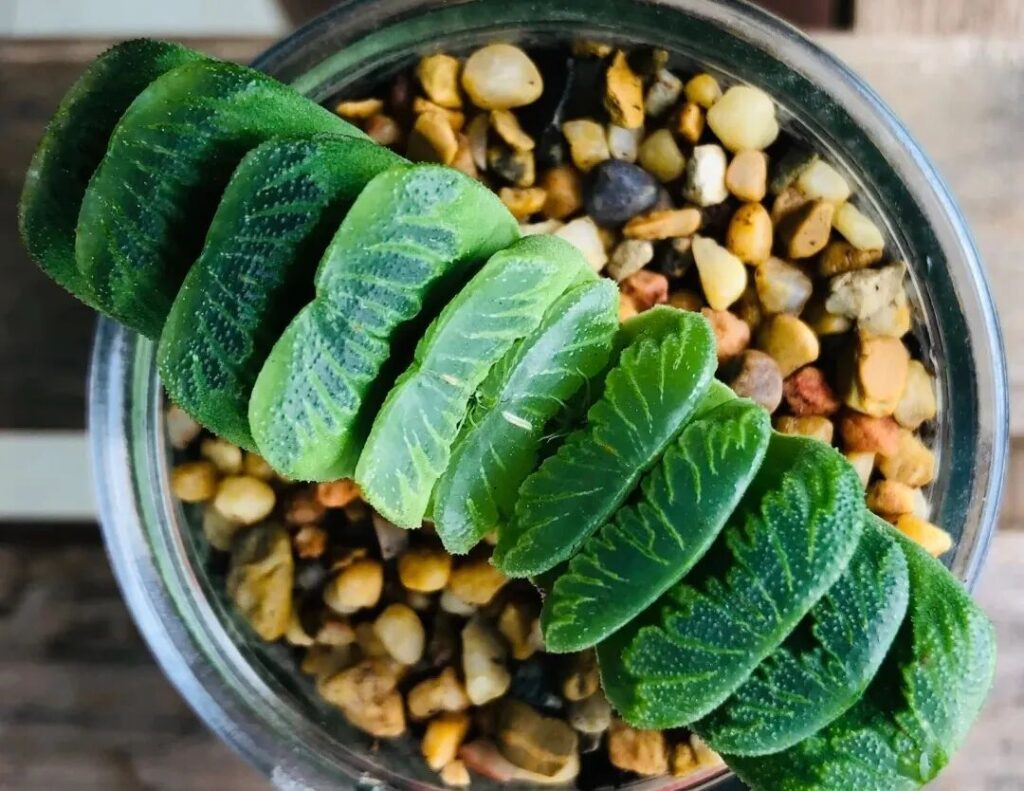
97. Living Stones
These fascinating little plants have evolved to look exactly like pebbles to avoid being eaten by animals in their native habitat.
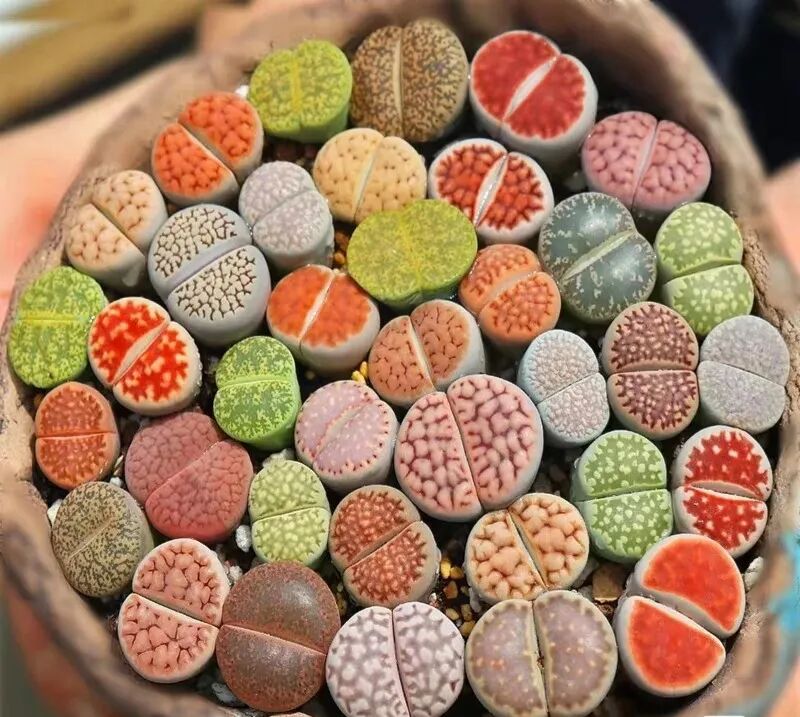
98. String of Dolphins
A delightful trailing plant where every single leaf is perfectly shaped like a tiny dolphin jumping out of the water.
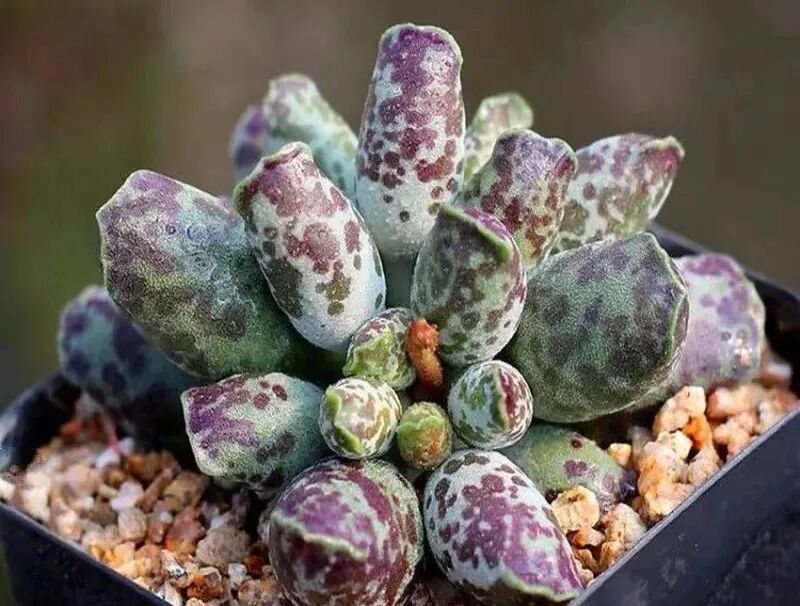
99. Jelly Beans
A clustering plant with plump, cylindrical leaves that turn bright red at the tips when exposed to cold and sun.
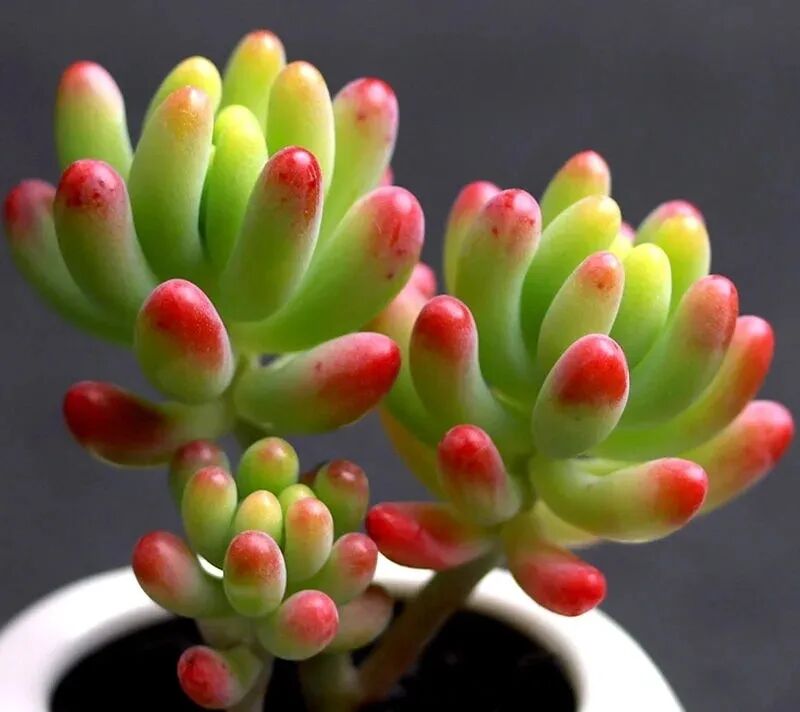
100. Pork and Beans
Very similar to the previous entry, but with slightly shorter, rounder leaves that drop easily if bumped or overwatered.
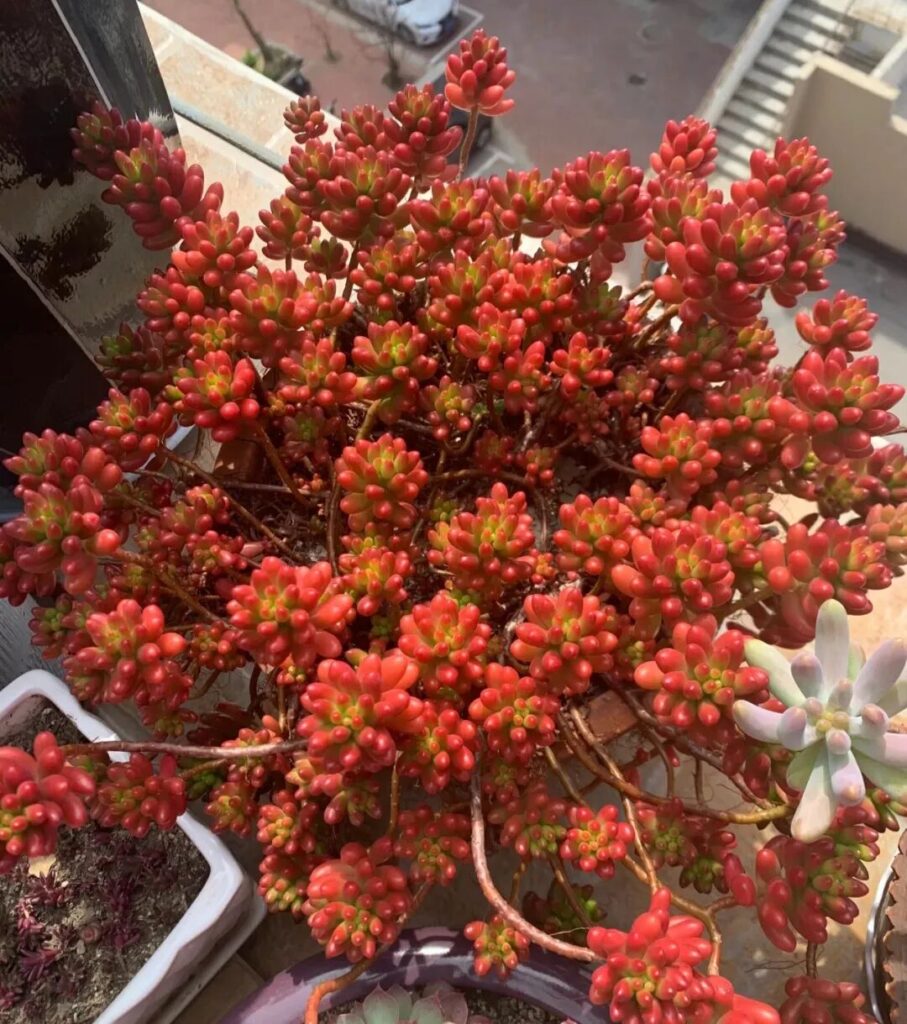
Caring for these succulent varieties is generally straightforward. They are highly drought-tolerant, meaning watering should be kept to a minimum. Providing plenty of outdoor sunlight or bright indoor light ensures they maintain their compact shapes and vibrant colors, preventing them from stretching out or rotting.
What variety is this one?
I grow succulents too, but I'm not sure how to make them turn redder.
The Ghost Plant is perfect for beginners.
Wow, there really are exactly 100 varieties listed here!
I have a few of these too.
I've kept this one for four years, not sure if it's called Floriana.
Does anyone know what these two succulents are?
They look beautiful, but many of them are actually quite hard to care for...
I have a whole bunch of them.
The variety guide is helpful because it groups plants by indoor care needs, making it easier to choose a forgiving first collection.
I didn't realize Mother of Thousands was so resilient for indoor care.
Love these succulent varieties.
Naturally beautiful and absolutely stunning.
I'm a beginner! Any advice is welcome!
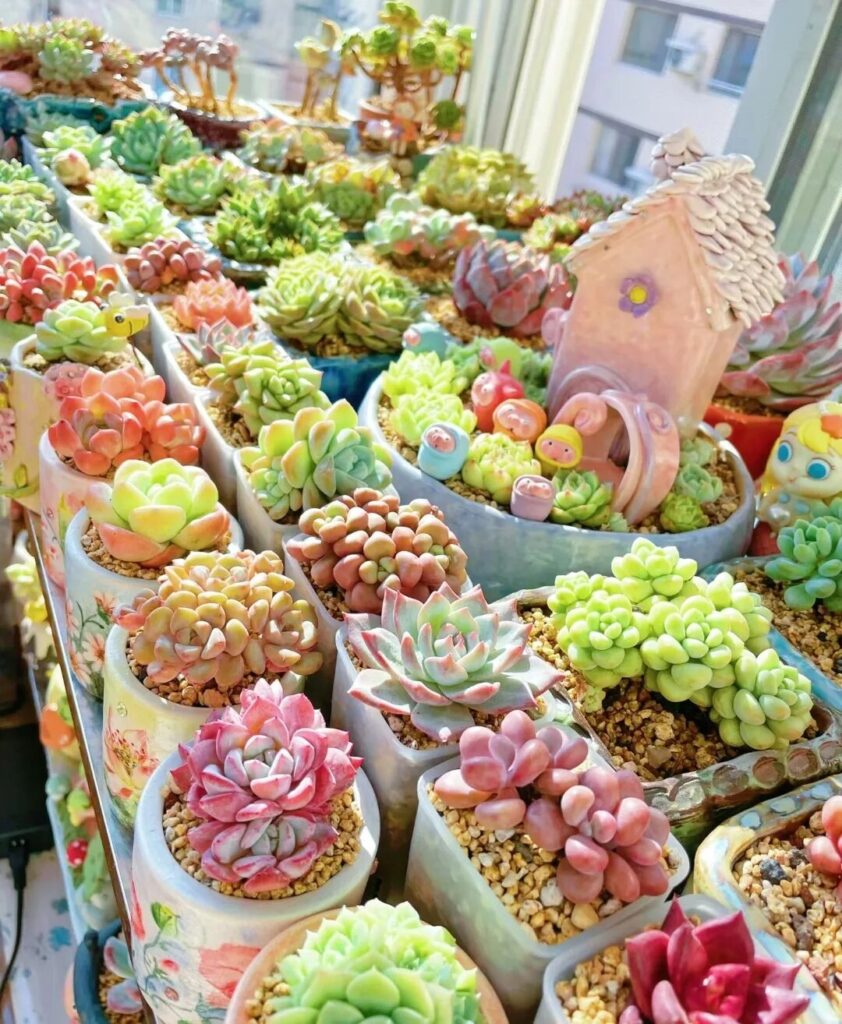
Here are the succulents I planted.